
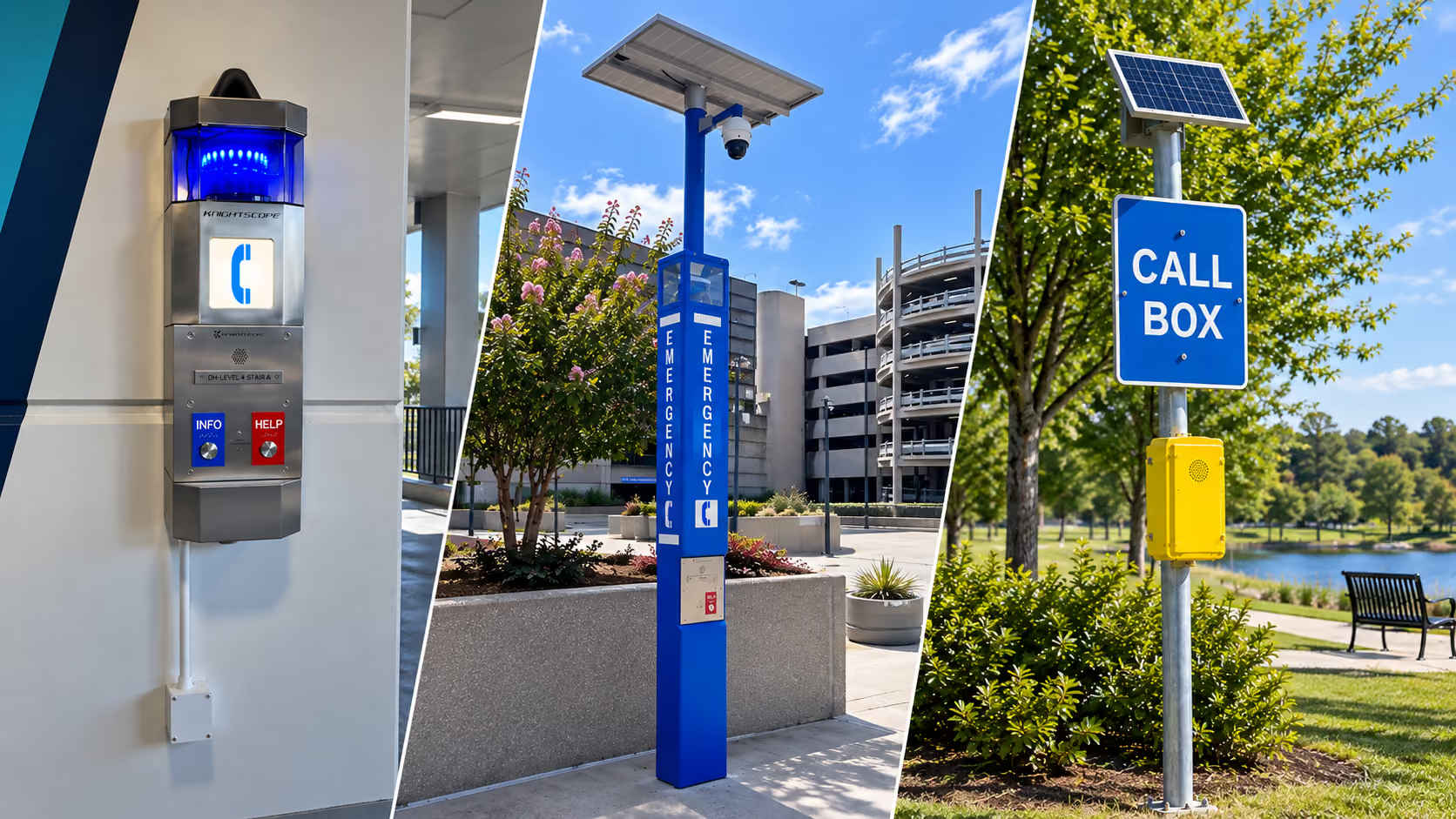
A campus quad, a hospital parking structure, a park trail, a stairwell. These are four completely different environments, but the goal in each one is the same: give someone in danger a fast, reliable way to reach help without needing a phone, a signal, or a working knowledge of a local emergency number.
The equipment that does that job comes in three main forms. Blue light towers. Call boxes. E-phones. They look different, install differently, and serve different environments. Understanding what makes each one the right tool for specific locations is what gets a safety infrastructure decision right rather than expensive.
This guide breaks all three down plainly so facilities directors, campus safety officers, municipalities, and anyone specifying emergency communication equipment can make that call with confidence.
What All Three Have in Common
Before the differences, the shared foundation matters. A blue light tower, a call box, and an e-phone all do the same core job: connect a person who needs help to 911, campus police, or a monitoring center with a single button press. No dialing. No knowing an address. No waiting for cell signal. The caller stays on a live two-way audio connection until help arrives.
All three also share a set of design requirements. ADA compliance for button height, labeling, and approach path. A visible indicator, usually a blue strobe or LED, so the device is easy to spot and responders can locate the caller. Connection methods that can work without building Wi-Fi or a direct network run.
The difference between them is form factor and environment, not function.
Blue Light Towers: The Outdoor, Open-Space Standard
A blue light emergency tower is a freestanding unit, typically six feet or taller, set in its own concrete foundation and designed to be seen from a significant distance. The tall pole and strobe at the top make it visible across a parking lot, open campus quad, athletic field, or park trail even before someone is actually in trouble. That visibility is both a communication tool and a deterrent.
TS&L's blue light emergency towers are available in solar-powered and AC-wired configurations, so a tower can go in any outdoor location including remote areas without a nearbypower run. Every unit connects over cellular or hardwired lines and is self-monitored 24/7, which means a fault triggers an automatic alert before anyone manually checks whether the tower is working.
Where towers belong:
- Open campus pathways and quads
- Parking lots and surface lots
- Athletic fields and recreation areas
- Park trails and public green spaces
- Building entrances and exterior perimeters
- Transit stops and bus shelters
Where towers don't fit:
A six-foot freestanding unit requires a concrete foundation and enough floor space to stand independently. That makes them impractical anywhere without a ground to anchor them, which eliminates most indoor environments, parking structure interiors where ceiling clearance is limited, stairwells, and building corridors.
For existing systems that need upgrading without a full replacement, TS&L's Blue Light Retrofit Kits update aging tower electronics, lighting, and connectivity inside the existing structure, which typically costs 50 to 70 percent less than replacing the whole unit.
Call Boxes: Built for Roadsides, Highways, and Remote Locations
A roadside emergency call box is a different product from a campus tower in one important way: it's built for locations where the primary risk is a motorist breakdown or accident on a highway, bridge, or remote road rather than a pedestrian safety scenario on a campus.
Where a campus tower is tall and visible to pedestrians on foot, a roadside call box like the LexanK1 Call Box(https://www.tsandl.us/safety-and-emergency/blue-light-call-box) is a pole-mounted unit built for vehicle environments. Solar powered. Weatherproof for all conditions. Sized and placed so a stranded driver can reach it without needing to walk far into traffic. It connects over cellular with no wired infrastructure, which matters because many of the locations that need roadside call boxes (bridges, underpasses, rural stretches)have no nearby power or network access at all.
Where outdoor call boxes belong:
- Highway shoulders and rural roadsides
- Bridges, underpasses, and tunnels
- Military base perimeters and training grounds
- National park roads and trail access points
- Remote parking lots and facilities
- Any location without grid power access
The key distinction from a campus tower:
Towers and roadside call boxes both mount outdoors, but they serve different users in different situations. A campus tower is designed for a pedestrian who can walk to it at a measured distance along a pathway. A roadside call box is positioned for someone who cannot safely walk far, a stranded motorist on a highway shoulder, a person near a bridge, someone in a remote area. The spacing, height, and design of the two units reflect those different use cases.
E-Phones: The Indoor and Structure Solution
An e-phone is where most campus and facility coverage plans miss a significant gap. The name stands for emergency phone, and the form factor is a compact wall or column-mounted unit, typically a few inches across, that delivers exactly the same dispatch connection as a tower or call box in spaces where neither of those can physically go.
Stairwells have walls, not floors to set a foundation in. Elevator lobbies have columns and wall surfaces but no room for a freestanding pole. Parking garage interiors have concrete columns on every level but low ceilings that make a tower impractical. Interior building corridors have walls but not the open sightlines that make a tall exterior tower useful.
TS&L's Blue Light E-Phone surface-mounts to a wall, column, or 4-inch junction box. It connects over cellular, Wi-Fi, VoIP, or analog lines, includes a battery backup so it stays online during a power outage, and meets ADA requirements for button height, tactile labeling, and hands-free operation. The same one-press dispatch connection as a full tower, in a footprint that fits anywhere with a wall.
There's also a compact indoor variant for parking structures and building installations: the K1 Mini Emergency Callbox. The K1 Mini adds an integrated HD camera for live video verification during a call, which is increasingly standard for facilities that want visual confirmation alongside audio when an emergency call comes in.
Where e-phones belong:
- Stairwells at every landing
- Elevator lobbies
- Areas of refuge under IBC Section 1009
- Interior parking structure columns, every level
- Building corridors in hospitals, universities, and large office buildings
- Restrooms and accessible facilities in stadiums, arenas, and convention centers
Side-by-Side: Which One Fits Where
Do You Need One Type or All Three?
The most common coverage gap for any campus or large facility is not choosing the wrong product, it is assuming that covering the outdoor environment is enough. Outdoor towers handle the parking lots and pathways. But a student who needs help in a stairwell, a visitor in a parking garage, or a staff member in a corridor is not outdoors. Without indoor e-phones, those spaces have no emergency communication coverage regardless of how complete the outdoor tower network is.
The facilities and campuses that get this right deploy all three as a coordinated system. Blue light towers cover the outdoor perimeter and open spaces. Outdoor call boxes cover roads, trails, remote parking, and any location without power access. E-phones cover every indoor floor, every stairwell, every area of refuge, and every parking structure level.
All three connect to the same dispatch center. A call from a tower in a parking lot, a call box on a highway shoulder, and an e-phone in a building stairwell all reach the same responders with automatic location data. The coverage is complementary, not duplicated.
Frequently Asked Questions
1. What is the difference between a blue light tower and a call box?
A blue light tower is a freestanding outdoor unit set in a concrete foundation, built for visibility across open spaces like campus quads and parking lots. A call box is a pole-mounted unit built for roadside and remote environments, designed for motorists rather than pedestrians. Both connect to dispatch with one button, but they're built for different environments and user scenarios.
2. Do I need a blue light tower or a call box for my site?
It depends on the environment. If your site is an outdoor campus, hospital complex, or municipal facility with pedestrian traffic, a blue light tower is typically the right fit. If your location is a highway, bridge, remote road, or rural site where a motorist might break down, an outdoor call box built for roadside use is the better choice.
3. What type of emergency call box should a campus use?
Most campuses need both towers and indoor e-phones. Towers cover open outdoor areas. E-phones cover stairwells, elevator lobbies, interior parking levels, corridors, and any area of refuge where the International Building Code requires two-way emergency communication. A campus that only installs towers outdoors has significant indoor coverage gaps.
4. Can a campus use more than one type of emergency call system?
Yes, and most should. Towers, call boxes, and e-phones all connect to the same dispatch infrastructure and deliver the same core function. Deploying all three in the right environments gives a facility complete coverage indoors, outdoors, and on any access roads or remote areas without creating redundancy or confusion for responders.
5. What is an emergency call box system?
An emergency call box system is the combined network of call stations, towers, and e-phones across a campus or facility, connected to a central dispatch point. Each unit activates a live two-way call with automatic location data when the button is pressed. A complete system covers outdoor spaces with towers or call boxes, indoor spaces with e-phones, and all locations are monitored 24/7 so faults are detected before they're needed.
6. How do I know if my existing blue light towers need upgrading?
If your towers are more than 10 years old, if they use older analog communication, or if you're manually checking them rather than receiving automatic status alerts, they're good candidates for a retrofit rather than full replacement. TS&L's retrofit kits update the electronics, lighting, and connectivity inside the existing structure at a fraction of the cost of replacement.
Not Sure What Your Facility Needs?
The right mix of towers, call boxes, and e-phones depends on your specific layout, power access, and coverage requirements. TS&L designs, installs, and monitors complete emergency communication systems across campuses, hospitals, municipalities, and public facilities throughout the Southeast and nationwide.


.jpg)

.png)

.png)