
Solar or AC powered emergency call stations built for campuses, hospitals, parking structures, and municipalities across the country. Every tower connects a caller to 911, campus police, or a monitoring center with a single button press, and every installation is backed by 24/7 self-monitoring so you know it's working without checking it yourself.











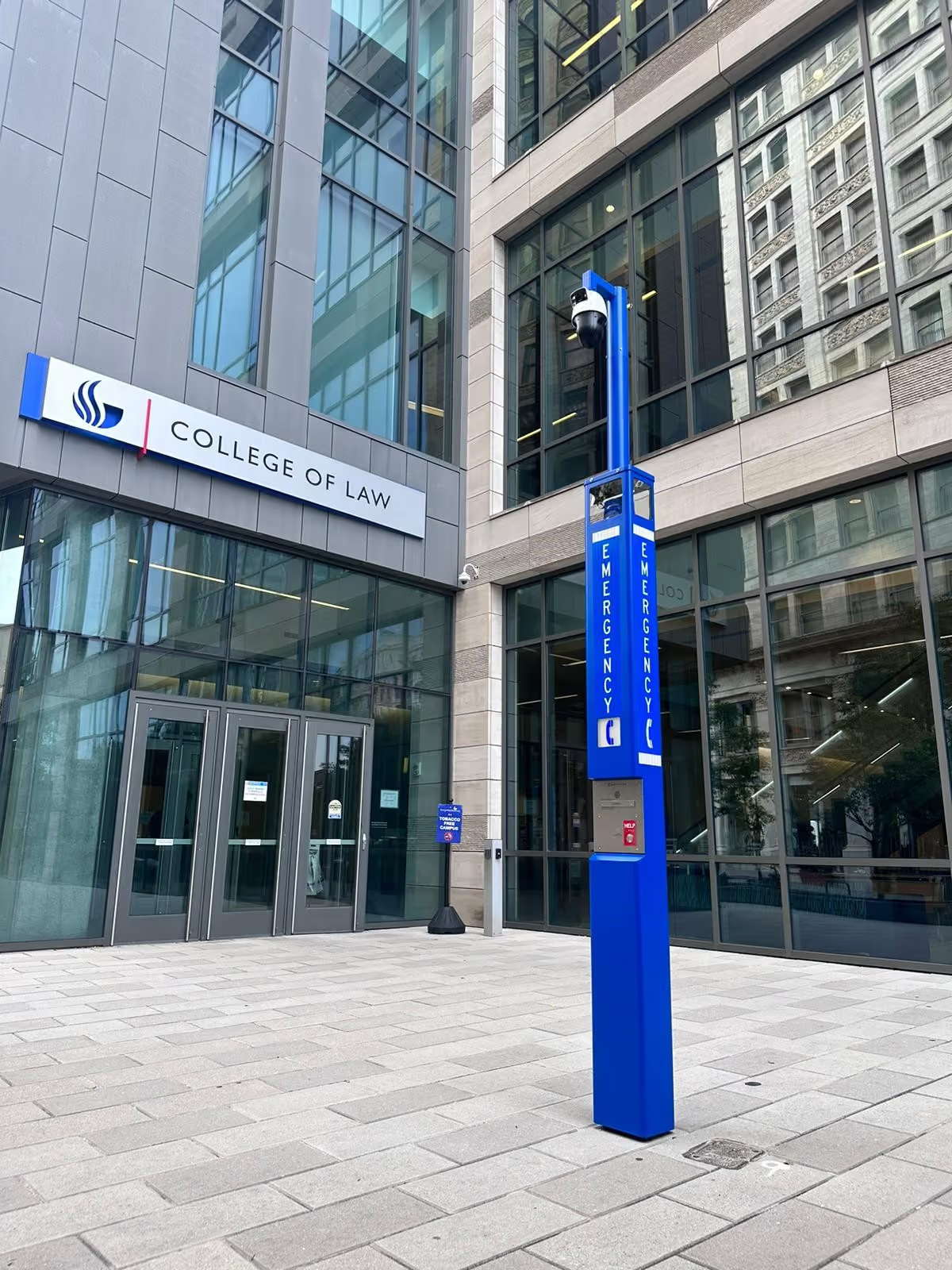
A blue light emergency tower is a solar or AC powered call station, marked with a flashing blue light and safety signage, that connects a person directly to 911, campus police, or a monitoring center by pressing a single button. Campuses, hospitals, parking structures, and cities install them in outdoor and public areas to shorten emergency response time and give people a visible, always-on way to call for help.
Also called an emergency call box, emergency intercom system, or emergency communication tower depending on the mounting style and features.
Blue Light Emergency Towers, Built for the Wireless Future.
TS&L’s Blue Light Emergency Towers give campuses, municipalities, healthcare facilities, and public spaces instant, one-touch access to security and emergency responders. In many applications, our towers can be deployed fully wireless and solar-powered, eliminating trenching and saving tens of thousands of dollars. When local power is available, we can use it. Cellular-connected and self-monitored 24/7, our towers deliver smarter deployment, faster response, and real-time system visibility through a single live dashboard. Demand More from Your Emergency Tower Solution.


Maintain a safer campus with emergency call boxes and towers that are monitored, online, and ready 24/7.


Give visitors peace of mind in remote areas with wireless, solar-powered emergency towers that need no trenching or nearby power.


Improve safety in isolated or low-light areas with instantly reachable call points and high-visibility lighting.


Give staff, patients, and visitors fast access to help across parking areas, entrances, and walkways, backed by device monitoring that runs around the clock.


Deploy large networks of emergency communication towers and monitor all of them in real time from one dashboard.


Improve safety at bus stops, rail platforms, and transit hubs with emergency call boxes that never go offline unnoticed.

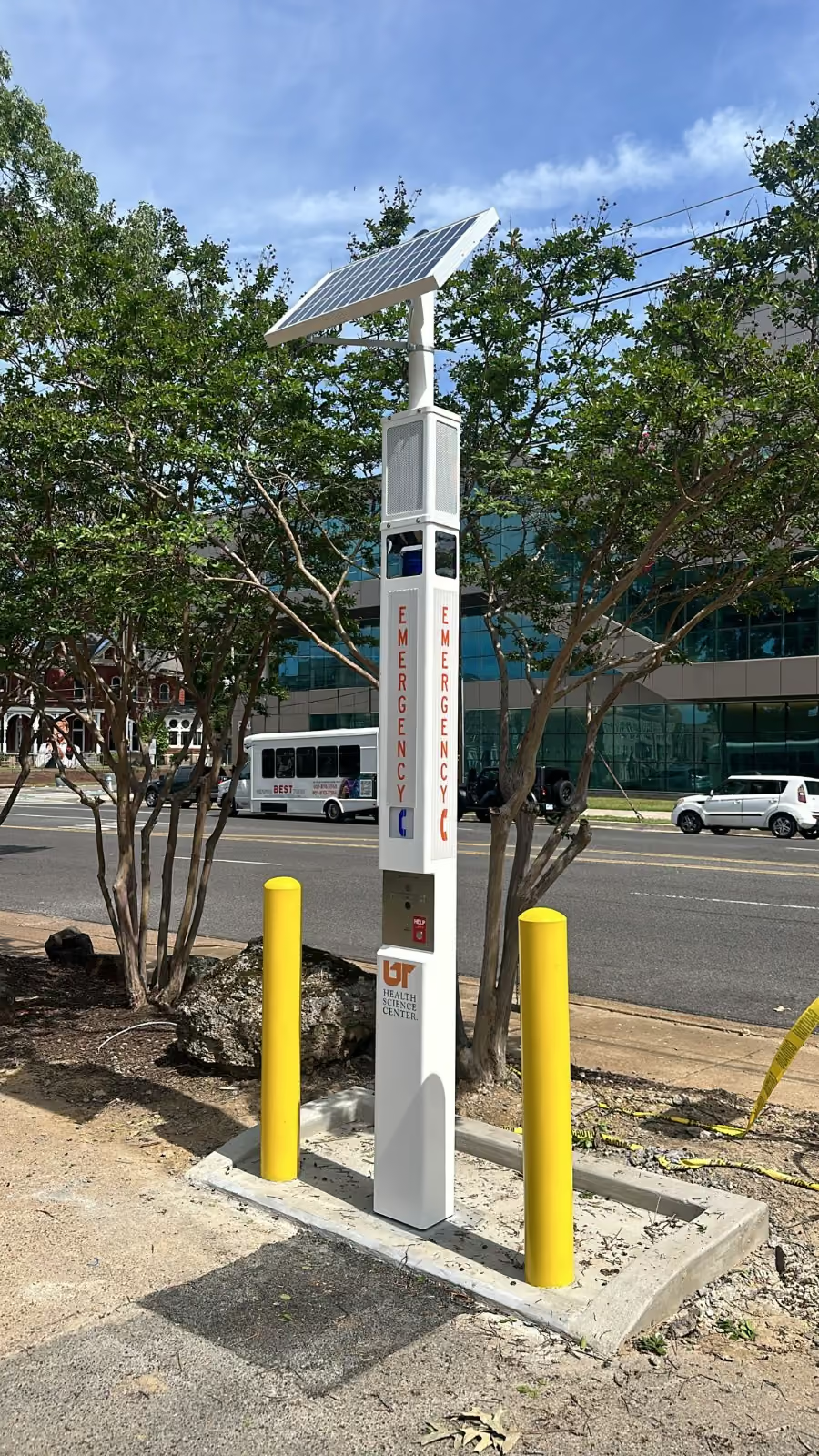

Upgraded to advanced blue light emergency towers for improved campus safety
Faster, more reliable two-way communication with campus responders
Built to withstand harsh Tennessee climates, including snow, heat, and heavy rain
Deployed 100+ emergency towers across 6 campuses in Georgia
All towers integrated into one platform allowing real time view of all installations
Strengthened safety for students, faculty, and visitors in an urban environment
90% Improved emergency response times with a highly visible communication network
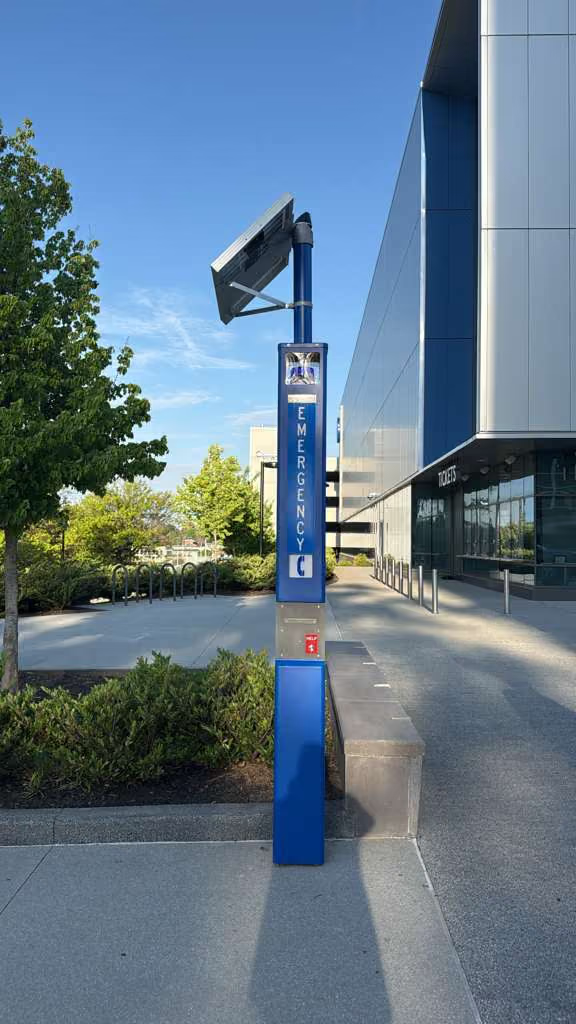
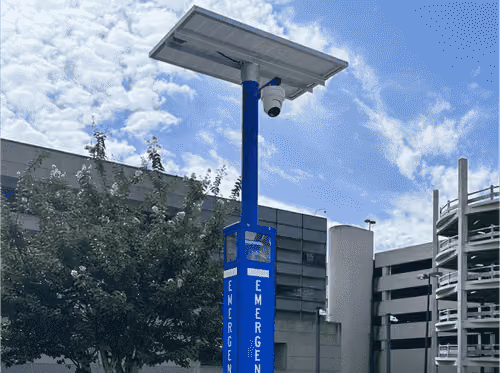


Upgraded with all-new cellular electronics, 10-day battery backup, and real-time monitoring.
Eliminates daily manual tower checks by giving campus staff live system visibility and automated alerts.
Modernized 215 towers across Auburn University with a more reliable, easier-to-manage emergency communication system.
Every campus, hospital, or municipality has a different mix of open space, existing power access, and budget. Here is how to think through the decision.

Retrofit when the physical tower structure is sound but the electronics, lighting, or communication module are outdated.
Replace when the structure itself is damaged, undersized, or no longer meets current visibility and ADA standards.
Most university-wide modernization projects mix both, some towers retrofitted, others replaced, based on a site-by-site inspection.

Line-of-sight spacing: towers should typically be visible from one another or from any point along a walkway, commonly 200 to 400 feet apart depending on lighting and sightlines.
Prioritize parking structures, remote lot perimeters, transit stops, and walkway intersections first.
Final spacing should be confirmed with a site walk; TS&L includes a placement assessment as part of every quote.
A single solar tower installation typically takes less than a day once the site is prepped. Multi-tower campus deployments (50 to 200+ units) are phased over weeks to months depending on scope, with TS&L handling site surveys, permitting coordination, and installation crews.


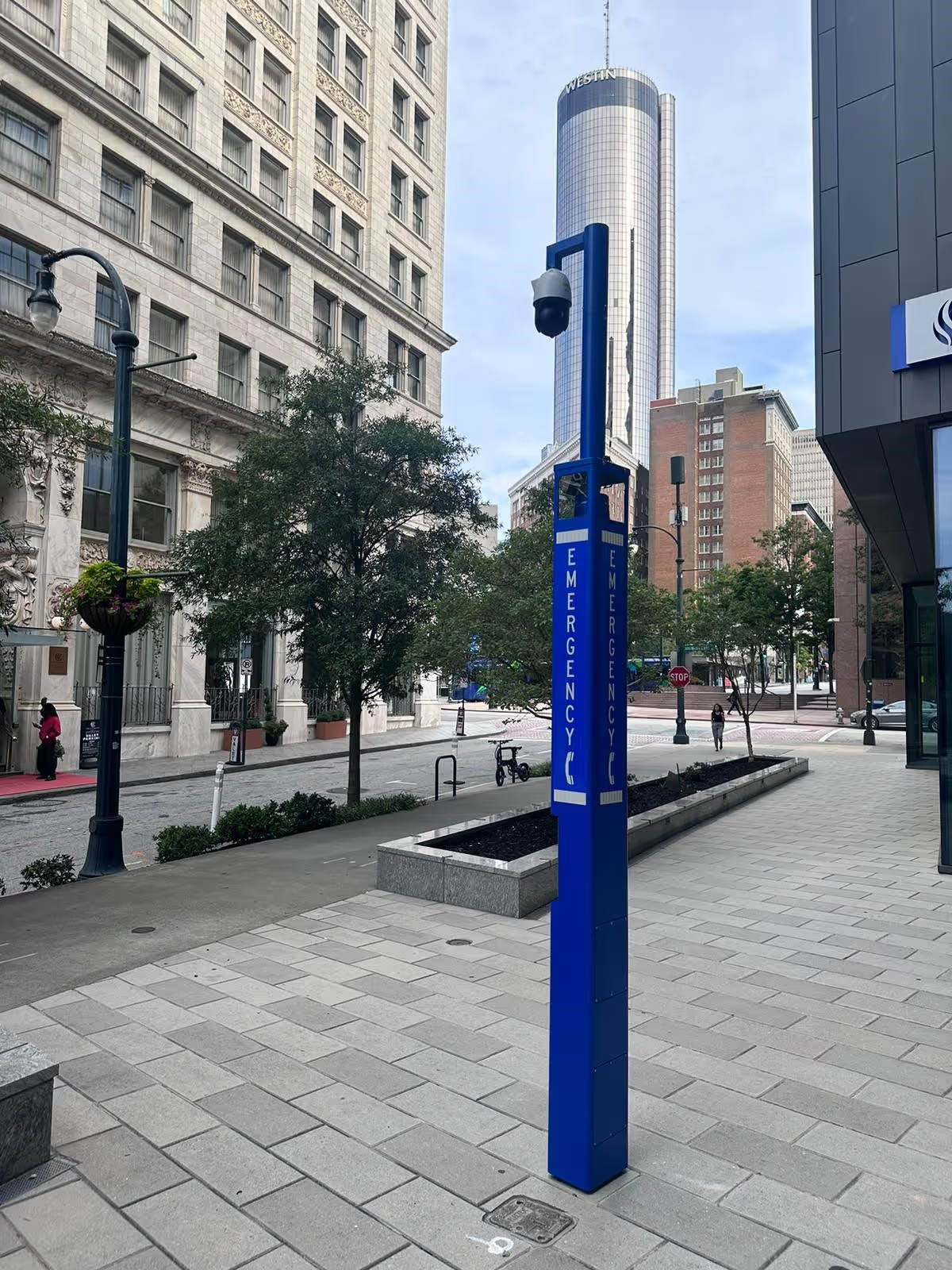


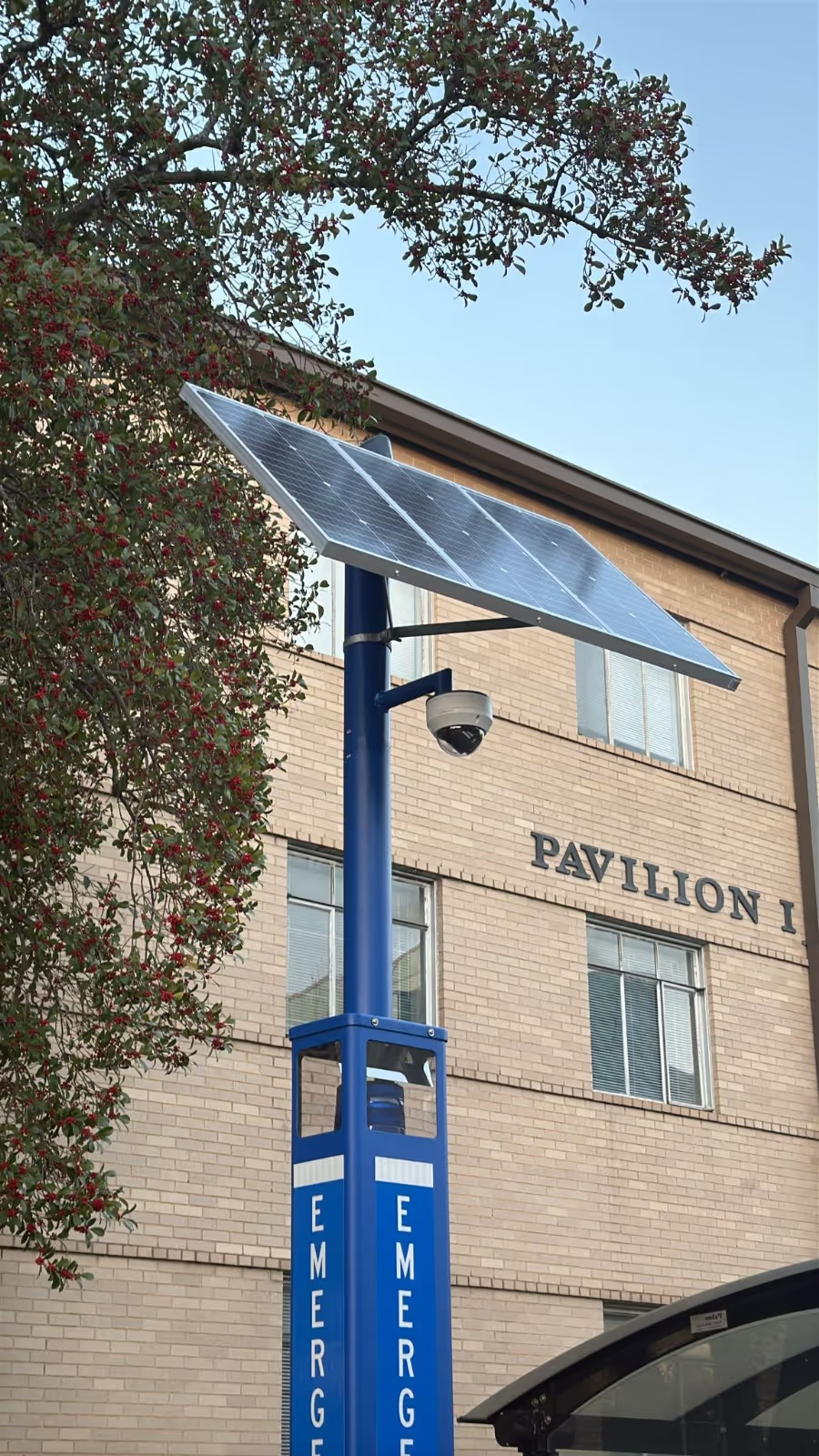

Once your emergency towers, call boxes, or intercom system are installed, TS&L stays on as the team responsible for keeping them working.
TS&L runs installation, maintenance, and repair services for emergency communication towers across the US, working directly with universities, colleges, city parks, municipal buildings, parking facilities, and government sites. A regional technician network means onsite support does not wait on a national queue.
connectivity and dispatch testing, battery and solar panel performance checks, strobe and siren function tests, and a structural check of the pole, mount, and enclosure. Any tower that fails a check triggers a same-day alert through the monitoring portal, not just a note on a paper log.
Bring older towers, call boxes, and intercom stations up to today's standards with TS&L's modernization kits. We upgrade legacy systems with:

New electronics & communication modules
Self-monitoring & automated health alerts
New LED lighting & strobes
Enhanced visibility signage
Solar or hybrid power systems
Vandal-resistant components
Modernization extends the life of your existing infrastructure and adds monitoring and communication features that most manufacturers don't offer as a retrofit.
Contact Us

Partner with TS&L
Let’s Build Safer, Smarter Communities Together
We’re more than a vendor. We’re your partner in public safety and infrastructure innovation. Ready to see how our solutions can serve your community?
Reach out to us anytime for product inquiries, technical guidance, or custom solutions. Whether you prefer email or an in-person visit, our team is always ready to assist you with reliable and timely support.

Revolutionized Traffic Management and Service of Safety Solutions in the United States


