
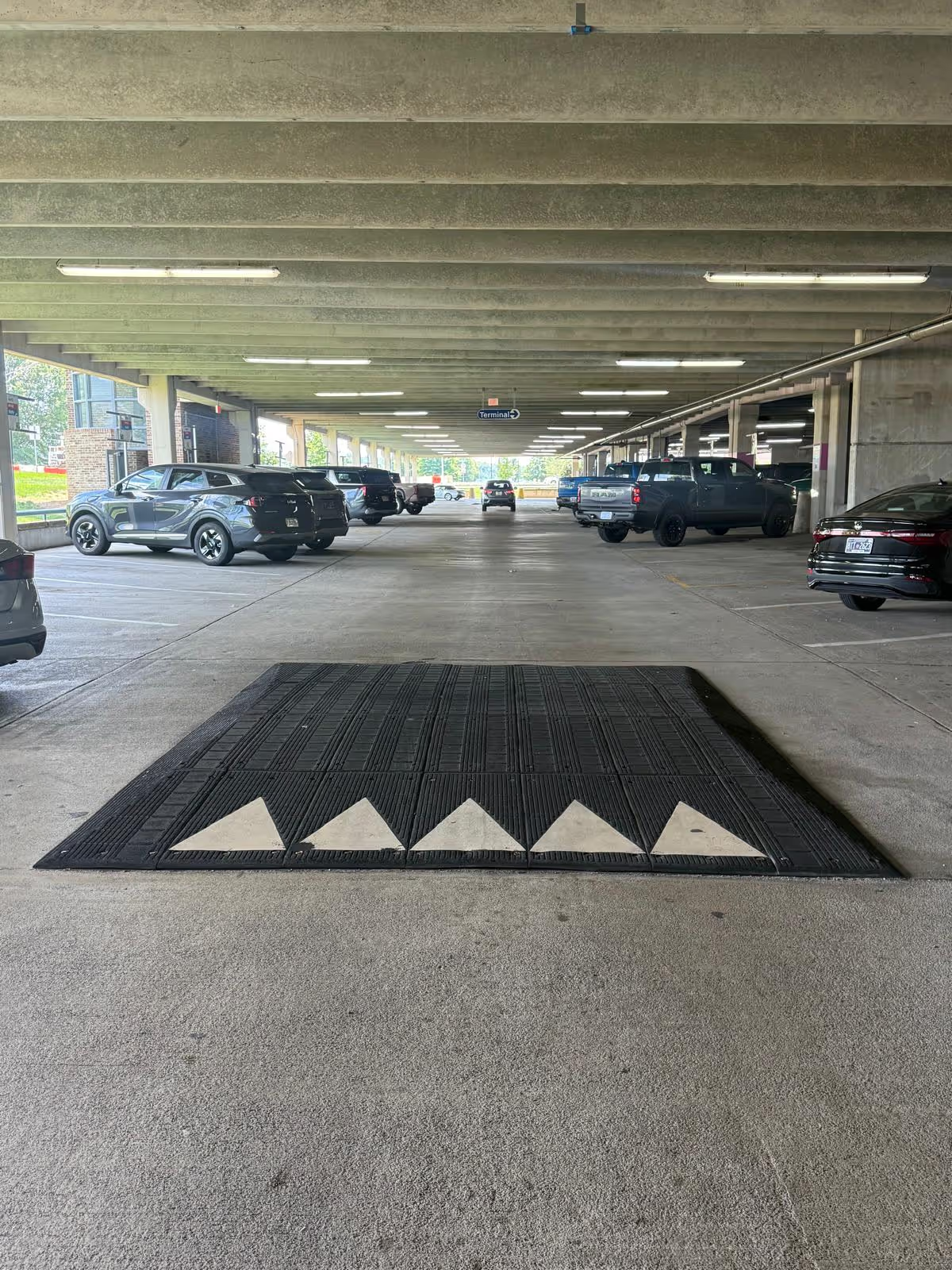
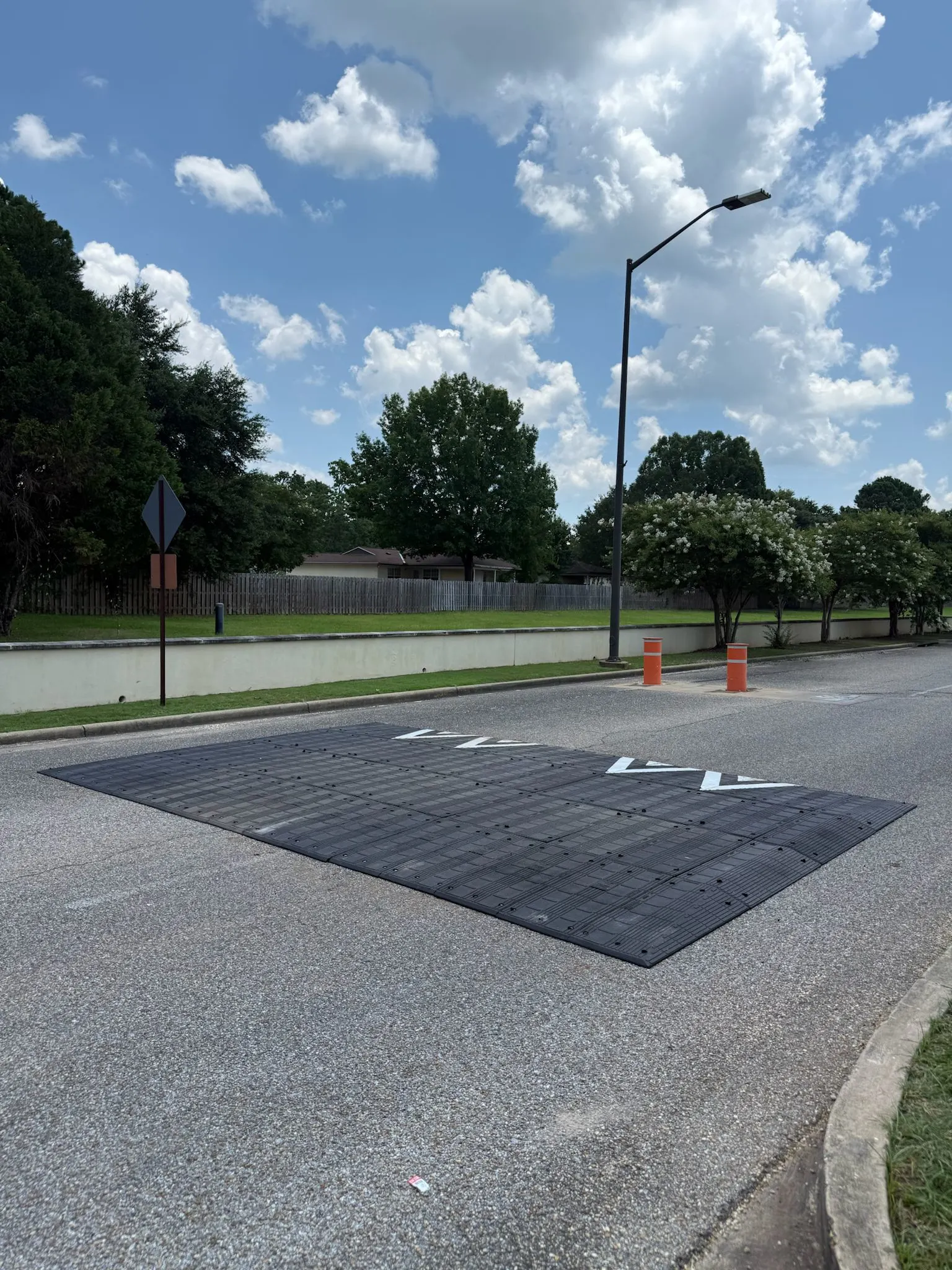
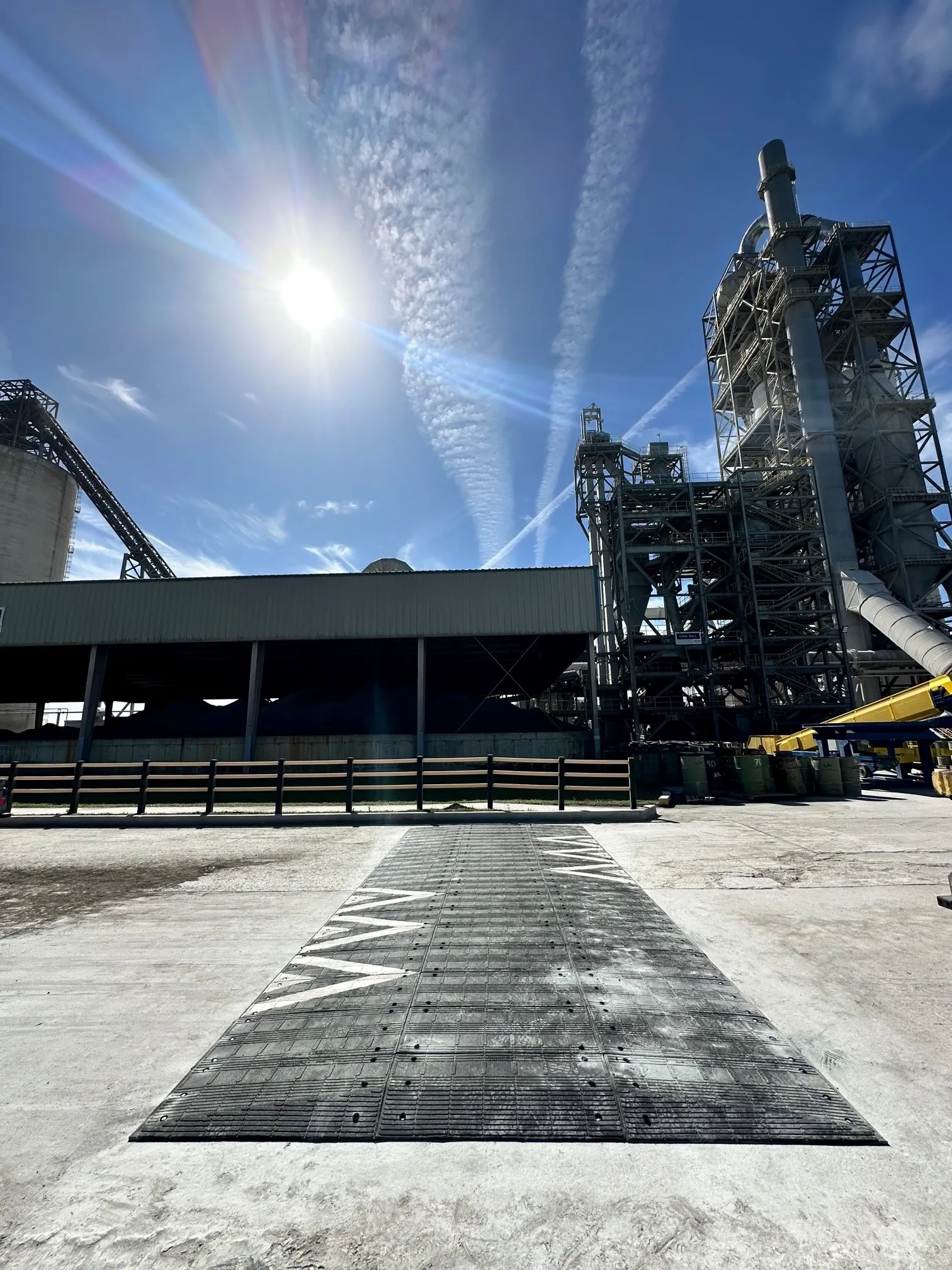
A rubber speed table is a flat-topped traffic calming device with a top surface long enough for the entire wheelbase of a passenger car to rest on at once. That flat top lets cars travel slightly faster than they would over a speed hump, slowing vehicles to an estimated 20 to 25 mph rather than bringing them to a rounded, more abrupt slowdown, making a speed table a common fit for roads with typical residential speed limits.
TS&L's rubber speed tables are 3 inches high and most often installed in 14 or 21 foot lengths, though every speed table can be customized to any length and to the width of your road in 18 inch increments.
Get Quote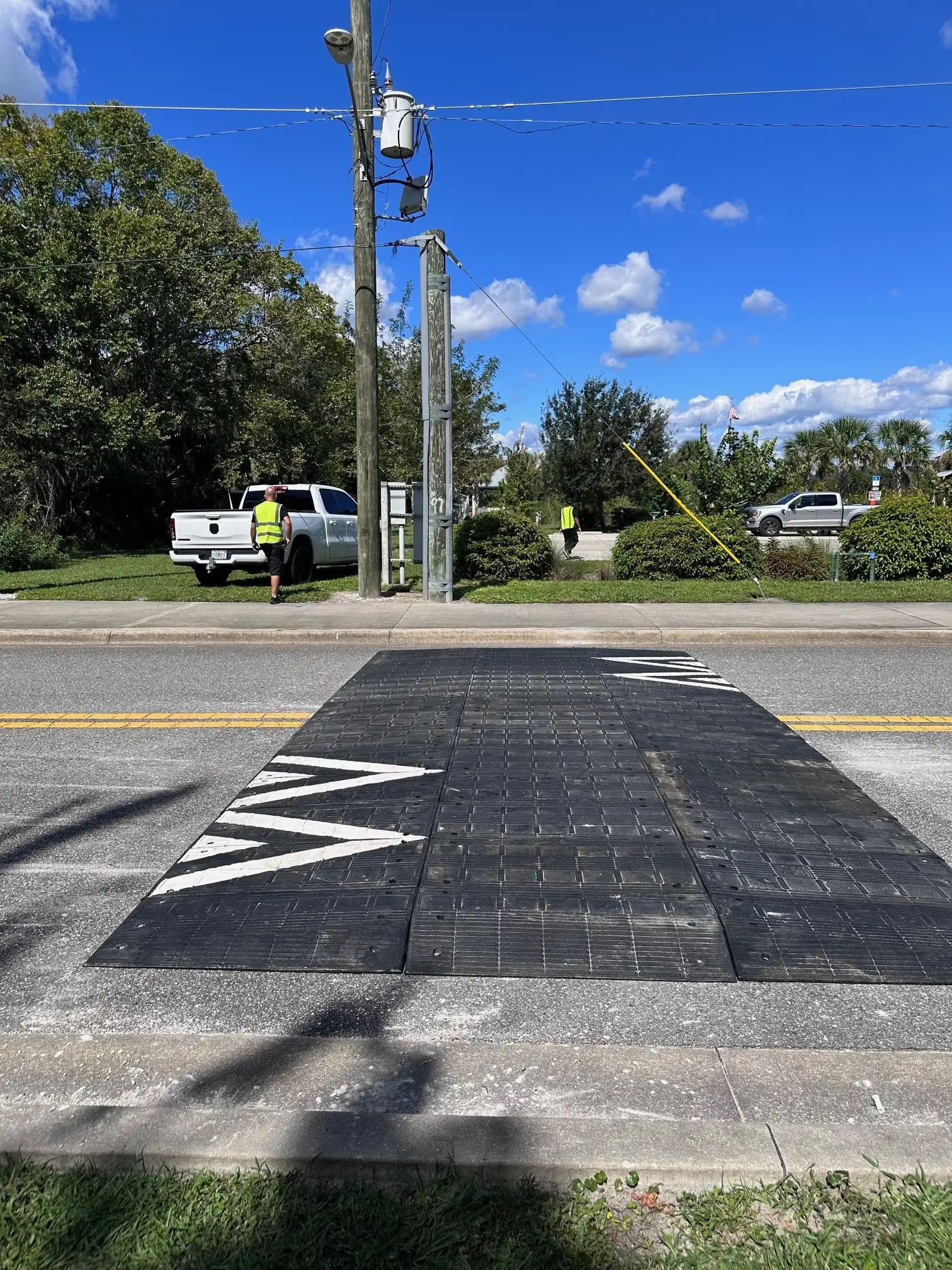
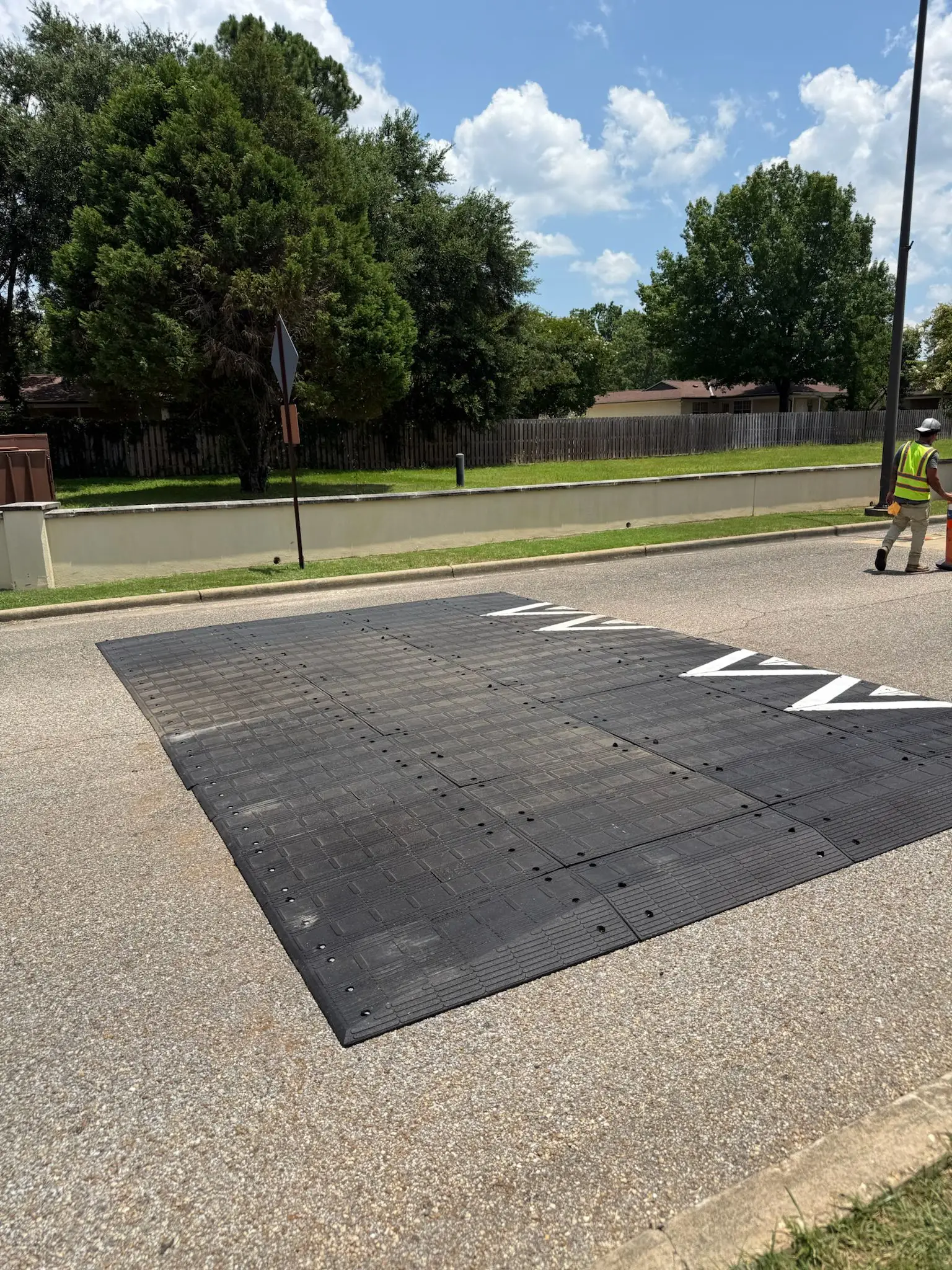
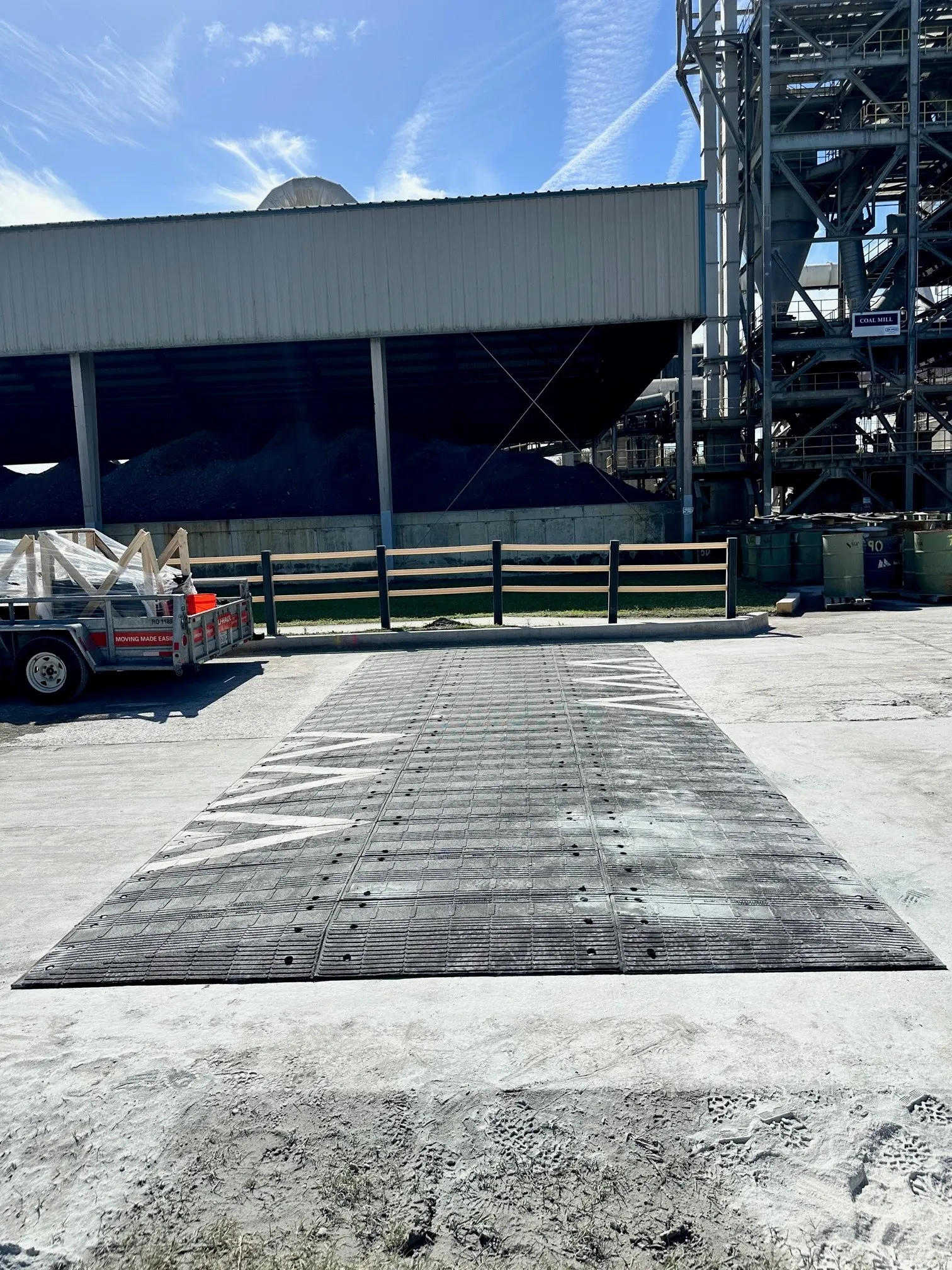
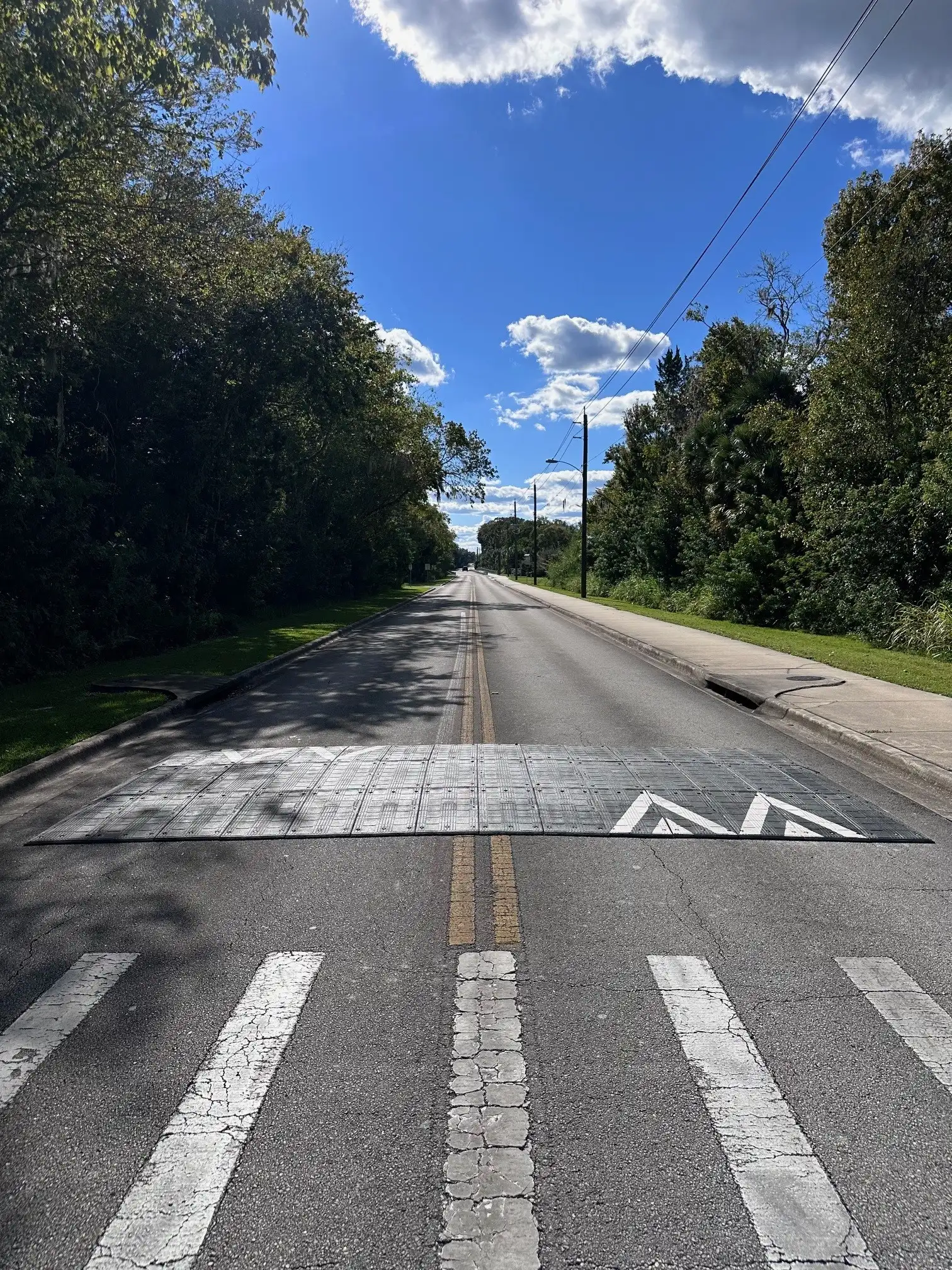
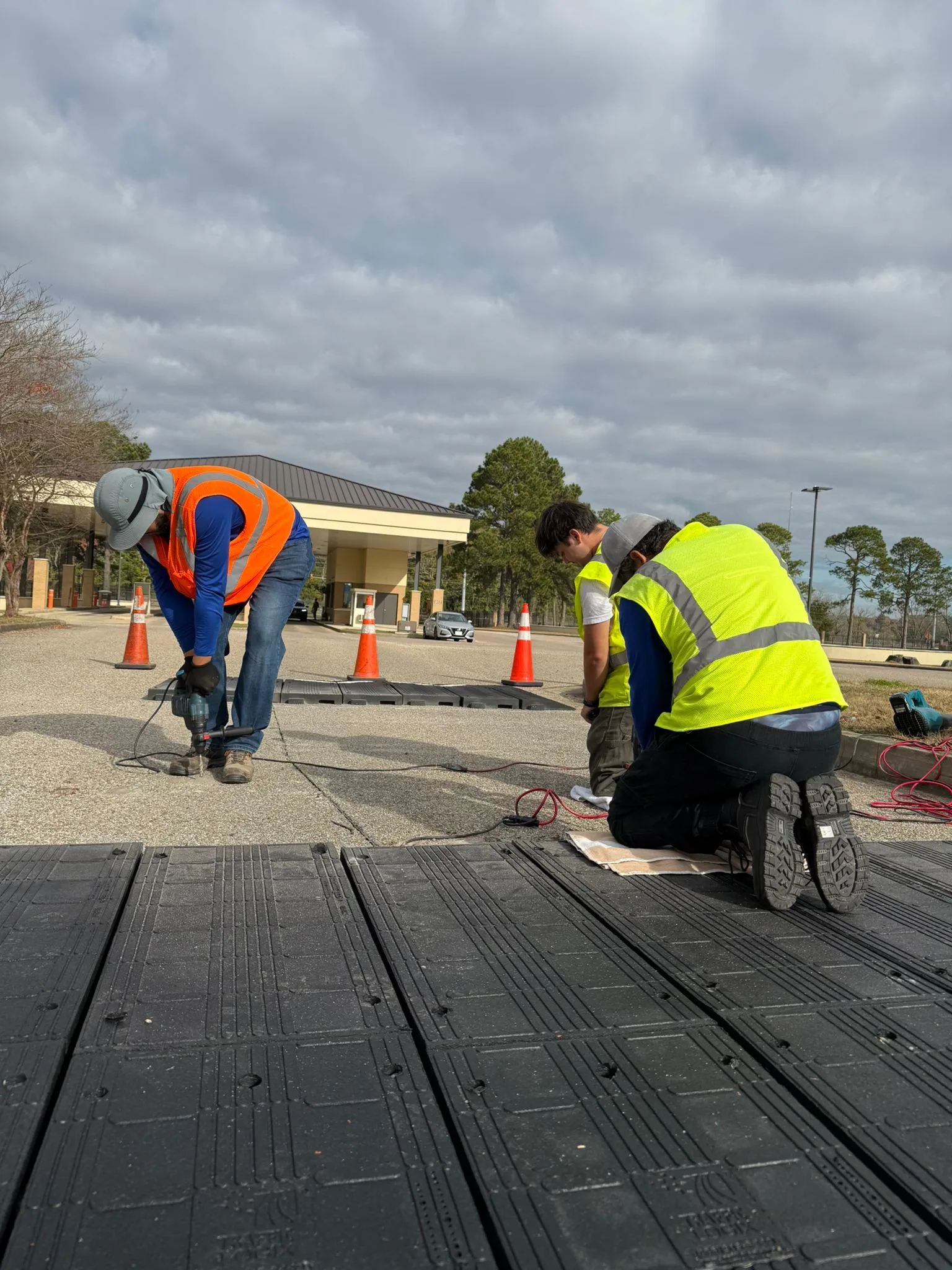
TS&L's rubber speed tables combine proven traffic-calming performance with modular flexibility and long-term durability. Engineered to slow speeding vehicles without restricting emergency access, they offer a sustainable, highly visible, easy-to-install speed table solution for modern traffic management.
Get A Quote
Slows speeding vehicles while allowing compliant drivers and emergency vehicles to maintain a smooth, safe ride.

Interlocking design keeps individual units firmly connected and securely positioned on the roadway.

Modular units allow custom length, width, tape color, and surface markings to fit any roadway layout.

Made from 100% recycled rubber, supporting sustainability goals and qualifying for many municipal grants.

Backed by a two-year warranty on speed cushion components when installed per manufacturer guidelines.

Heavy-duty yet removable design prevents road damage and avoids costly full replacements.

Embedded yellow or white reflective tape ensures excellent visibility in all lighting conditions.

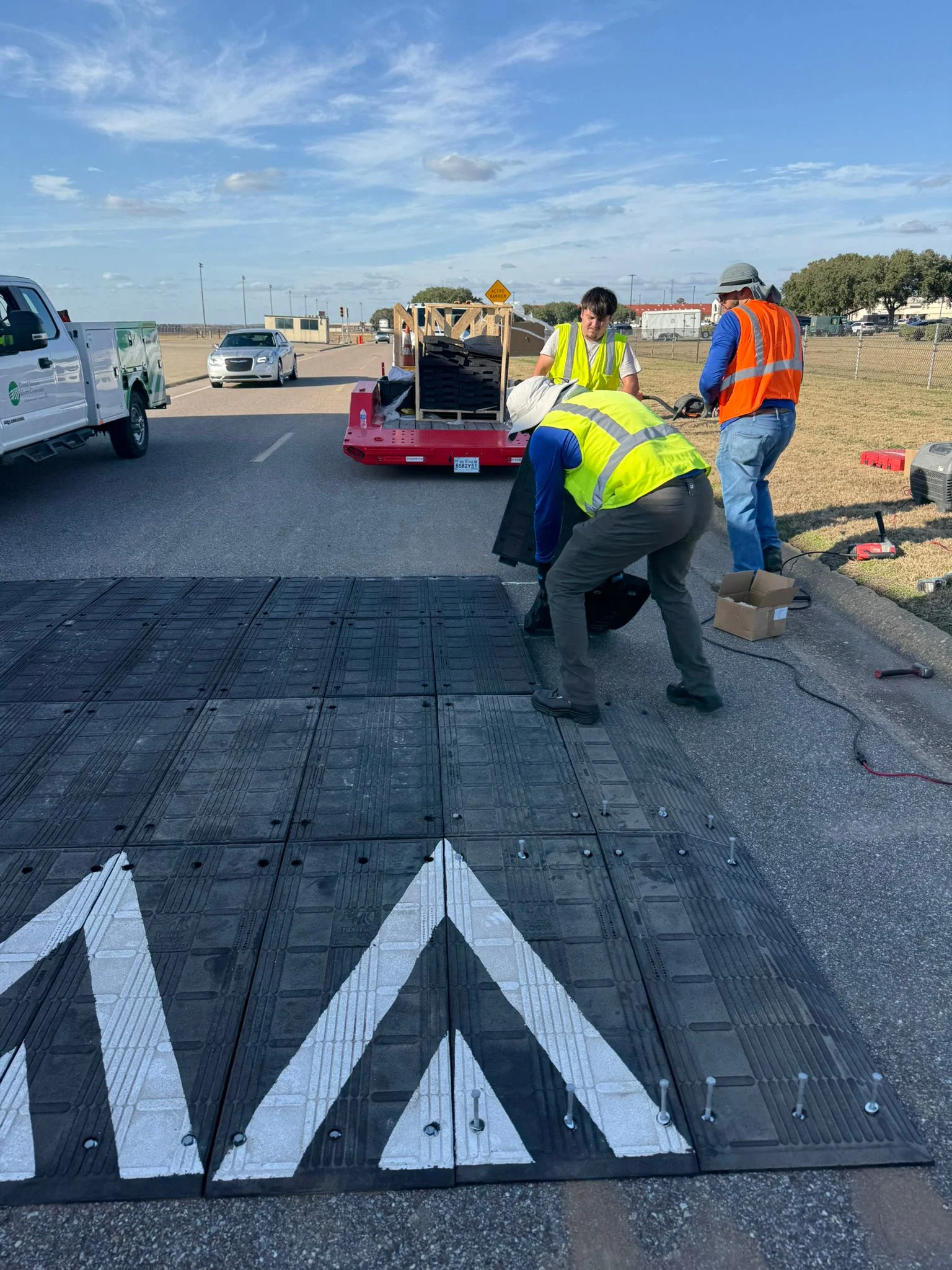
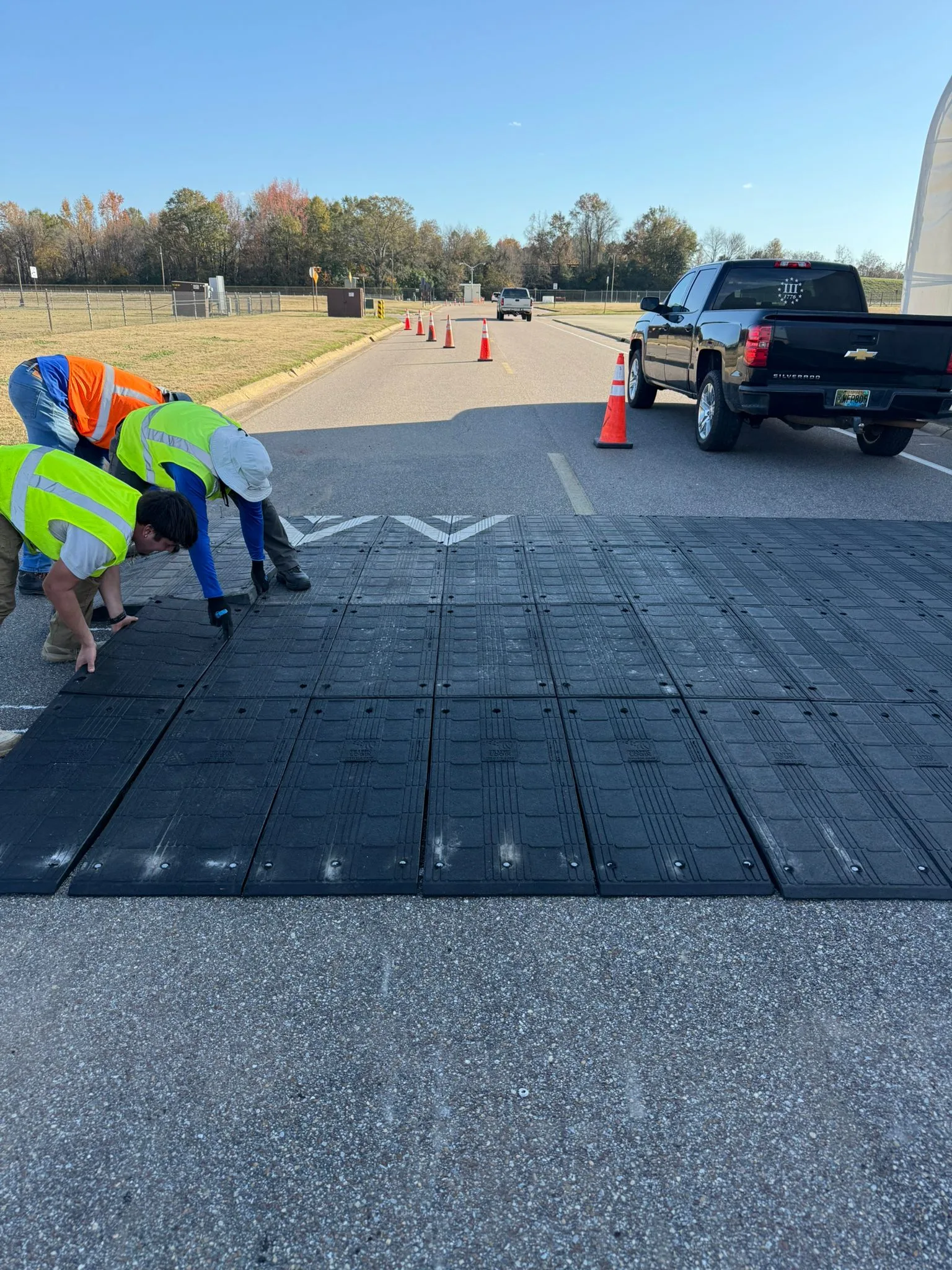
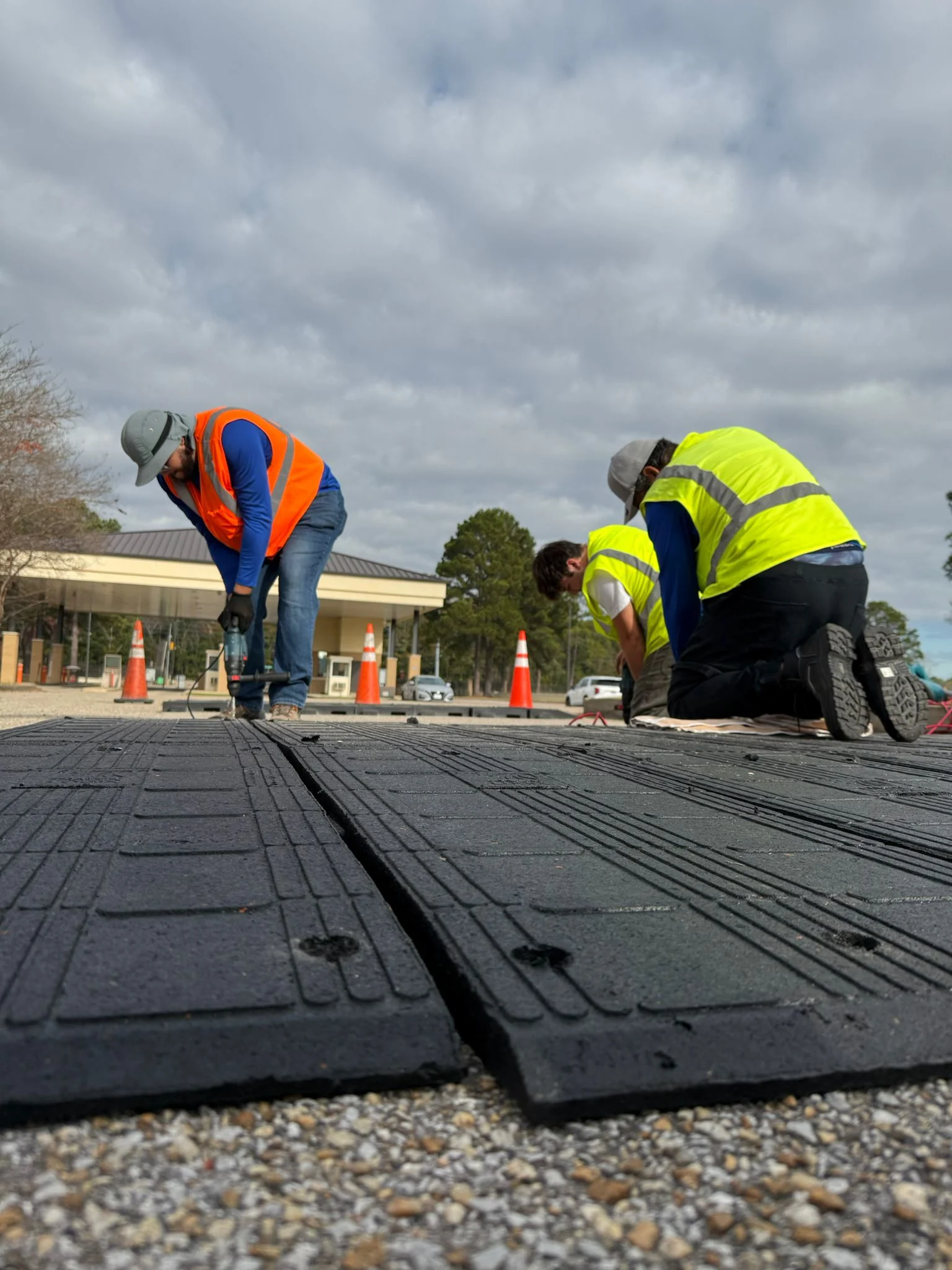
Quick assembly using anchors and bolts—no road closures required, keeping traffic moving.
At TS&L, we take pride in our commitment to delivering prompt and reliable service. That’s why we guarantee to be onsite within 24 hours of your request, ensuring your needs are met quickly and efficiently. Whether it’s an emergency or routine maintenance, our team is available 24/7, 365 days a year. No matter the time, day, or circumstance, you can trust TS&L to provide the professional support you need, when you need it most. Your satisfaction and the continued performance of your lighting and transportation solutions are our top priorities.
Get Quote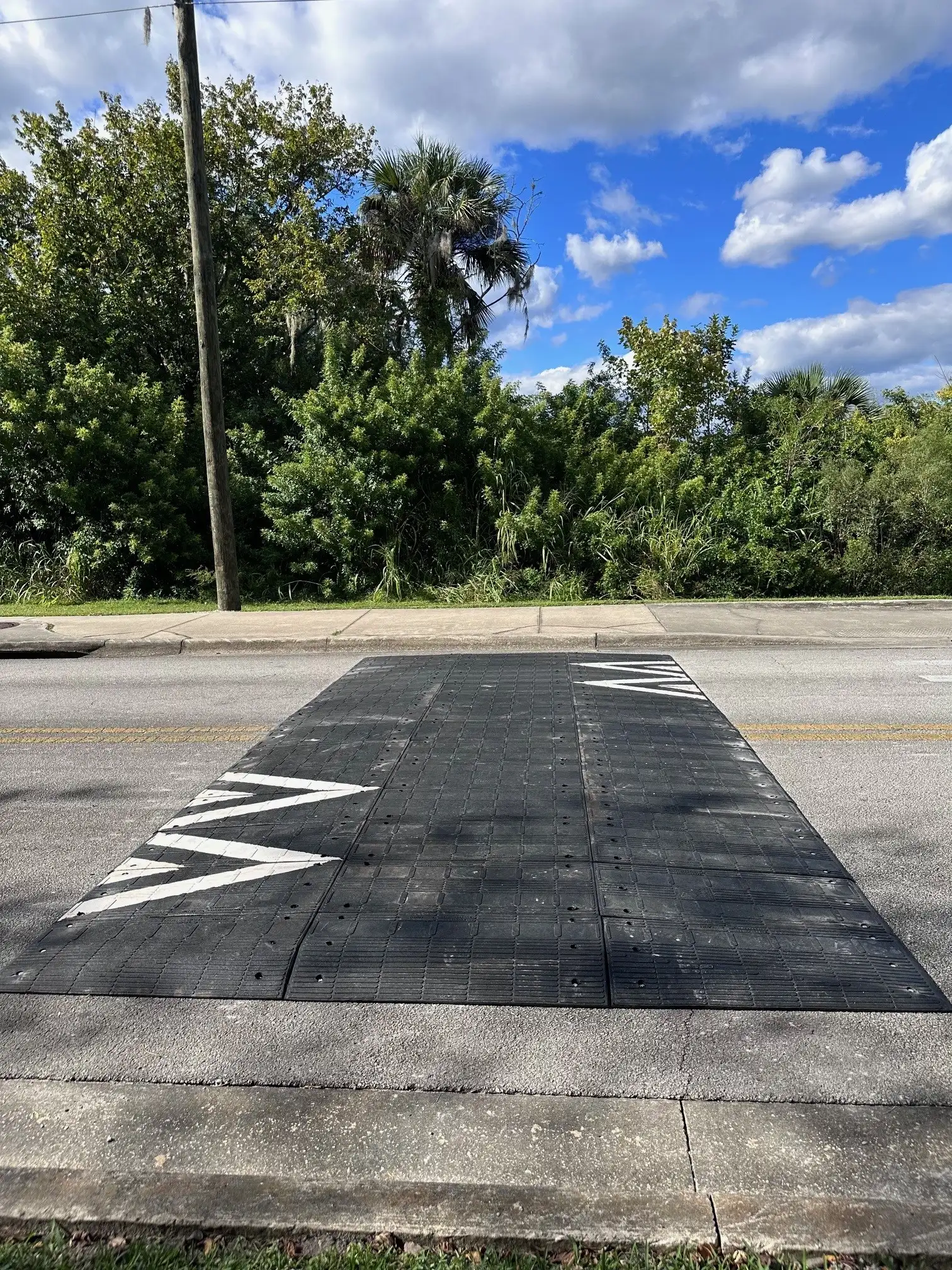
A speed table is a flat-topped traffic calming device, wider than a speed hump, built so a vehicle's full wheelbase rests on top as it crosses, producing a gentler, more gradual slowdown than a rounded speed hump or an abrupt speed bump.
If you’re involved in traffic calming for a city, private community, or corporate campus, you probably already know that speed bumps are abrupt, aggressive devices that slow cars almost to a halt. They’re appropriate in parking lots or driveways but are not traffic calming tools for residential streets.
But speed humps and speed tables both are. So why choose one over another?
Speed humps are rounded in shape. They curve up and then curve back down, without ever having a flat surface on top. Speed tables, on the other hand, are flat-topped. Depending on the length of the speed table, the entire wheelbase of a car can often rest on top of it. What practical difference does that design make though?
The less significant speed reduction is also a consideration for cities that don’t want abrupt traffic calming devices that will significantly impede emergency vehicles. While speed tables don’t allow ambulances to pass without slowing, they do offer an option that slows them less drastically. This can also be helpful on bus routes or on any roadways where cities want to slow cars down to improve safety but also want to keep the flow of traffic smooth and constant.
The first question you want to consider when deciding between speed humps and speed tables is what the speed limit is on your roads. Speed humps, while far less aggressive than abrupt speed bumps, still slow cars more significantly than speed tables do. Speed tables are ideal for streets with typical residential speed limits of around 25 mph. They help to keep traffic flowing but at a safer pace. Many cities prefer speed tables over speed humps for the calmer, smoother experience they offer drivers. Other cities may prefer the more aggressive approach that speed humps offer, particularly on streets with lower speed limits.
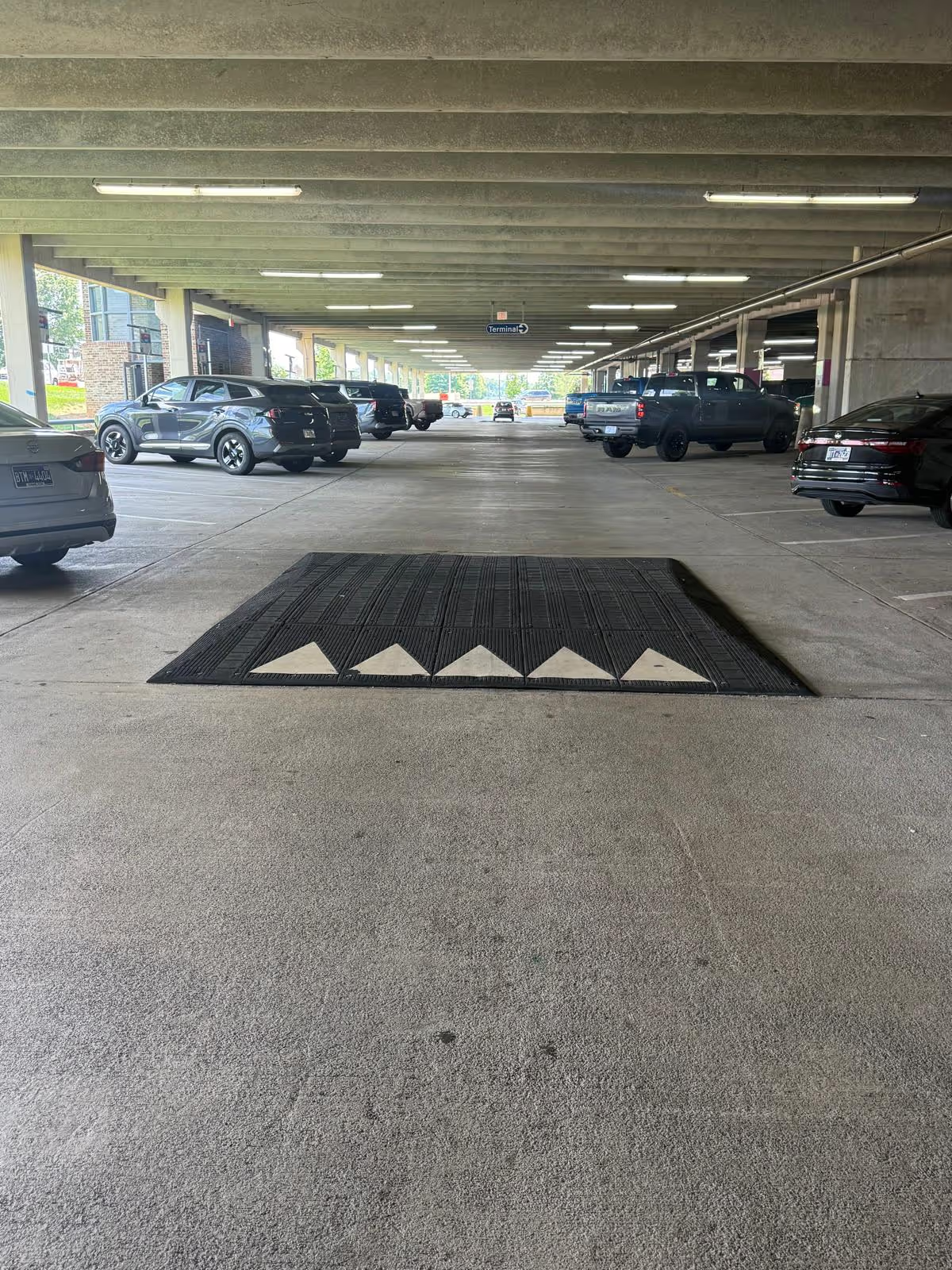
This technical data sheet provides detailed specifications for the speed tables, including dimensions, materials, weight, installation requirements, and performance characteristics. Designed for municipal and commercial applications, the data ensures proper selection, compliance, and long-term reliability. Use this information to support planning, procurement, and installation decisions.


Revolutionized Traffic Management and Service of Safety Solutions in the United States
.png)

.png)