lane separators

Rubber Calming

Lane Separators

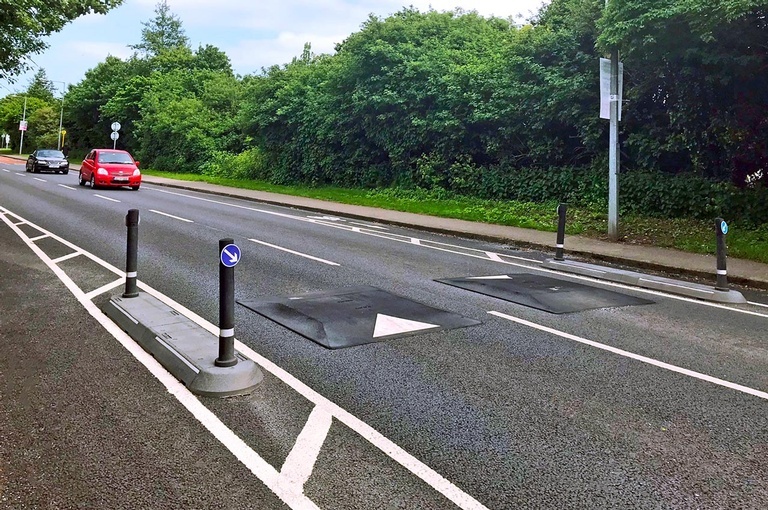
TS&L's lane separators are a versatile trio of traffic lane dividers built to fit a wide range of applications, from continuous or intermittent cycle lane segregation to satellite islands and pinch points that need a physical, visible lane divider.

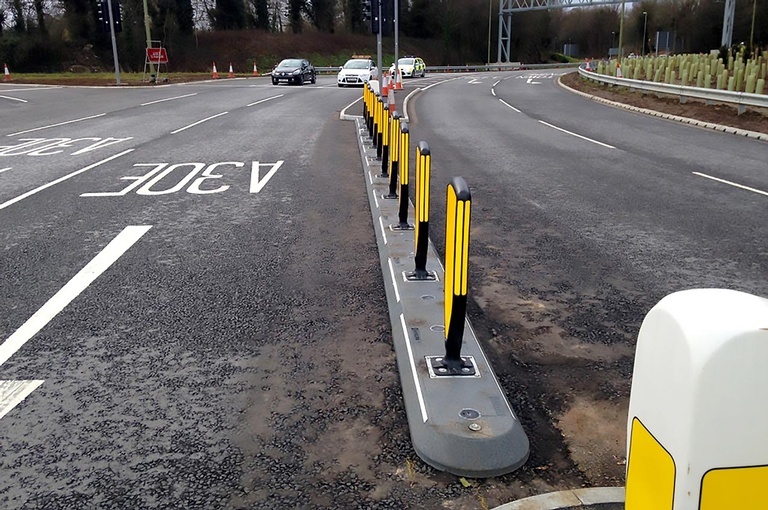
Each lane separator unit shares the same length, width, and height, so multiple units combine into long, consistent runs. Because they're surface-mounted and require no excavation, a lane separator installation is quick, with minimal disruption to traffic.
TS&L Rubber Lane Separators

Features

  • No excavation required, our lane separators are surface fixed and bolted directly to the road
  •  Fast lane separator installation with minimal traffic disruption
  • Removable and relocatable if a lane divider layout needs to change
  • Moulded units install in long, continuous sections for full corridor lane separation
  • Strong, durable, and flexible construction built for daily traffic loads
  • Block pave surface effect available to order
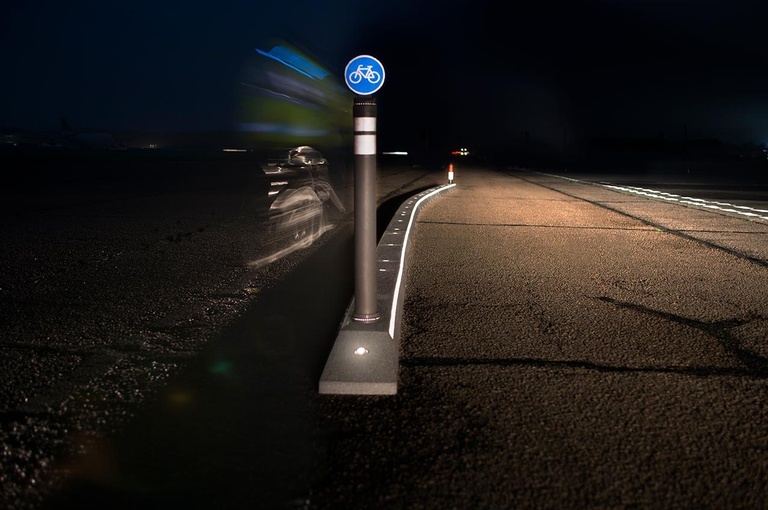
  • Optional reflective glass eyes available for improved nighttime visibility
Contact Us Today

TS&L guarantee

At TS&L, we take pride in our commitment to delivering prompt and reliable service. That’s why we guarantee to be onsite within 24 hours of your request, ensuring your needs are met quickly and efficiently. Whether it’s an emergency or routine maintenance, our team is available 24/7, 365 days a year. No matter the time, day, or circumstance, you can trust TS&L to provide the professional support you need, when you need it most. Your satisfaction and the continued performance of your lighting and transportation solutions are our top priorities.

What Are Lane Separators & Where Are They Used?

What Are Lane Separators?

A lane separator is a low-profile rubber unit bolted directly to the road surface to create a firm, visible dividing line between lanes, without the cost or disruption of pouring a concrete median. Each unit connects to the next to form a continuous run, so a single product line can be configured as a short pinch point or extended into a long corridor divider.

Common Applications

● Separating a dedicated bike lane or cycle track from vehicle traffic
● Segregating a bus-only or HOV lane during peak hours
● Creating satellite islands and pinch points to slow or redirect traffic
● Channelizing traffic through construction zones or temporary detours
● Guiding turning movements at complex intersections
Lane Separators defination

Lane Separators vs. Concrete Curbs or Barriers

A poured concrete curb or barrier is permanent, expensive to install, and difficult to move if a lane configuration changes. A rubber lane separator delivers the same physical, visible lane division but installs in a fraction of the time, requires no excavation, and can be removed or relocated if traffic patterns shift, seasonal lane use changes, or a project moves to a new phase.

Technical Information

Height
Double Curve (LS01)
Single Curve (LS02)
Extension Unit (LS03)
Weight (KG)
95
100
105
Dimensions (mm)
L: 1500 W: 500
L: 1500 W: 500
L: 1500 W: 500
View PDF and Product Code

Frequently Ask Questions

What is a lane separator used for?

FAQ arrow
A lane separator creates a firm, visible line between traffic lanes, most often to protect a bike lane, separate an HOV or bus lane, form a pinch point to slow traffic, or channel vehicles through a construction zone or detour, without the cost of a permanent concrete curb.

How are lane separators installed?

FAQ arrow
Lane separators bolt directly to the road surface, no excavation required. Individual units connect end to end to form a continuous run, and a standard lane separator installation is typically completed within a day.

Can lane separators be removed or relocated?

FAQ arrow
Yes. Because they're surface-mounted rather than poured in place, lane separators can be unbolted and relocated if a lane configuration changes, a construction phase ends, or a seasonal traffic pattern shifts.

What's the difference between a lane separator and a lane divider?

FAQ arrow
The terms are generally used interchangeably in the industry, both describe a raised unit installed along a lane line to create a physical, visible barrier between lanes. TS&L's lane separators are available in single curve, double curve, and extension configurations to fit different corridor layouts.

Do lane separators work for bike lanes?

FAQ arrow
Yes, protecting a bike lane or cycle track from vehicle traffic is one of the most common uses for a lane separator, giving cyclists a physical buffer that a painted line alone doesn't provide.

What sizes do lane separators come in?

FAQ arrow
TS&L's lane separator units (Double Curve LS01, Single Curve LS02, and Extension Unit LS03) share the same 1500mm length and 500mm width, with weights ranging from 95 to 105 KG depending on the unit, so runs of any length can be built from a consistent set of components.

Are lane separators visible at night?

FAQ arrow
Yes. Standard units are available with a block pave surface effect, and optional reflective glass eyes can be added for improved night time visibility at pinch points and lane transitions.

Join 2,000+ subscribers

Subscribe to TS&L updates for the latest in traffic safety, smart solar lighting, and infrastructure solutions—designed to keep communities safer and more connected.
We care about your data in our privacy policy.
Thank you! Your submission has been received!
Oops! Something went wrong while submitting the form.
© 2026 TS&L. Privacy Policy  Terms & Conditions