
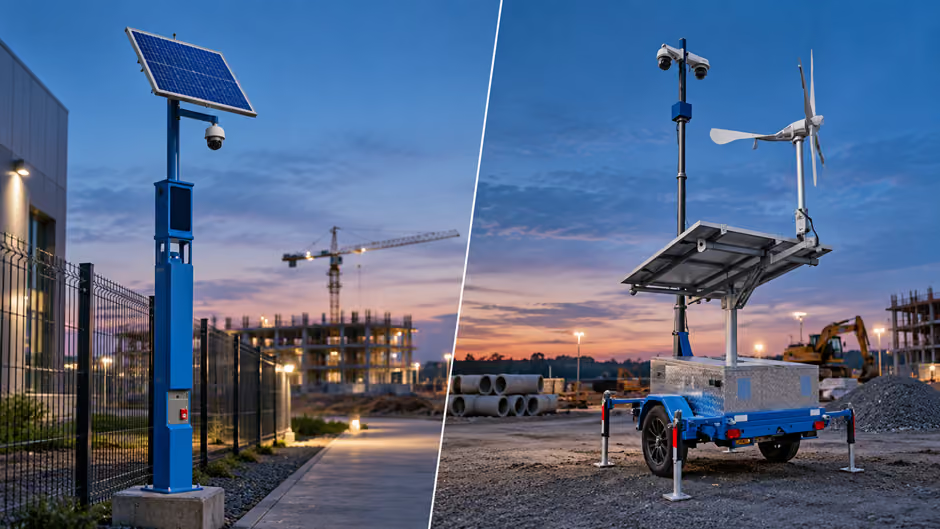
Construction equipment theft costs the U.S. industry between $300 million and $1 billion every year, according to estimates from the National Equipment Register and the National Insurance Crime Bureau, and fewer than one in four stolen machines is ever recovered. The camera system a site uses, and where it's placed, is often the difference between recovering that loss and becoming another statistic.
The short answer: if a site is temporary, remote, off-grid, or changes layout as a project progresses, a mobile security trailer is almost always the better fit. If a site is permanent, has stable power, and its layout won't change, a fixed camera system is usually the more cost-effective long-term choice. The rest of this guide breaks down why, with the numbers to back it up.
What Fixed Cameras Actually Are (and Aren't)
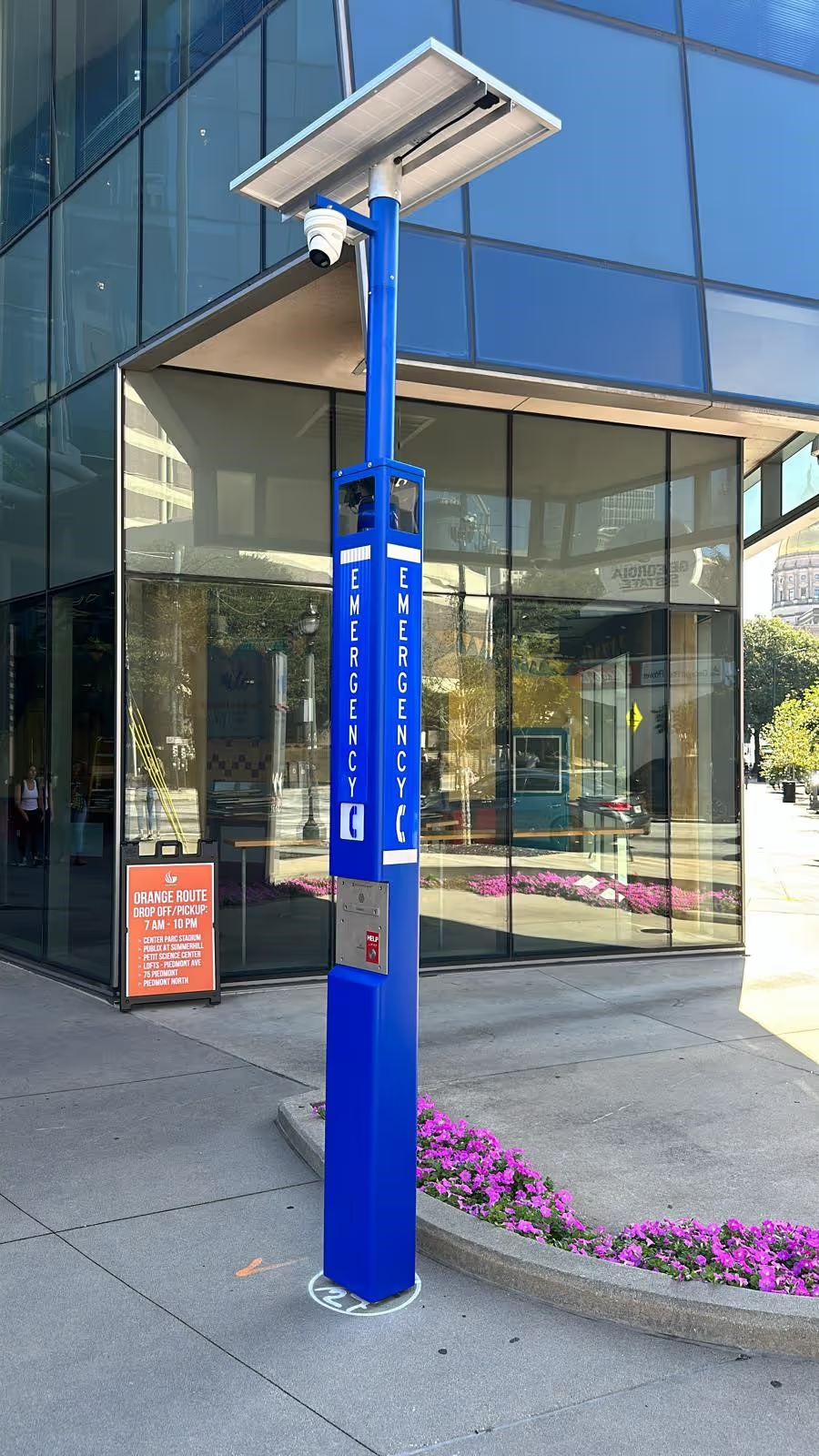
A fixed camera is permanently mounted to a structure, a wall, a ceiling plate, a utility pole, and draws power from the building's electrical system. Footage runs over a wired network or Wi-Fi, and the camera always looks at the same fixed point from where it was installed. TS&L's own Blue Light Wireless Camera Systems are one example of this category, built for permanent public safety installations.
That permanence is both the strength and the limit. On a completed facility with stable power, defined entry points, and a layout that isn't changing, a fixed camera is a solid, cost-effective investment once it's installed. On an active job site, where the building doesn't exist yet, there's no grid power to tap into, and the areas that need watching shift every few weeks, that same camera becomes a much harder sell. Fixed systems typically require trenching, wiring, and permitting before they capture a single frame, and on a site that will be active for 6 to 18 months before being handed over as a finished building, that infrastructure cost is often sunk, with the cameras ending up in the wrong position for the completed property anyway.
What Mobile Security Trailers Actually Are
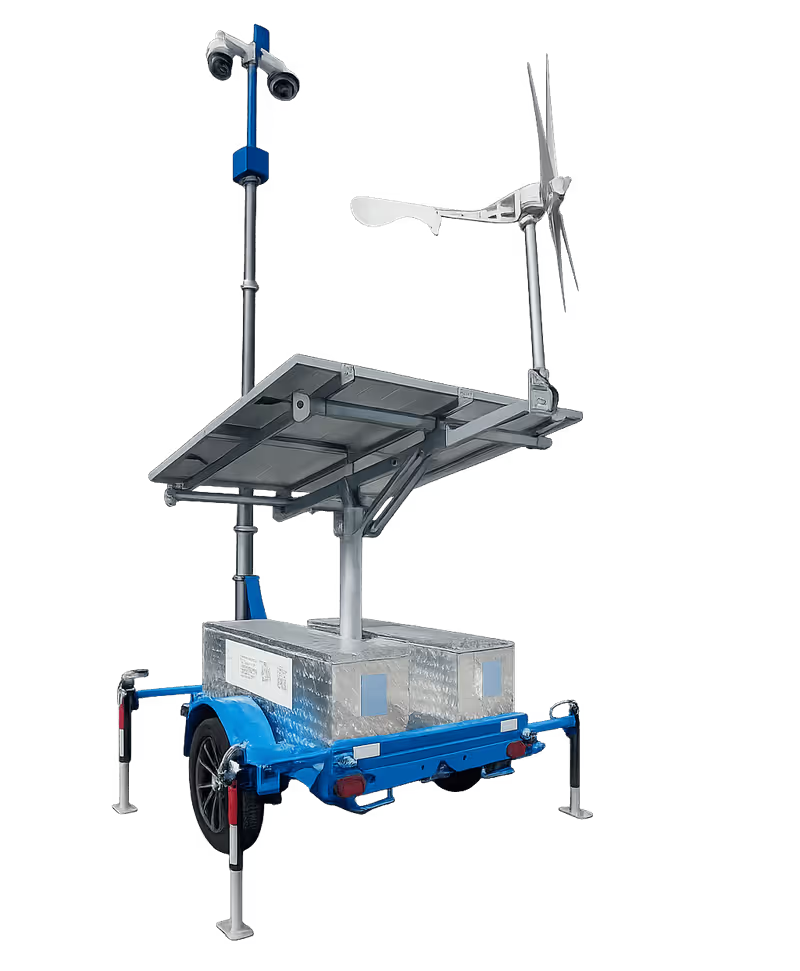
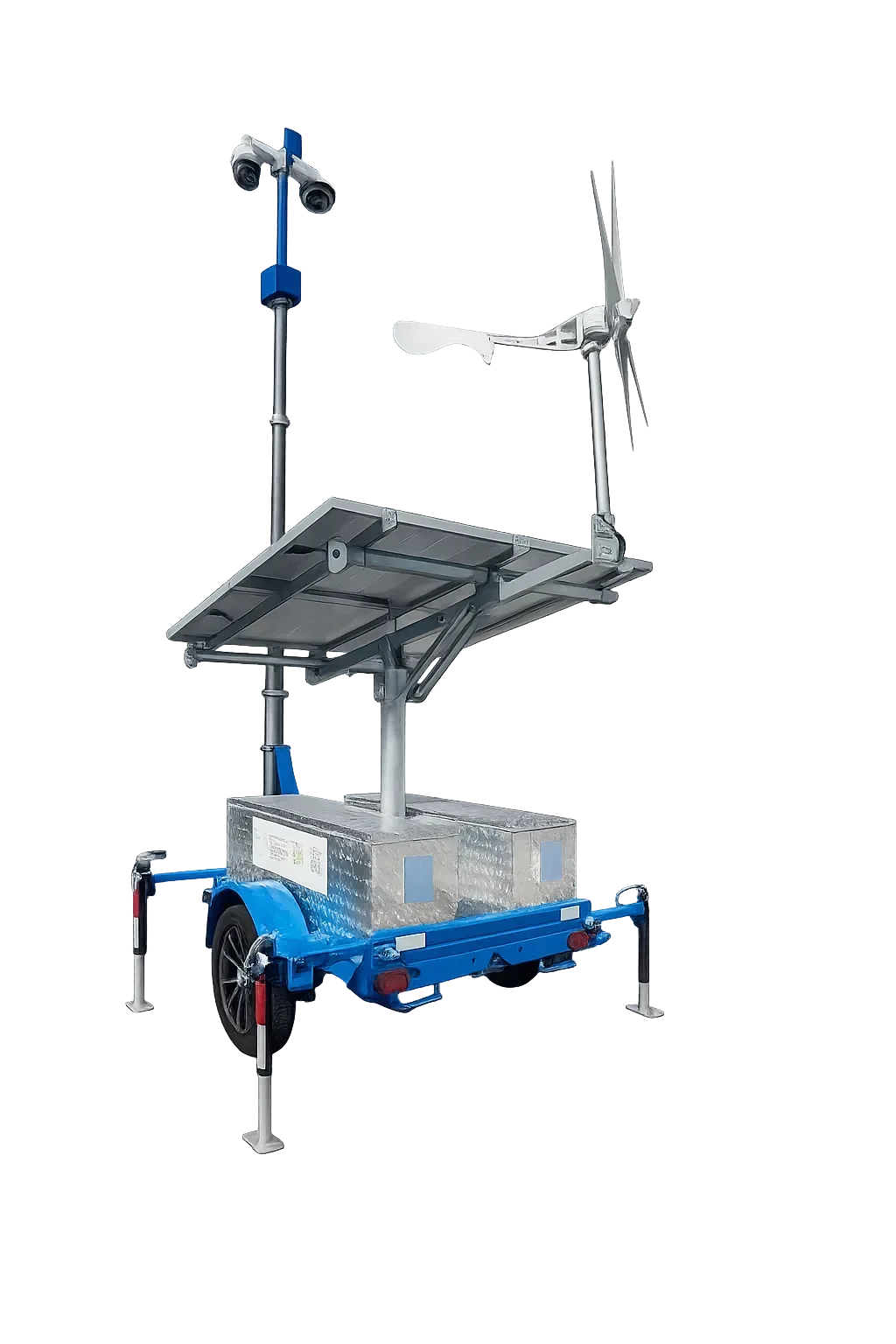
A mobile security trailer is a self-contained surveillance unit on a towable frame. A typical setup includes HD PTZ cameras with 360-degree coverage up to roughly 328 feet, solar power with battery backup, cellular connectivity for live remote monitoring, two-way audio for active deterrence, and floodlighting. No foundation, no trenching, no waiting on an electrician, most units are operational within an hour of arriving on site: tow it in, position it toward the areas that matter most, confirm cellular signal, and the monitoring team is live.
Construction sites are rarely static. Materials move, equipment shifts, perimeters expand and contract as a project progresses, and a fixed camera installed in month one is often misaligned with what actually needs watching by month six. A mobile trailer repositions with the site instead of watching an empty corner. That flexibility is also showing up in the numbers: industry market research estimates the mobile solar surveillance trailer market at roughly $1.5 billion in 2025, growing at more than 20% annually through 2032, driven largely by demand for deterrence and off-grid flexibility on exactly this kind of site.
Fixed Cameras vs. Mobile Security Trailers, at a Glance
The Real Cost Question
This is where most of the confusion lives. Fixed cameras look cheaper on a spec sheet, a decent outdoor camera runs a few hundred dollars. But that's the hardware cost, not the installed cost. Add trenching, conduit, electrical labor, an NVR, network setup, ongoing IT maintenance, and permitting in some jurisdictions, and a properly installed fixed system on a mid-size job site can run $10,000 to $30,000 or more before it has recorded a single incident.
Mobile security trailers typically rent from around $1,500 a month, all-inclusive: equipment, solar power, cellular connectivity, and 24/7 remote monitoring bundled together. Month-to-month rentals generally run 15 to 25% higher than a 6-month term, so locking in a project's actual timeline usually saves money, and multi-unit discounts of 10 to 20% are common for sites that need more than one trailer.
The math tends to favor prevention. Unmonitored sites have reported single-incident losses in the tens of thousands of dollars from one night of theft or vandalism. A six-month trailer rental frequently costs less than that one incident, meaning a single prevented event can cover the entire rental period.
Renting a Mobile Security Trailer Short-Term
Most providers offer month-to-month rental with no long-term commitment, which fits short-duration projects, temporary high-risk windows (a materials delivery before a site is fenced, equipment staged before lock-up), or seasonal work. The tradeoff is price: expect to pay 15 to 25% more per month than a 6-month contract, so a project with a known end date typically comes out ahead by locking in that term upfront.
Short-term rental also works as a bridge. A site that will eventually get fixed cameras once construction wraps can use a mobile trailer through the build phase, without sinking money into infrastructure that would need to be removed and reinstalled once the building is finished.
Which One Fits Your Site?
A smaller off-grid area that doesn't need a full trailer's footprint, a single remote gate or a small lot, is sometimes better served by a standalone solar security camera instead of a full trailer deployment.
The Hybrid Approach: Using Both
Fixed and mobile aren't always an either-or decision. A common pattern on multi-phase projects is combining a mobile trailer covering the high-activity outer perimeter during construction with fixed cameras installed on the permanent interior zones once the building reaches lock-up stage. The trailer handles what's still changing. Fixed cameras take over once the site has stabilized. Neither system is universally "better," they solve different problems, and the sites that get this right usually end up using both at different points in the same project.
Frequently Asked Questions
Can I use both fixed cameras and mobile trailers on the same site?
Yes, and on larger or longer-running projects this is often the most cost-effective approach. A mobile trailer covers the perimeter or high-activity zones while the site is still under construction, and fixed cameras go in once specific areas reach their final layout and have permanent power available.
Does construction insurance require site surveillance?
Requirements vary by insurer and policy, but many commercial property and builder's risk policies offer reduced premiums or require documented security measures, video surveillance included, for higher-value job sites. Check directly with your carrier, since coverage and premium impact differ by policy.
How many mobile security trailers does a large site need?
It depends on the site's size, number of entry points, and how many blind spots the perimeter creates. A single trailer's 360-degree coverage can reach up to roughly 328 feet, so a site larger than that, or one with multiple access points, typically needs more than one unit positioned to cover each active zone.
Can a mobile security trailer replace fixed cameras permanently?
It can, but it isn't usually the most economical choice for a permanent, unchanging site. Mobile trailers are built for flexibility, which comes with an ongoing rental or depreciation cost. Once a site's layout and power are finalized, a fixed system is generally cheaper over the long run.
What happens to trailer footage if cellular signal drops?
Most mobile security trailers store footage locally on the unit and sync to the monitoring platform once connectivity is restored, so a temporary signal loss doesn't mean lost footage, though live remote monitoring is paused until the connection comes back. Site teams evaluating a rental should confirm local storage capacity and cellular carrier coverage for the specific location beforehand.
Need Coverage for a Site That Can't Wait?
TS&L deploys mobile security trailers across active construction sites, remote locations, and temporary operations anywhere a fixed system isn't practical, and installs fixed camera systems for permanent sites once the layout is locked in. Get a site-specific quote, or ask about solar security camera options for smaller or tighter coverage zones.
View Mobile Security Trailers →


.jpg)

.png)

.png)