
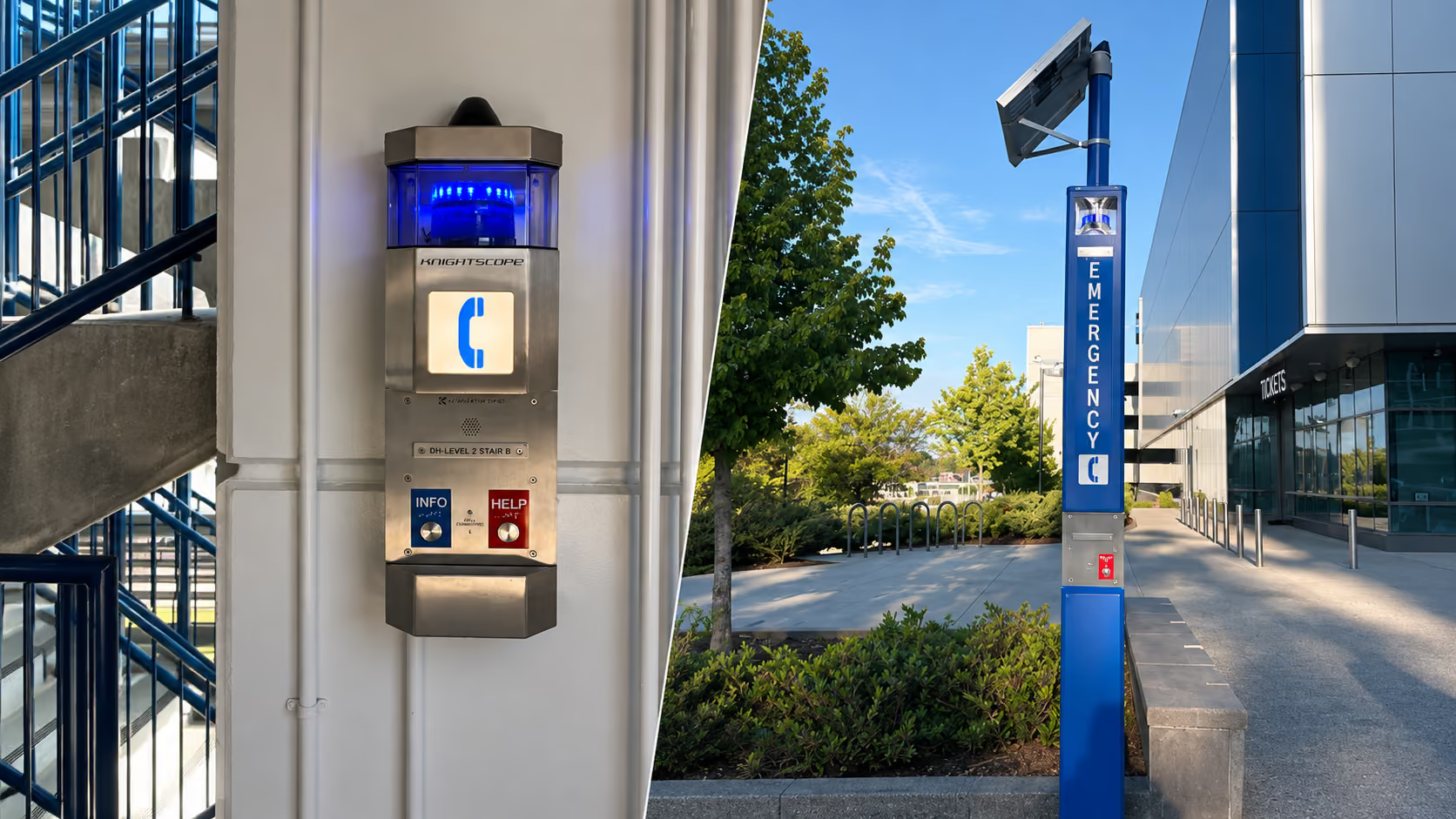
Not every emergency communication point needs to be a six-foot tower. In a stairwell, an elevator lobby, a building corridor, or an area of refuge, a compact wall-mounted e-phone does the same job in a form factor that actually fits the space.
The blue light tower has become the recognizable symbol of campus emergency communication, and for open outdoor spaces, it earns that reputation: visible from a distance, weather-resistant, built to stand on its own. Indoors, it's the wrong tool. A full tower in a stairwell is physically impractical. In an elevator lobby, it blocks circulation space. In a building corridor, it creates an obstruction that neither ADA codes nor common sense would accept.
This is where the indoor emergency phone, specifically the compact blue light e-phone, fills a gap a tower cannot. Same core function: push a button, connect to dispatch, location identified automatically. Different form factor, built for the spaces where towers simply do not fit.
QuickAnswer
A blue light e-phone is a compact, wall-mounted emergency call station designed for indoor and space-constrained environments. It provides the same push-button dispatch connection as a full tower, hands-free audio, automatic location transmission, visual indicators, and ADA compliance, in a unit sized to mount on a stairwell wall, elevator lobby column, or corridor surface without structural modification.
What Is a Blue Light E-Phone?
A blue light e-phone is a surface-mount or flush-mount emergency call station, compact enough to install directly on a wall, column, or standard electrical junction box, with no concrete work and no floor space required. That compact depth matters for a specific reason: ADA rules require that wall-mounted objects projecting more than 4 inches into a path of travel be detectable by cane, and compact e-phone units are built around that depth limit.
A modern blue light e-phone includes single push-button activation, hands-free speaker phone, a visual LED indicator that lights when the call connects, braille labeling for ADA compliance, and automatic location transmission, so the caller doesn't need to know or describe where they are. TS&L's Blue Light E-Phone connects over cellular, Wi-Fi, VoIP, or analog lines and includes battery backup, so most installations don't need a dedicated outdoor power run or an ongoing battery-replacement schedule, a compact, ADA-compliant unit that delivers the same emergency communication function as a tower in spaces where a tower isn't a viable option.
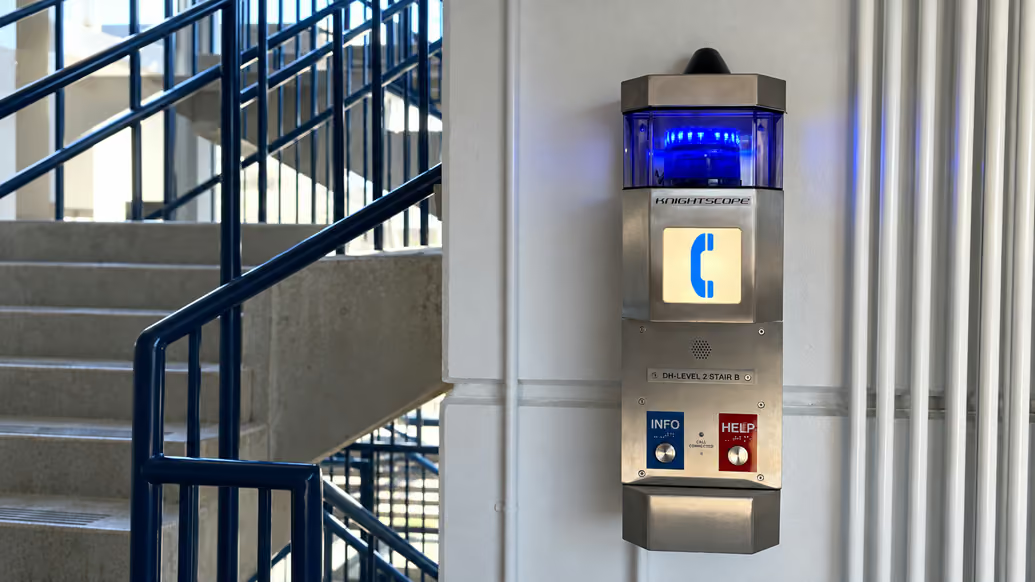
Where E-Phones Belong: The Locations That Need Them
Stairwells
High-risk, poor cell signal, fully enclosed. A wall-mounted e-phone at each landing provides coverage without blocking egress or requiring floor space.
Elevator Lobbies
Code requires emergency communication in elevators and at elevator lobbies. An e-phone mounted to a column or wall meets that requirement without obstructing circulation.
Areas of Refuge
IBC Section1009 requires two-way communication at areas of refuge. A compact e-phone is the standard solution, meeting the code requirement within the footprint available.
Building Corridors
Long interior corridors in hospitals, universities, and large office buildings need intermediate emergency communication points where a tower is impractical.
Parking Structure Interiors
Underground and interior levels where a tower cannot stand and cell coverage is unreliable. Column-mounted e-phones cover each level without the structural requirements of a freestanding tower. For facilities that want a connected, networked compact unit instead of a traditional e-phone, TS&L's K1 Mini Emergency Call Box covers the same interior locations with cellular connectivity and smart monitoring built in.
Restrooms and Accessible Facilities
ADA-accessible restrooms in large facilities, stadiums, convention centers, and medical buildings increasingly specify emergency call capability in accessible stalls.
E-Phone vs. Blue Light Tower: Side by Side
The decision isn't which is better overall. It's which is right for a specific location. Here's how they compare across the factors that actually drive that decision.
The Code and Compliance Argument for Indoor E-Phones
Several building and safety codes create a requirement for indoor emergency communication that a blue light tower simply cannot meet in the spaces specified.
IBC Section 1009: Areas of Refuge
The International Building Code requires two-way communication systems at areas of refuge, the designated safe spaces where people with mobility impairments wait during evacuation. These areas sit inside buildings, typically at stairwell landings or designated floor areas. A compact e-phone is the standard compliant solution for this requirement.
ASME A17.1: Elevator Emergency Communication
This code requires emergency telephone access in elevators and at elevator lobbies. ADA-compliant e-phones are built to meet ASME A17.1 elevator emergency phone requirements, including automatic location ID transmission and hands-free operation.
ADA Accessibility Standards
For wall-mounted units, ADA requires push buttons between 15 and 48 inches above the floor for a forward reach, and that the unit not project more than 4 inches into a pedestrian path if mounted between 27 and 80 inches above the floor. Compact e-phones are designed around these constraints. A full tower generally isn't wall-mountable in a way that meets them.
When You Need Both: Building a Complete System
The most complete emergency communication coverage for a campus or large facility uses both. The blue light tower covers the outdoor environment, parking lots, pathways, building entrances, open-air areas, where tall, highly visible units provide both deterrence and communication. The e-phone covers the indoor environment, every floor, every stairwell, every elevator lobby, every area of refuge, where a tower cannot go.
The two systems typically share the same dispatch connection and location-identification infrastructure, so a call from an e-phone in a stairwell and a call from a Blue Light Tower in the parking lot both reach the same dispatch center with automatic location data. From the dispatcher's side, the response is identical. From the planning side, the right unit just needs to be in the right environment.
- Place towers in outdoor open spaces, along campus paths, around building edges, and at entry plazas, anywhere people need to see the device from a distance and where open-ground deterrence matters.
- Put e-phones in stairwells, elevator lobbies, areas of refuge, interior parking floors, and hallways, anywhere indoors where cell service is weak and a wall mount is the practical option.
- Both connect to the same dispatch center, so the coverage is complementary, not duplicated.
The question to ask for each location on a coverage map: is this a place where someone could reasonably be in danger and unable to reliably reach help by cell phone? If the answer is yes and the location is indoors, that's an e-phone location. If it's outdoors and open, that's a tower location.
Frequently Asked Questions
1. What is an emergency e-phone?
A compact, wall-mounted emergency call station that provides single push-button dispatch connection, hands-free audio, visual LED confirmation, automatic location transmission, and ADA-compliant operation. It delivers the same core emergency communication function as a blue light tower, in a form factor built for indoor and space-constrained environments.
2. When should I use an emergency phone instead of a tower?
Use an e-phone wherever a tower is physically impractical: stairwells, elevator lobbies, interior parking levels, building corridors, areas of refuge, and any enclosed indoor space. An e-phone mounts to a wall or column with no floor space requirement and no need for outdoor power wiring or concrete footings.
3. Can emergency phones be mounted indoors?
Yes, indoor mounting is exactly what compact e-phones are designed for. They surface-mount to walls, columns, or standard electrical junction boxes, connect over cellular, Wi-Fi, VoIP, or analog lines with battery backup, and are built within ADA depth limits for wall-mounted objects in pedestrian paths. IBC and ASME codes both specify indoor emergency communication requirements that e-phones are designed to meet.
4. What's the difference between an e-phone and a call box?
The terms get used loosely, but in practice a call box is typically a larger, standalone unit built for outdoor use, often with its own enclosure, a strobe light, and sometimes its own stand or pole. An e-phone is the compact, surface-mount format built specifically for wall installation in indoor environments. Both connect to dispatch and both are ADA-compliant; the difference is form factor and intended environment.
5. Do e-phones need a dedicated power source?
No. TS&L's blue light e-phones connect over cellular, Wi-Fi, VoIP, or analog lines and include battery backup, so most installations don't require a dedicated outdoor power run or an ongoing battery-replacement schedule.
6. Does TS&L install indoor emergency e-phones in Florida and the Southeast?
Yes. TS&L supplies and installs blue light e-phones for stairwells, elevator lobbies, areas of refuge, and interior corridors at campuses and facilities across Florida and the Southeastern United States, with projects supported nationwide.
Need Indoor Emergency Communication Coverage?
TS&L supplies blue light e-phones for stairwells, elevator lobbies, areas of refuge, and interior locations across campus and facility environments in Florida, the Southeastern US, and beyond, ADA-compliant, backed up against power loss, and built for the spaces where a tower isn't the right fit.



.jpg)

.png)

.png)