
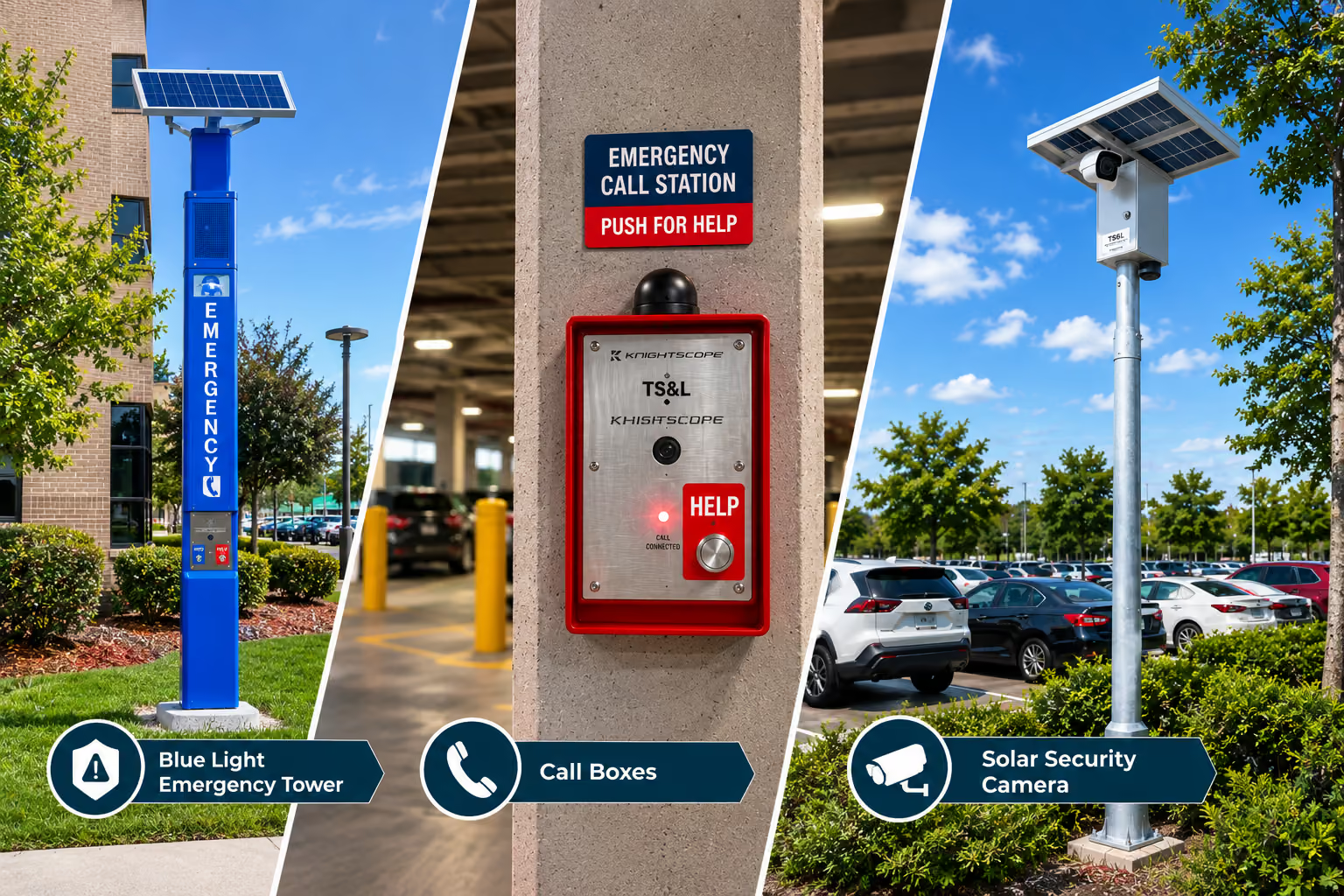
Parking garages account forroughly 6% of all violent crime reported to the FBI, enough to make them thethird most common location for violent crime in the United States, behind onlyprivate residences and streets or sidewalks. That statistic does not improvejust because a property installs cameras. It improves when cameras, call boxes,and emergency towers work together as one connected system, not as separate purchasesmade in different budget years.
Most conversations about parking garage security start and stop at cameras. They are visible, straightforward to install, and produce footage that is useful after something has already happened. What a camera cannot do is get a person in danger connected to help while the danger is still happening. That is a different job, handled by different equipment, and it is the piece missing from a lot of garages that consider themselves covered.
This guide breaks down how the three core components of a parking garage safety system work together, where each one belongs inside a structure, and why the gaps between them are usually where incidents happen. TS&L designs and installs these systems for parking structures throughout Florida and the wider Southeastern United States, from coastal garages exposed to salt air and hurricane season to inland campus and hospital decks that need the same layered coverage, with projects supported nationwide.
Why Parking Garages Are a Different Kind of Security Challenge
Multi-level and underground garages create conditions most security plans were never built for. Cell signal drops out on lower levels and inside stairwells. Ceilings sit low, ramps and corners stay poorly lit, and support columns create sightline gaps that no single camera angle can resolve. Add long stretches with almost no foot traffic, and the result is an environment where someone in trouble may not be able to call for help and may not be seen by anyone who could offer it.
Vehicle theft adds anotherlayer to the problem. About 20% of all vehicle thefts in the US happen inparking lots and garages, according to National Insurance Crime Bureau data.Parking structures also carry more of the emergency communication burden thanmost buildings, simply because their physical layout is what breaks ordinarycommunication. A person having a medical emergency on a basement level may haveno cell signal and no visible way to summon help without a dedicated emergencycommunication point nearby.
Florida garages face an addedlayer on top of that: heat, humidity, and storm exposure that put extra strainon wiring, batteries, and outdoor electronics. Equipment built for coastal andhurricane-prone climates needs to keep working through the worst weather of theyear, not just on a clear day.
The Three Components, and What Each One Actually Does
A complete parking garagesafety system has three distinct layers. They do different jobs and belong indifferent places, and the mistake most facilities make is treating them assubstitutes for one another instead of parts of the same system.
1. Surveillance Cameras: Detection and Documentation
A security camera does two things well. It deters, since a visible camera changes the calculation for someone considering an opportunistic crime, and it documents, since footage helps identify people and reconstruct what happened. What a camera does not do is intervene. It records what happens to a person in distress; it does not connect that person to help.
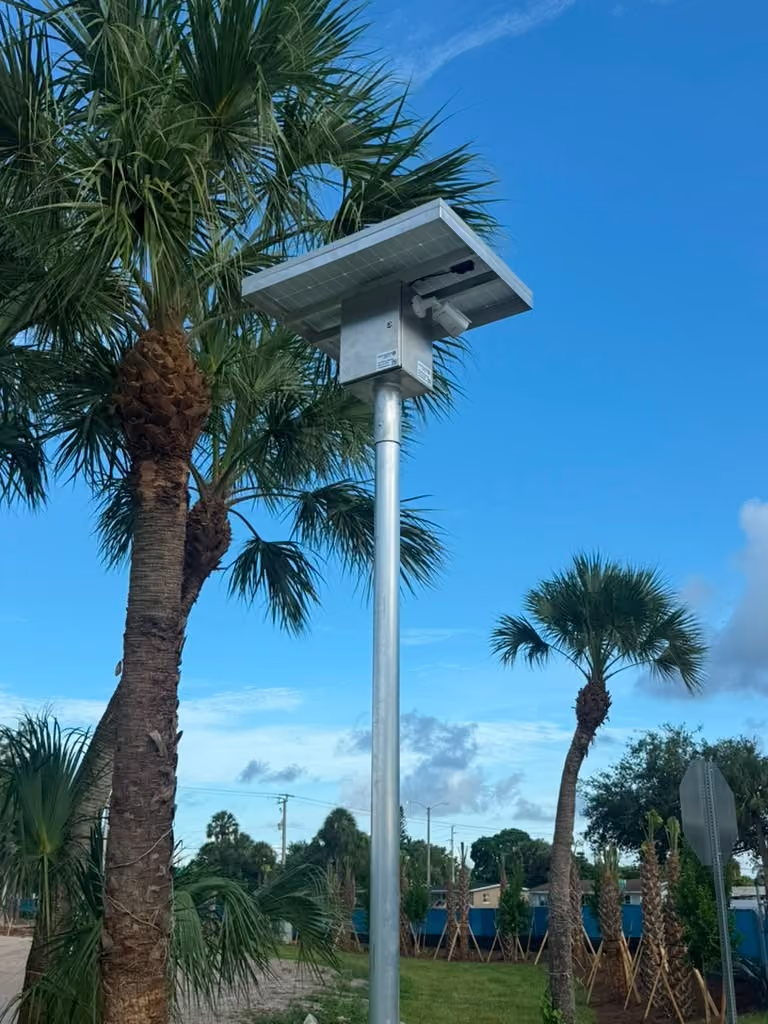
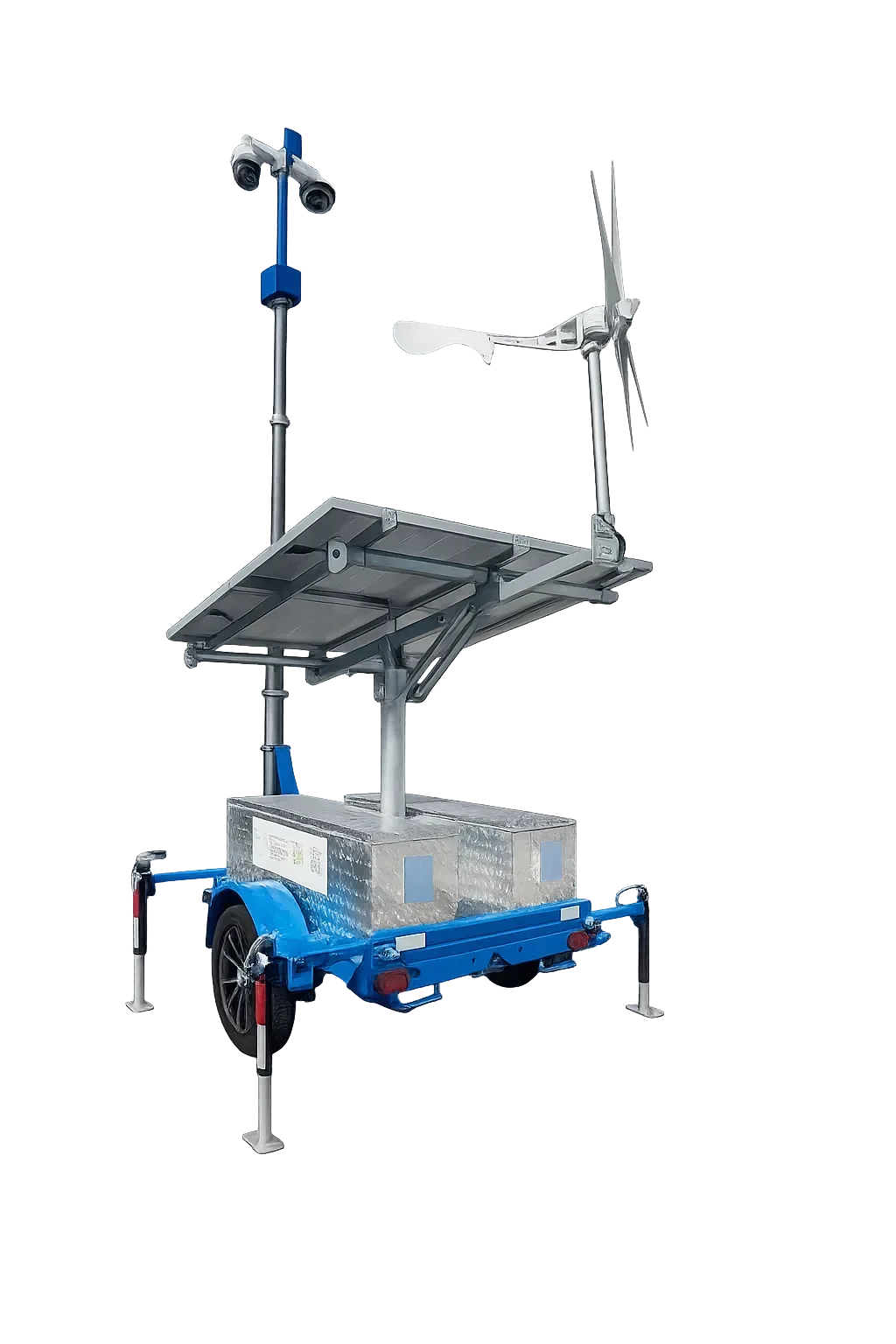
Open decks and rooftop levels are usually the hardest areas to wire for power. TS&L's solar security cameras are built for exactly that gap: no trenching, no power run, and units that canbe repositioned as a garage's coverage needs change from one project phase to the next.
2. Blue Light Emergency Towers: Visible Deterrence for Open Areas
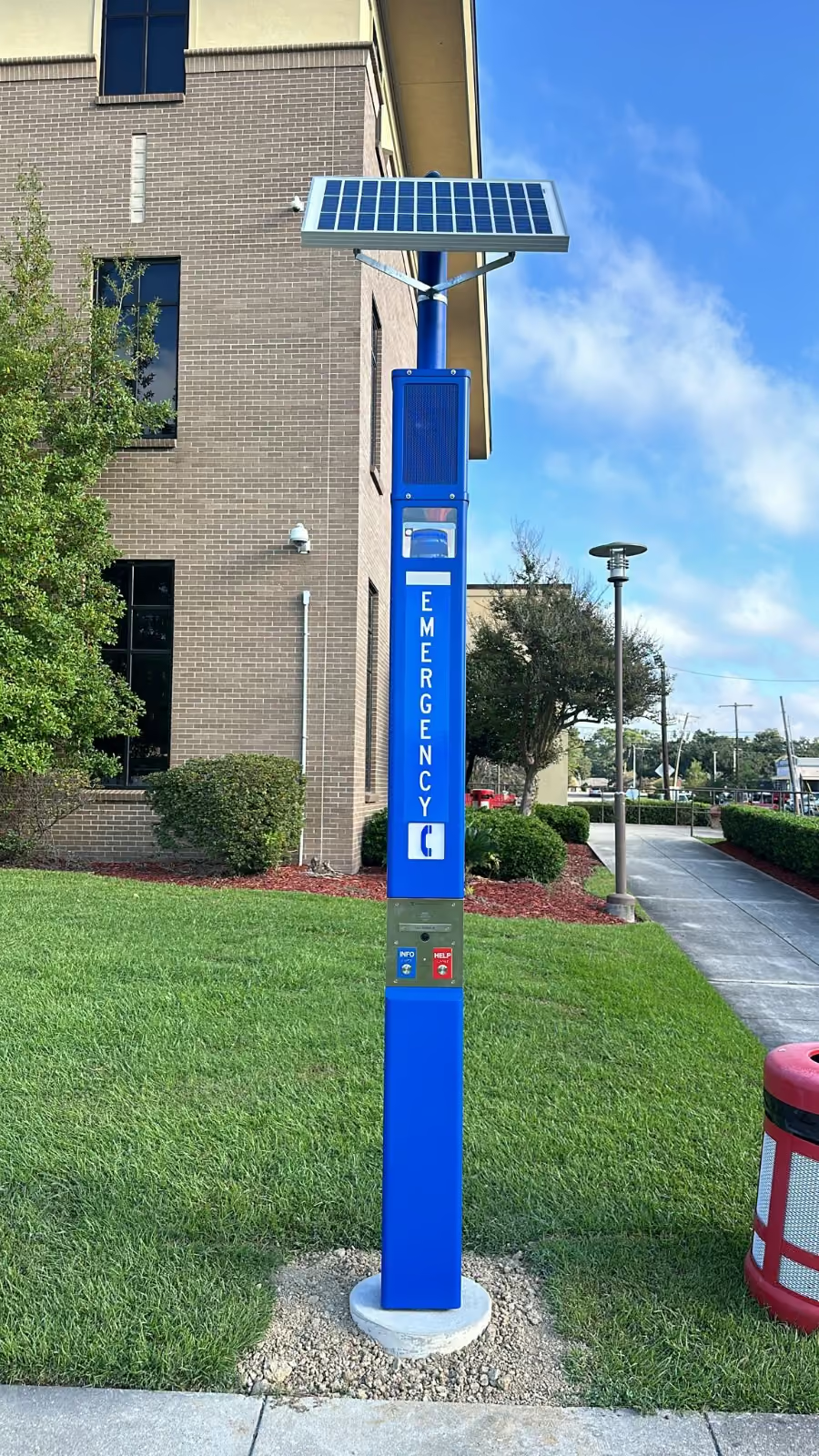
A blue light emergency towerdoes a different job than a call box. Its main value is visible deterrenceacross open space. A tower placed at a stairwell entrance or on a rooftop deckcan be seen from a distance, signals that help is available, and changes thecalculation for anyone considering criminal activity in that area.
TS&L's Blue Light Emergency Towers are built for open and semi-open applications like this: tall enough to be seen across a full parking level, weatherproofed for Florida's heat and storm seasons, and wired for a direct connection to dispatch. For garages that already have towers installed but running on older hardware, TS&L's Blue Light Retrofit Kits add modern connectivity and self-monitoring to existing units at a fraction of full replacement cost.
3. Wall and Column-Mounted Call Boxes: Coverage for Interior Levels
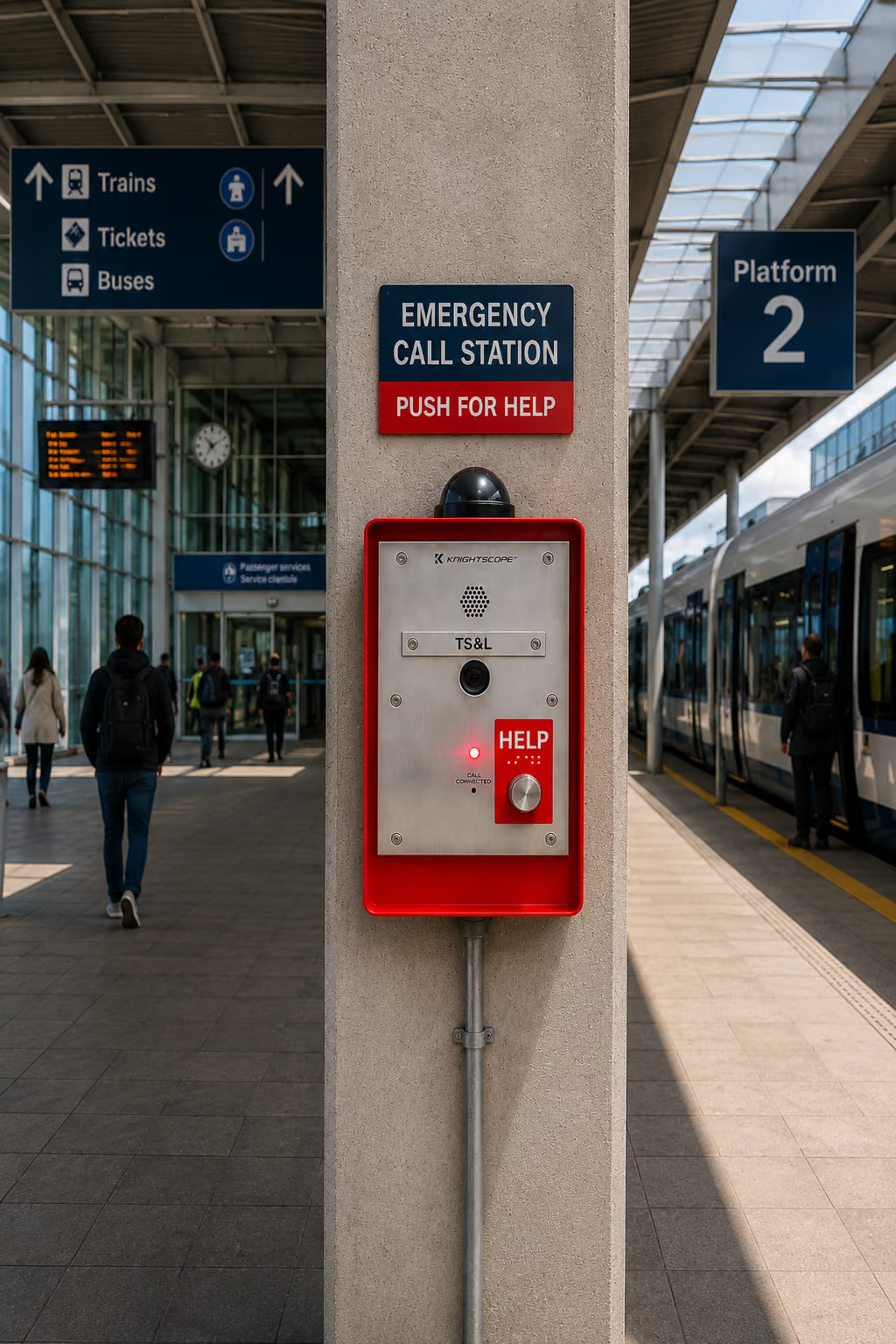
Inside a parking structure, onlower levels, in stairwells, and at elevator lobbies, a freestanding tower isnot practical. Ceilings are too low, the footprint is too tight, and theinstallation would be disruptive. This is where a compact call box mounted to awall or column does the job a tower cannot.
TS&L's K1 Mini Emergency Call Box is built for exactly this application. It mounts directly to columns and walls, takes up almost no floor space, and provides the same direct-to-dispatch connection as a full tower. It is the right unit for nearly every interior level of a parking structure, which, inmost garages, is most of the building. Facilities already standardized on TS&L's Blue Light E-Phone platform can extend that same call box style indoors instead of mixing hardware types.
The distinction that matters issimple. Cameras document what happened. Call boxes connect someone to helpwhile it is still happening. A garage with cameras and no call boxes hassurveillance. A garage with both has a safety system..
Placement Guide: Where Each Device Belongs
Use this as a starting framework for a multi-level garage. The exact number of units per level depends on square footage, but most specifications call for emergency stations spaced roughly every 300 to 500 feet.
- Entry and exit plaza /ticketing area: Blue Light Tower plus camera. The tower is visible from the street and gives visitors a communication point before they even enter the structure; cameras cover license plate recognition at the lanes.
- Rooftop and open deck level: Solar camera plus Blue Light Tower. Open sky allows solar deployment without running power, and the tower provides deterrence across the full deck. This level often has the lowest foot traffic and the highest risk per incident.
- Upper interior levels (each level): K1 Mini Call Box plus camera. One K1 Mini per level at minimum, placed at the highest-traffic route, typically the stairwell approach or elevator lobby, with a camera covering the ramp entry point.
- Lower interior levels (each level): K1 Mini Call Box plus camera. Lower levels combine the worst cellcoverage with the lowest foot traffic. Larger footprints may need two K1 Minisper level, with cameras covering stairwells and ramp descents where visibility is worst.
- Stairwells (each landing):K1 Mini Call Box. Stairwells are enclosed, have poor sightlines, and typically carry no cell signal, making them one of the highest-incident zones in a structure. A call box at each landing means someone in distress does not need to reach a parking level first.
- Elevator lobbies (each level): K1 Mini Call Box plus camera. People waiting for an elevator are stationary and can be more vulnerable. A camera covering the lobby plus a wall-mounted call box handles both documentation and communication.
- Pedestrian exit routes(ground level): Blue Light Tower or K1 Mini plus camera. Where pedestrians transition from the structure to the street, a visible tower or wall unit adds reassurance and a communication point for the last stretch of the walk.
The Products in This System
K1 Mini Emergency Call Box
Compact wall and column-mounted call box for interior parking levels, stairwells, and elevator lobbies. Direct-to-dispatch connection with almost no footprint.
Blue Light Emergency Tower
Freestanding tower for rooftop decks, entry plazas, and open-lot perimeters. Visible deterrence and emergency communication in one unit.
View Blue Light Emergency Towers →
Solar Security Cameras
Wire-free camera coverage for rooftop decks and locations where running power is impractical. Repositionable as coverage needs change.
Already have towers installed but running on outdated hardware? TS&L's Blue Light Retrofit Kits bring modern connectivity and self-monitoring to existing units at a fraction of replacement cost. For garages under construction or hosting temporary events, Mobile Security Trailers provide interim camera coverage until permanent units are installed.
Do Parking Garages Have to Have Emergency Call Boxes?
The short answer is that it depends on the jurisdiction. There is no single federal mandate covering emergency communication in parking garages, and requirements vary by state and municipality. Some states, including New York, have built out more detailed garage safety frameworks than others. California's Title 24 and IBC Section 406address construction and egress in parking structures but generally leave communication equipment to local ordinance.
What tends not to vary as much is liability exposure. This is general information, not legal advice, but the same pattern shows up repeatedly in negligent security cases: if it is reasonably foreseeable that someone in a parking garage cannot reach emergency services by cell phone, and no alternative has been provided, that gap is often one of the first things reviewed after an incident. The practical standard most specifications use is emergency stations within 300 to 500 feet of any point in the structure. Property owners and managers should confirm current requirements with local code officials or legal counsel for their specific location.
Frequently Asked Questions
What is the best emergency call system for a parking garage?
A layered system works best: wall or column-mounted call boxes for interior levels, blue light emergency towers for open decks, and solar cameras wherever running power is impractical.
Do parking garages need emergency call boxes?
Requirements vary by state and municipality, but emergency call stations are a standard part of most parking garage safety plans, especially where cell service is unreliable.
How far apart should parking garage call boxes be placed?
Most specifications call for stations roughly every 300 to 500 feet. Larger garages typically need one to two stations per level, plus additional units at stairwells and elevator lobbies.
What is the difference between a call box and a security camera in a garage?
A camera watches and records an area. A call box connects a person directly to help. They serve different purposes and work best when installed together.
Can solar cameras be used inside a parking garage?
Solar cameras work best on rooftop decks, open-air levels, and exterior areas with direct sunlight. Enclosed or underground levels usually need wired or battery-backed cameras instead.
Does TS&L install parking garage safety systems in Florida?
Yes. TS&L is headquartered in Boca Raton, Florida, and installs call boxes, blue light towers, and solar cameras for parking structures throughout Florida and the Southeastern United States, with projects supported nationwide.
Building a Complete Parking Garage Safety System?
TS&L supplies and installs emergency call boxes, blue light towers, and solar surveillance cameras for parking structures across Florida, the Southeast, and the rest of the country. Talk to our team about coverage mapping and product selection for your facility.
Explore the K1 Mini Call Box →


.jpg)

.png)

.png)