
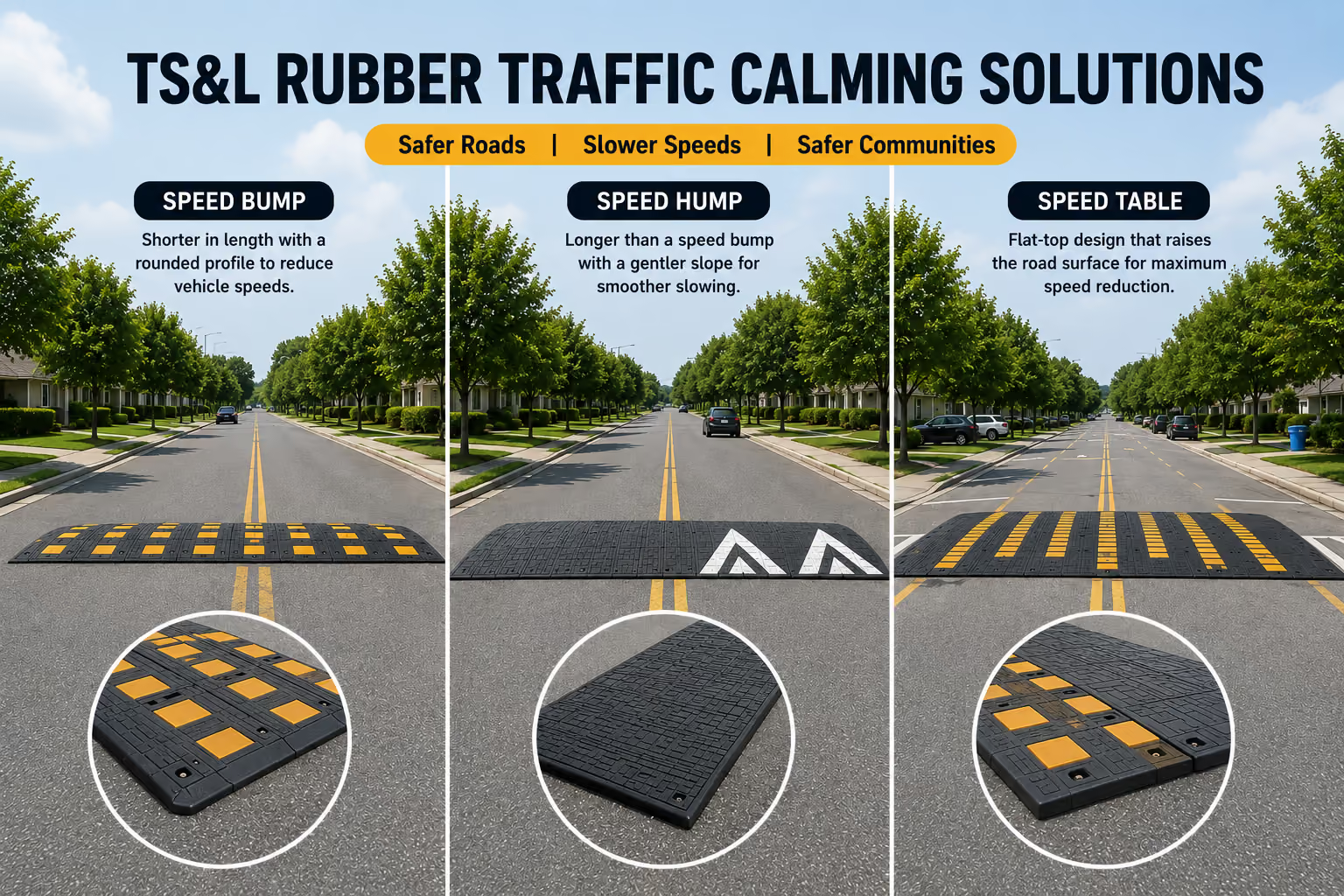
A Complete Traffic Calming Comparison
Speed bumps, speed humps, and speed tables are not interchangeable. Speed bumps are short and abrupt, meant to slow vehicles to near-a-stop— they belong in parking lots and driveways, not on public streets. Speed humps are rounded, gradual rises that slow traffic more moderately and are common on lower-speed residential streets. Speed tables are flat-topped and wider than speed humps, allowing a vehicle's full wheelbase to rest on top, which produces the gentlest, most gradual slowdown of the three. If your road carries atypical 25 mph residential speed limit, buses, or emergency traffic, a speed table is usually the better fit; for stricter, more aggressive slowing on low-speed streets, a speed hump may be preferred.
Why the Difference Matters
If you manage traffic calming for a city, private community, or corporate campus, choosing the wrong device can create more problems than it solves — vehicle damage complaints, emergency response delays, or traffic that simply isn't slowed enough. Understanding the shape, speed reduction, and intended use of each device is the first step to designing streets that are both safe and functional.
Speed Bumps: Aggressive, Abrupt, and Off-Street Only
Speed bumps are short, steep devices designed to slow vehicles almost to a halt — often to 2-10 mph. Because they're so abrupt, they are appropriate for:
● Parking lots
● Private driveways
● Low-speed, low-traffic areas where a near-stop is the goal
Speed bumps are not considered a true traffic calming tool for residential or public streets. Their aggressive profile can cause driver discomfort, vehicle wear, and complaints when installed on roads meant to carry regular through-traffic.
Speed Humps: Rounded and Moderate
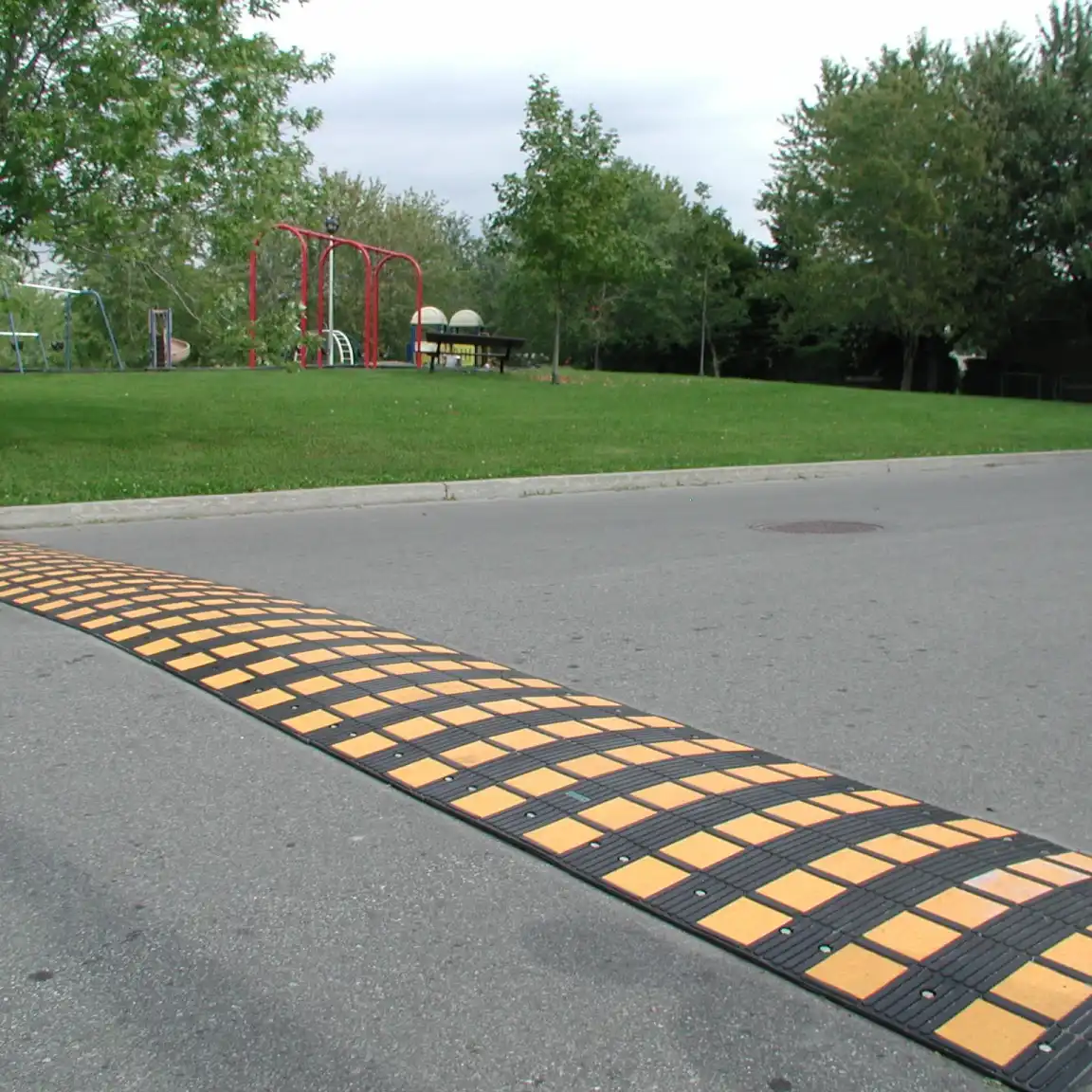
Speed humps are rounded traffic calming devices — they curve up and back down without ever forming a flat surface. This shape means a vehicle's wheels roll up and over a curve rather than resting on a level top.
Speed humps:
● Slow traffic more significantly than speed tables, though far less aggressively than speed bumps
● Work well on streets where a stronger speed reduction is the priority
● Are a common choice on residential streets with lower posted speed limits
Speed Tables: Flat-Topped and Gradual
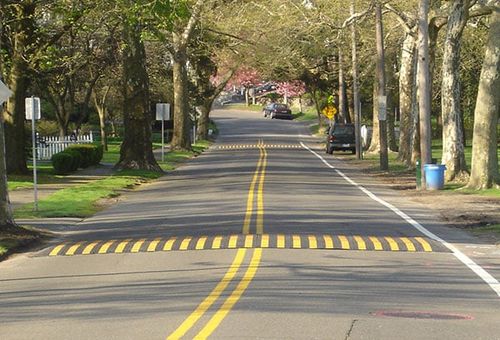
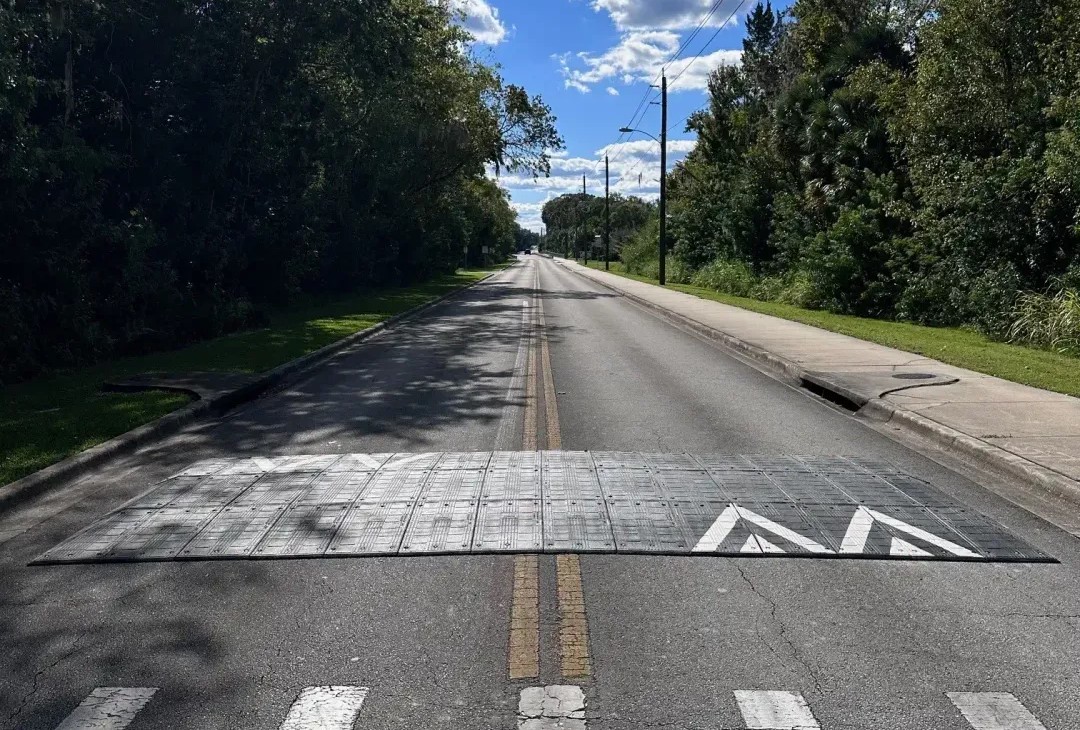
A speed table is a flat-topped traffic calming device, wider than a speed hump, built so a vehicle's full wheelbase can rest on top as it crosses. That flat top — rather than a rounded curve — is what produces a gentler, more gradual slowdown compared to a speedhump or speed bump.
Speed tables:
● Are ideal for streets with typical residential speed limits around 25 mph
● Keep traffic flowing at a safer, steadier pace rather than forcing an abrupt slowdown
● Are often preferred by cities that want a calmer, smoother driving experience
Emergency Vehicles and Bus Routes
One of the most practical differences between speed humps and speed tables is how each affects emergency and transit vehicles.
Because speed tables produce a less significant speed reduction, they're a strong option for cities that don't want traffic calming devices to heavily impede ambulances, fire trucks, or buses. Speed tables don't let emergency vehicles pass without slowing down, but they do slow them less drastically than a rounded speed hump would. That makes speed tables especially useful on:
● Designated bus routes
● Streets used regularly by emergency services
● Roadways where cities want a safety benefit without disrupting traffic flow
Speed Hump vs. Speed Table: Side-by-Side Comparison
How to Choose Between a Speed Hump and a Speed Table
Start by asking what speed limit your road currently has — and what speed you actually want drivers traveling. Speed humps, while much less aggressive than speed bumps, still slow vehicles more sharply than speed tables. Speed tables suit streets around a 25mph limit where the goal is safer speeds without sacrificing steady traffic flow. Many cities favor speed tables for this calmer, smoother driving experience — while others choose speed humps when a stronger, more aggressive speed reduction is the priority, particularly on streets with lower speed limits.
Frequently Asked Questions
What's the difference between a speed bump and a speed hump?
Speed bumps are short and abrupt, slowing vehicles almost to a stop, and are meant for parking lots and driveways. Speed humps are rounded and more gradual, making them suitable as a true traffic calming device on public residential streets.
What's the difference between a speed hump and a speed table?
A speed hump is rounded with no flat top. A speed table is flat-topped and wider, letting a vehicle's full wheelbase rest on top, which creates a gentler, more gradual slowdown than a speed hump.
Are speed tables better for emergency vehicles?
Yes. Speed tables slow emergency vehicles less drastically than speed humps do, making them a common choice on bus routes and roadways with regular emergency vehicle traffic.
What speed limit are speed tables best for?
Speed tables work well on streets with typical residential speed limits around 25 mph, where the goal is to keep traffic flowing smoothly at a safer pace.
Can speed bumps be used on residential streets?
Generally, no. Speed bumps are considered too abrupt for residential streets and are recommended for parking lots and driveways instead. Speed humps or speed tables are the appropriate choice for public roads.



.jpg)

.png)

.png)