
An ambulance with its lights on still has to get through the intersection. A red light, a line of stopped cars, and drivers who are not sure which way to move can cost a crew seconds that matter, and they create the exact conflict point where emergency vehicle crashes happen. Traffic signal preemption takes that decision out of the drivers' hands by giving the approaching emergency vehicle a green light.
The results are well documented. The Federal Highway Administration's emergency vehicle preemption report cites a Denver study in which response times fell 14 to 23 percent, about 70 seconds on a typical route, and St. Paul, Minnesota, which saw a 71 percent drop in emergency vehicle crashes after deploying preemption. Those are older studies and results vary by corridor, but the pattern holds: fewer conflicts and faster arrivals.
This guide explains how traffic signal preemption works, how it reduces response times, how it differs from signal priority, and where it is used, including in work zones. TS&L supplies traffic signal hardware, Tomar preemption, and portable traffic signals for agencies and contractors across Florida, the Southeast, and the rest of the United States.
Quick Answer
Traffic signal preemption is a system that interrupts a signal's normal cycle to give right of way to an approaching emergency vehicle. When a fire truck, ambulance, or police car is detected, the controller safely ends the current phase, shows green on the emergency vehicle's approach and red to conflicting traffic, then returns to normal operation once the vehicle has passed.
What Is Traffic Signal Preemption for Emergency Vehicles?
The Manual on Uniform Traffic Control Devices (MUTCD) defines preemption as the transfer of normal operation of a traffic control signal to a special control mode of operation. In practice, that means the signal stops following its usual timing plan and serves the vehicle that matters most at that moment.
Emergency vehicle traffic signal preemption is the most common form, used by fire, EMS, and police. The same concept is also used for trains approaching a crossing and, in some places, for boats at movable bridges. It sits on top of the signal controller and works with the signal heads, detectors, and communications already at the intersection.
How Does Traffic Signal Preemption Work?
- Detect. The emergency vehicle announces itself with a light, a sound, or a wireless signal, or the system tracks its position. A detector at the intersection, or a central system, picks that up as the vehicle approaches.
- Request. The detection is sent to the traffic signal controller as a preemption request.
- Transition. The controller ends the current phase safely, using the required yellow and clearance intervals, and moves to the phase that serves the emergency vehicle. FHWA notes that a green is not always immediate, because the signal has to clear conflicting traffic first.
- Hold. The signal shows green on the emergency vehicle's approach and red to conflicting movements while the vehicle passes through.
- Recover. After the vehicle clears, the controller returns to its normal timing plan.
Detection comes in a few forms. Optical systems use an infrared emitter on the vehicle and a detector at the signal. GPS and cellular systems track the vehicle's position and send the request over a network. Radio and acoustic systems respond to a transmitted signal or a siren. FHWA also separates vehicle-based systems, which work from the vehicle alone, from system-based ones that let the response vehicle take any route to the call.
Reliable preemption depends on the rest of the signal network, including traffic networking communications that carry requests between vehicles, controllers, and traffic management centers.
How Does Traffic Signal Preemption Reduce Emergency Response Times?
A typical emergency route crosses several signalized intersections, and each red light adds a delay. Preemption removes most of those stops, and it also clears the queue ahead of the vehicle so it does not have to weave through stopped traffic.
- Denver: a before-and-after study found response times dropped 14 to 23 percent, saving roughly 70 seconds on a typical route with three to six signalized intersections.
- Planning for the whole route: because the saved time adds up across every intersection, agencies usually deploy preemption along the response routes from stations and hospitals first.
The time saved matters most for cardiac arrest, stroke, trauma, and structure fires, where minutes change outcomes. Source: FHWA, Emergency Vehicle Preemption (HOP-24-019).
Can Traffic Signal Preemption Improve Intersection Safety?
Yes. Intersections are where emergency vehicles are most likely to be hit, because drivers react in different ways to sirens and lights. Some stop, some inch forward, and some run the light. A clear green for the emergency vehicle and a clear red for everyone else reduces that confusion.
FHWA reports that St. Paul, Minnesota experienced a 71 percent reduction in emergency vehicle crashes after it deployed preemption. Giving emergency vehicles a green light also reduces driver confusion and conflicts, which protects civilians as well as crews.
Safe preemption still takes care. MUTCD guidance asks agencies to take extra care when a signal that is coming back from a power failure receives a preemption request, so vehicles and pedestrians are not directed into a conflict. That matters in Florida and across the Southeast, where storms regularly knock signals into flashing or dark mode and backup power and recovery logic are part of the design.
Signal Preemption vs. Signal Priority
The two terms are often mixed up. FHWA draws a clear line: preemption interrupts normal signal operation, while priority adjusts it.
Many agencies use both. Adaptive platforms such as the NoTraffic management platform, which uses AI sensors and cloud processing to optimize signal timing across a city grid, show how detection and signal management are moving toward connected systems. NoTraffic received approval from the Florida Department of Transportation in 2024 to operate in the state.
Key Benefits of Traffic Signal Preemption Systems
- Faster response. Fewer stops and cleared queues along the route.
- Fewer crashes. Emergency vehicles cross intersections on a green instead of a red.
- Less driver confusion. Everyone else sees a clear signal instead of guessing.
- Safer crews. Emergency personnel face less risk at the point where they are most exposed.
- Scalable. Agencies can start with the most critical response routes and expand corridor by corridor.
Where Traffic Signal Preemption Is Used
- Corridors leaving fire stations and EMS bases
- Routes to hospitals and trauma centers
- Congested downtown and arterial intersections
- Railroad crossings near signalized intersections
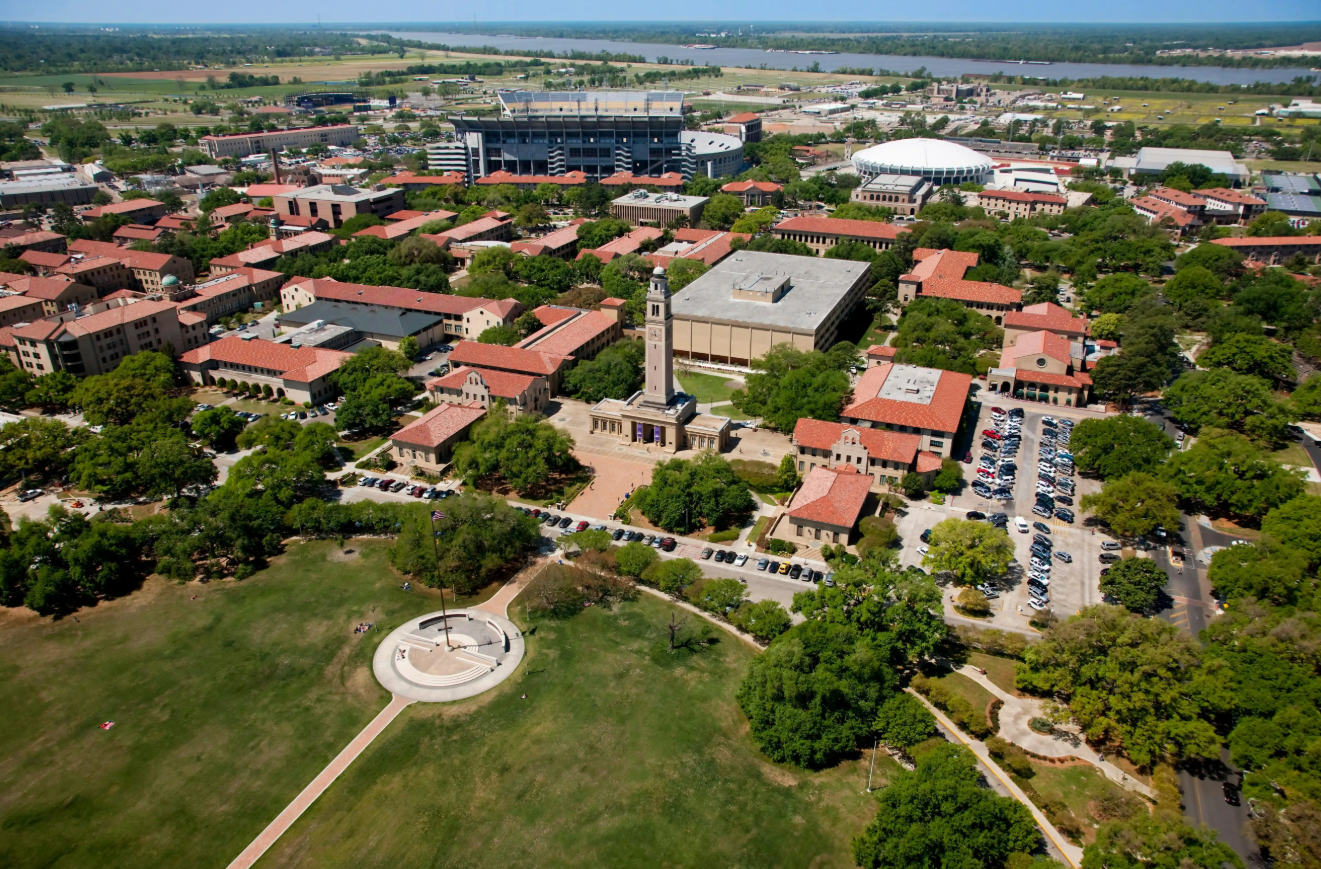
- College campuses, airports, and ports with their own response teams
- Intersections with pedestrian crossings, where signal changes must still protect people on foot
Where foot traffic shares the intersection, pedestrian crossing systems and well-timed pedestrian phases keep walkers safe during and after a preemption event.
Emergency Access Through Work Zones and Temporary Signals
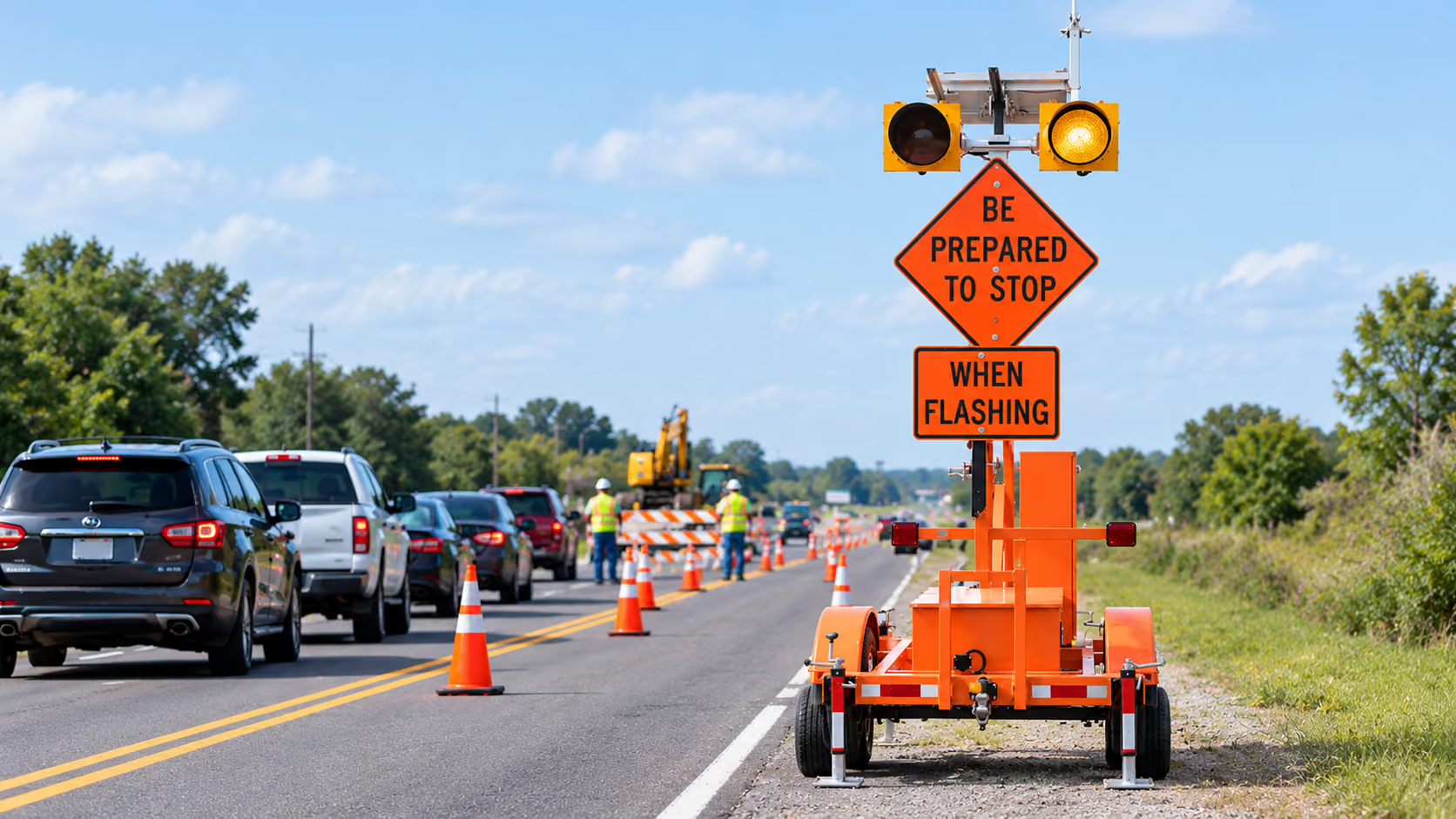
Permanent intersections are not the only place emergency vehicles get stuck. A work zone that controls one lane with temporary signals can hold a queue of cars for minutes, and an ambulance can end up at the back of it. Good temporary traffic control plans account for that from the start: coordination with local fire and EMS, clear lane geometry, and signal operation that does not trap response vehicles.
TS&L's portable traffic signals are trailer-mounted, solar-charged, and radio-linked, and meet MUTCD and NEMA TS-5 standards. The PL2.4X portable traffic signal handles complex work zones with up to twenty trailers on one site, and the RCF3.4 lane control signal covers long-term lane closures. Upstream, LED message boards and arrow boards warn drivers early, and flagging devices give crews another way to control traffic. Talk to TS&L about how emergency vehicle access should be handled in your traffic plan.
What to Consider When Planning a Preemption System
- Controller compatibility. Preemption works through the signal controller, so confirm the controller and signal hardware at each intersection support it.
- Detection technology. Optical, GPS or cellular, radio, and acoustic each have trade-offs in range, line of sight, cost, and what has to be installed on the vehicle.
- Priority rules. Decide in advance what happens when two emergency vehicles arrive from conflicting directions, and how preemption interacts with transit priority.
- Power and recovery. Plan backup power and how the signal returns to normal after an outage or a preemption event.
- Communications and data. A networked system logs every request, which helps agencies review response routes and maintain equipment.
- Housings and signal heads. Clear, visible indications matter, and traffic signal housings and backplates improve visibility for approaching drivers.
Frequently Asked Questions
1. What is traffic signal preemption for emergency vehicles?
Traffic signal preemption is a system that interrupts a signal's normal cycle to give an approaching emergency vehicle a green light and stop conflicting traffic. When the vehicle has passed, the signal returns to normal operation.
2. How does traffic signal preemption work?
A detector or tracking system recognizes an approaching emergency vehicle and sends a request to the signal controller. The controller safely ends the current phase, shows green on the vehicle's approach and red to cross traffic, holds that state while the vehicle passes, and then recovers to its normal timing.
3. How does traffic signal preemption help reduce emergency response times?
Preemption removes red-light stops and clears queues along the route. FHWA cites a Denver study in which response times fell 14 to 23 percent, about 70 seconds on a typical route. Results vary by corridor and system.
4. Can traffic signal preemption improve intersection safety?
Yes. It gives emergency vehicles a clear green and everyone else a clear red, which reduces driver confusion and conflicts at intersections. FHWA reports a 71 percent reduction in emergency vehicle crashes in St. Paul, Minnesota after preemption was deployed.
5. What is the difference between signal preemption and signal priority?
Preemption interrupts normal signal operation to serve an emergency vehicle, while priority adjusts normal operation, for example by extending a green, to help vehicles such as buses. Preemption takes precedence over priority.
6. Does TS&L supply traffic signal equipment in Florida and across the US?
Yes. TS&L is based in Boca Raton, Florida, and supplies traffic signal hardware, preemption equipment, traffic management platforms, and portable traffic signals to agencies and contractors across Florida, the Southeast, and the United States. Request a quote to get started.
Need Traffic Signal Equipment for Your Corridor or Work Zone?
TS&L supplies traffic signal hardware, preemption equipment, traffic management platforms, and portable traffic signals for agencies, contractors, and campuses across Florida, the Southeast, and the rest of the United States. Tell us about your intersection or project and we will recommend a setup.
Explore Portable Traffic Signals →