Every driver knows the feeling. You sit at a red light with no cross traffic in sight, waiting for a timing plan to finish. That plan was probably built from traffic counts taken years ago, and the road has changed since then. The choice between adaptive vs. fixed-time traffic signals comes down to one question: should a signal follow a schedule, or should it respond to what is happening now?
The cost of getting this wrong is measurable. The Federal Highway Administration (FHWA) estimates that outdated signal timing accounts for 5 to 10 percent of all traffic delay on major roadways, roughly 295 million vehicle hours a year. FHWA also reports that adaptive signal control improves travel time by more than 10 percent on average, and by 50 percent or more where existing timing is badly out of date.
Florida is a good example of why this matters. A 2024 Florida Policy Project report called for better signal timing and digitization statewide, and seasonal visitors, events, and storms change traffic patterns faster than a fixed plan can follow. This guide compares the two approaches, shows where each one fits, and explains how message boards and signal equipment work together. TS&L supplies traffic signal hardware, the NoTraffic management platform, and LED message boards for agencies and contractors across Florida and the United States.
Quick Answer
Fixed-time traffic signals run on pre-programmed schedules, with set cycle lengths and green times for each time of day. Adaptive traffic signals use detectors and software to measure traffic in real time and adjust timing continuously. Fixed-time works well where traffic is stable and predictable. Adaptive works best where demand changes through the day, by season, or because of events and incidents.
How Do Fixed-Time Traffic Signals Work?
A fixed-time signal, also called a pretimed signal, follows a schedule that engineers set in advance. Each timing plan defines the cycle length, how much green each approach gets, and how neighboring signals are offset so vehicles can move together along a corridor. Most agencies run a few plans by time of day, such as morning peak, midday, evening peak, and overnight.
This approach has real strengths:
- Predictable. Drivers, pedestrians, and engineers always know what the signal will do.
- Simple and low cost. It needs no detection and little communication equipment, and it is easy to maintain.
- Good for stable patterns. Downtown grids and intersections with consistent daily flows can run well on a well-built plan.
The weakness is that the plan cannot see the road. A crash, a ball game, a construction lane closure, or a busy tourist weekend all look the same to a fixed-time signal as a normal Tuesday. FHWA notes that traditional time-of-day plans do not accommodate variable and unpredictable demand, and that months or years can pass before outdated timing is noticed and fixed.
What Is Adaptive Traffic Signal Control?
Adaptive traffic signal control adjusts the timing of green, yellow, and red in response to current traffic. FHWA describes the process in three steps that repeat every few minutes: sensors collect traffic data, software evaluates it and develops timing improvements, and the system applies the updates.
- Detect. Sensors such as cameras, radar, or in-road detectors measure vehicles and, in some systems, pedestrians and trucks at each approach.
- Decide. Software compares current demand with the timing in use and works out better splits, offsets, or cycle lengths.
- Adjust. The controller applies the new timing, and the cycle repeats as conditions change.
Established adaptive systems include SCOOT, SCATS, and ACS Lite, an FHWA developed option designed to be lower in cost and complexity. FHWA tested ACS Lite in Bradenton, Florida. Newer platforms use AI sensors and cloud processing. The NoTraffic platform from TS&L, for example, uses plug and play AI sensors to measure approaching road users, streams the data to the cloud, and optimizes signals across a city grid. NoTraffic received Florida Department of Transportation approval to operate in the state in 2024.
Adaptive control also sits above a middle option, actuated signals, which respond to vehicles at a single intersection within preset limits. Adaptive systems go further by coordinating timing across a corridor or grid.
Adaptive vs. Fixed-Time Traffic Signals: Side by Side
Key Benefits of Adaptive Traffic Signal Systems
- Shorter, more reliable trips. FHWA reports travel time improvements of more than 10 percent on average.
- Timing that stays current. The system keeps updating, so agencies are not waiting for the next retiming study.
- Better handling of disruptions. Crashes, special events, and construction are things time-of-day plans cannot anticipate.
- Lower emissions. FHWA notes smoother flow reduces hydrocarbon and carbon monoxide emissions.
- Better data. Detection produces counts and delay measurements that agencies can use for planning and reporting.
Limitations to Plan For
Adaptive control is not the right answer for every intersection, and a good plan says so. It depends on working detection, reliable communications, and staff who can monitor the system. Benefits are largest where demand varies and smallest on isolated, low volume intersections. The agencies that get the most from adaptive control choose their corridors carefully, start with a pilot, and measure before and after.
Fixed-time signals still make sense where traffic is steady, budgets are limited, or the infrastructure to support adaptive control is not yet in place. The goal is not to replace every plan. It is to find the intersections losing the most time to a plan nobody has revisited.
Practical Use Cases
1. Arterials with changing demand
Commuter corridors that are busy at rush hour and quiet at midday waste green time on side streets when a fixed plan guesses wrong. Adaptive timing shifts green to whichever approach has traffic.
2. Event and tourist areas
Stadiums, convention centers, beaches, and theme park corridors see short bursts of demand. In Florida, winter visitors and holiday weekends also change traffic patterns far from the standard morning and evening peaks.
3. Construction zones and detours
Lane closures push traffic onto streets that were never timed for it. Temporary portable traffic signals control the work zone, and adaptive timing on the surrounding network helps absorb the diverted flow.
4. Busy intersections with pedestrians
Where crossings are heavy, signal timing must balance vehicle delay with safe pedestrian phases. Pair signal control with pedestrian crossing systems and LED radar speed signs on approaches where speeds are a concern.
5. Emergency response routes
Signal control and emergency vehicle priority work together. Our guide to traffic signal preemption explains how emergency vehicles get a green light through an intersection.
How LED Message Boards Support Signal Control
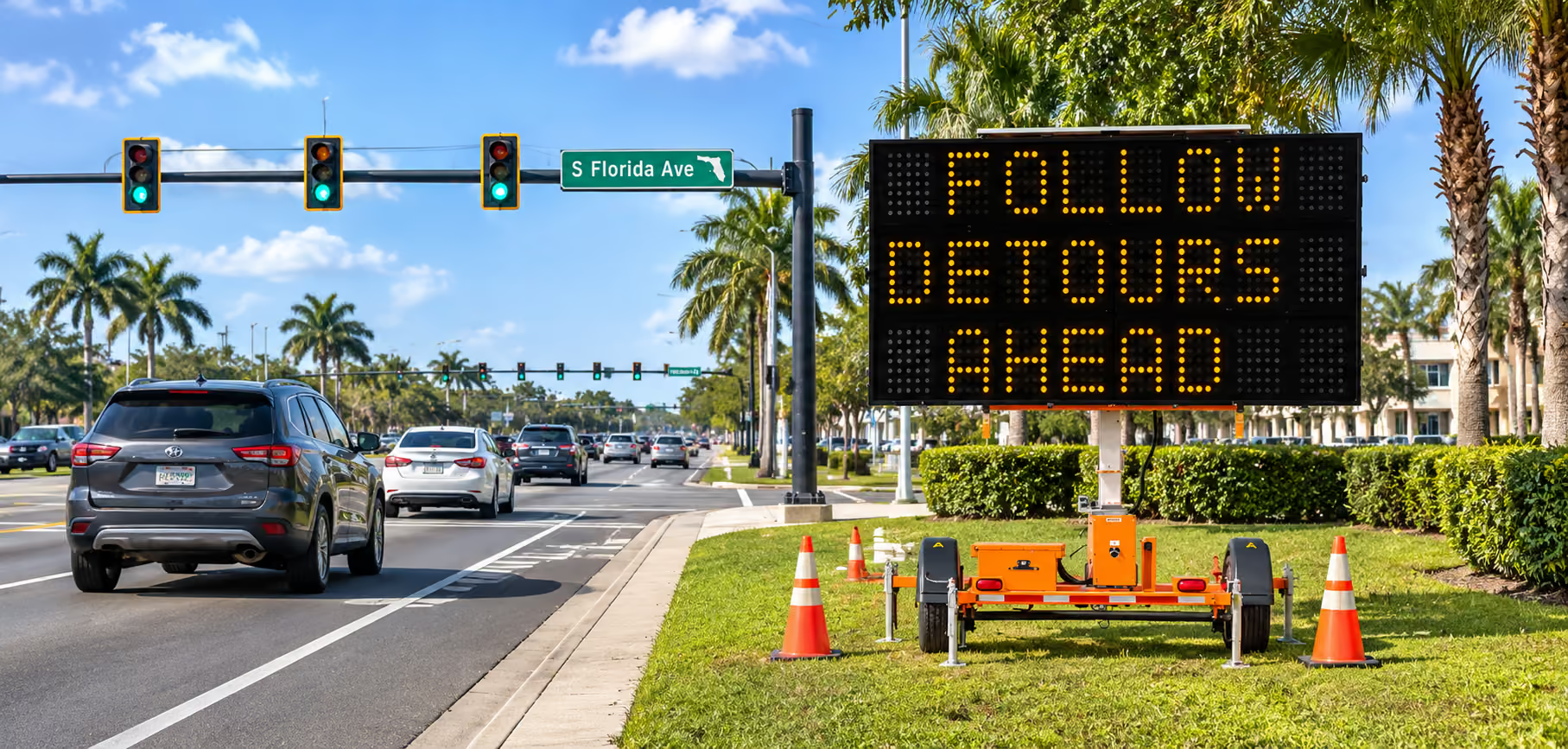
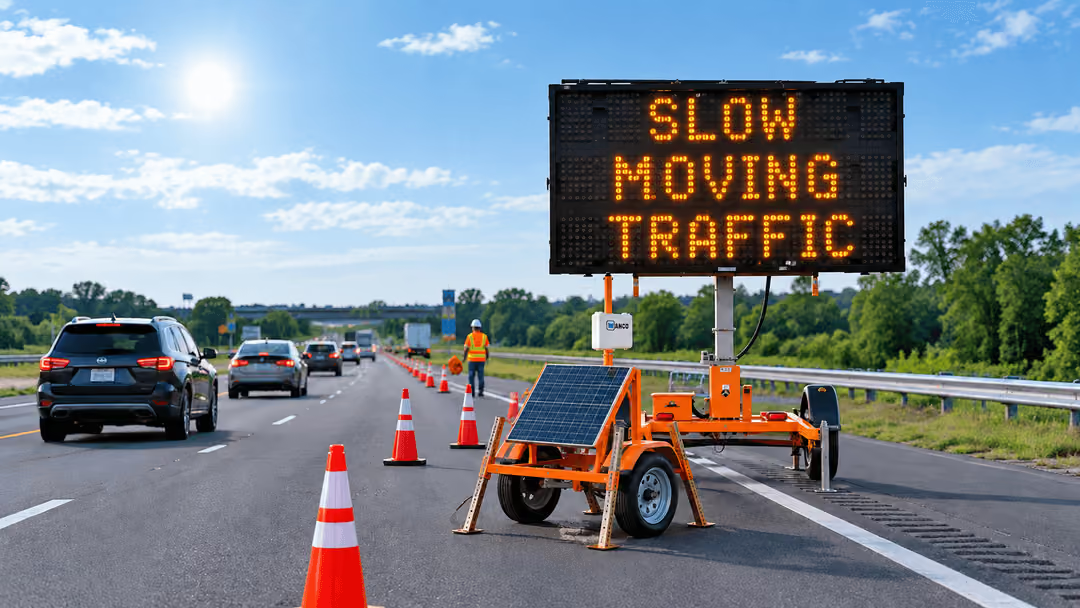
Signal timing manages the intersection, but drivers also need to know what is happening before they reach it. Variable message signs fill that gap. They warn about lane closures and detours, announce special events, give travel information, and tell drivers when a signal is out of service.
TS&L's LED message boards include full size matrix message signs for roadwork and events, color message signs that display text and graphics, compact units for tight urban spaces, and pole mounted message signs with remote monitoring and control for permanent installations. A message sign camera system adds remote video so operators can see conditions and update the sign from anywhere. Together with arrow boards and traffic control equipment, message boards help keep drivers informed while signal timing does its work.
Can Adaptive Systems Work With Existing Signal Infrastructure?
Often, yes. FHWA describes ACS Lite as usable with new signals or as a retrofit for existing ones, and many modern platforms add sensors and software to signals already in the field. Whether a specific intersection can support it depends on a few things:
- The controller. It needs to accept the timing changes the adaptive system sends.
- Detection. Intersections need sensors that can measure each approach reliably, day and night.
- Communications. Sensors, controllers, and software have to share data. See TS&L's traffic networking communications equipment.
- Condition of the hardware. Aging heads, cabinets, and mounting hardware may need replacement. TS&L supplies signal housings and backplates and traffic signal hardware.
Planning Checklist for Agencies
- Rank corridors by delay and variability. Start where traffic changes the most and the current plan is oldest.
- Audit what you have. Check controllers, detection, communications, and power at each intersection.
- Pilot first. Choose one corridor, record travel times before, and compare after.
- Keep a fixed-time fallback. Every adaptive intersection should revert safely to a standard plan if detection or communications fail.
- Tell drivers. Use message boards during installation, detours, and events so drivers know what to expect.
- Review results on a schedule. Share outcomes with leadership and use them to prioritize the next corridor.
Frequently Asked Questions
1. What is adaptive traffic signal control?
Adaptive traffic signal control is a system that adjusts signal timing in real time based on current traffic. Sensors measure vehicles at each approach, software works out better timing, and the controller applies the update, repeating every few minutes as conditions change.
2. How do fixed-time traffic signals work?
Fixed-time signals follow pre-programmed timing plans. Each plan sets the cycle length and the green time for each approach, and plans are scheduled by time of day, such as morning peak, midday, and evening peak. The signals do not change in response to actual traffic.
3. Can adaptive traffic signals help reduce traffic congestion?
Yes. FHWA reports that adaptive signal control improves travel time by more than 10 percent on average, and by 50 percent or more where existing timing is badly outdated. Results vary by corridor, and the largest gains come where traffic demand changes often.
4. Can adaptive traffic control systems work with existing traffic signal infrastructure?
Often yes. Many adaptive systems add sensors and software to signals already installed, and FHWA describes ACS Lite as usable with new signals or as a retrofit. Compatibility depends on the controller, detection, communications, and the condition of the signal hardware, so each corridor should be assessed.
5. When are fixed-time signals still the better choice?
Fixed-time signals suit steady, predictable traffic, isolated intersections, and agencies that do not yet have detection and communications in place. They are simple, predictable, and lower in cost, though they need periodic retiming to stay effective.
6. Does TS&L supply adaptive signal and message board equipment in Florida and across the US?
Yes. TS&L is based in Boca Raton, Florida, and supplies traffic signal hardware, the NoTraffic adaptive management platform, LED message boards, and related traffic control equipment to agencies and contractors across Florida and the United States. Request a quote to get started.
Need Signal Control and Driver Information Equipment?
TS&L supplies traffic signal hardware, adaptive traffic management, and LED message boards for agencies, contractors, and campuses across Florida and the United States. Tell us about your corridor and we will recommend a setup.
See Arrow Boards and Traffic Control Equipment →