How License Plate Recognition Cameras Improve Parking Facility Security
A parking facility can have cameras on every level and still not know who drove in. Parking lots and garages are the third most common location for violent crime in the United States, at roughly 6% of cases reported to the FBI, and around 20% of vehicle thefts happen in parking lots and garages, according to National Insurance Crime Bureau data. When something does happen, the footage often shows a car but not a readable plate, and a car without a plate is hard to act on.
License plate recognition cameras close that gap. They read every plate that enters and leaves, log it with a time and a photo, and can alert your team when a vehicle should not be there. For parking structures, campuses, hospitals, and municipal lots, that turns video from something you review after a loss into something that helps prevent one.
This guide explains how LPR works, what it does for parking facility security, how it supports automated access, how it performs at night, and what to plan before you install it. TS&L offers LPR as an add-on to its solar security cameras and through its Genetec partnership, for facilities across Florida, the Southeast, and the rest of the United States.
Quick Answer
A license plate recognition (LPR) camera is a camera paired with software that automatically reads vehicle license plates and records the plate number, time, location, and an image of the vehicle. In a parking facility, LPR cameras help identify vehicles for investigations, flag vehicles on a watchlist, and automate entry for approved vehicles.
What Is a License Plate Recognition Camera?
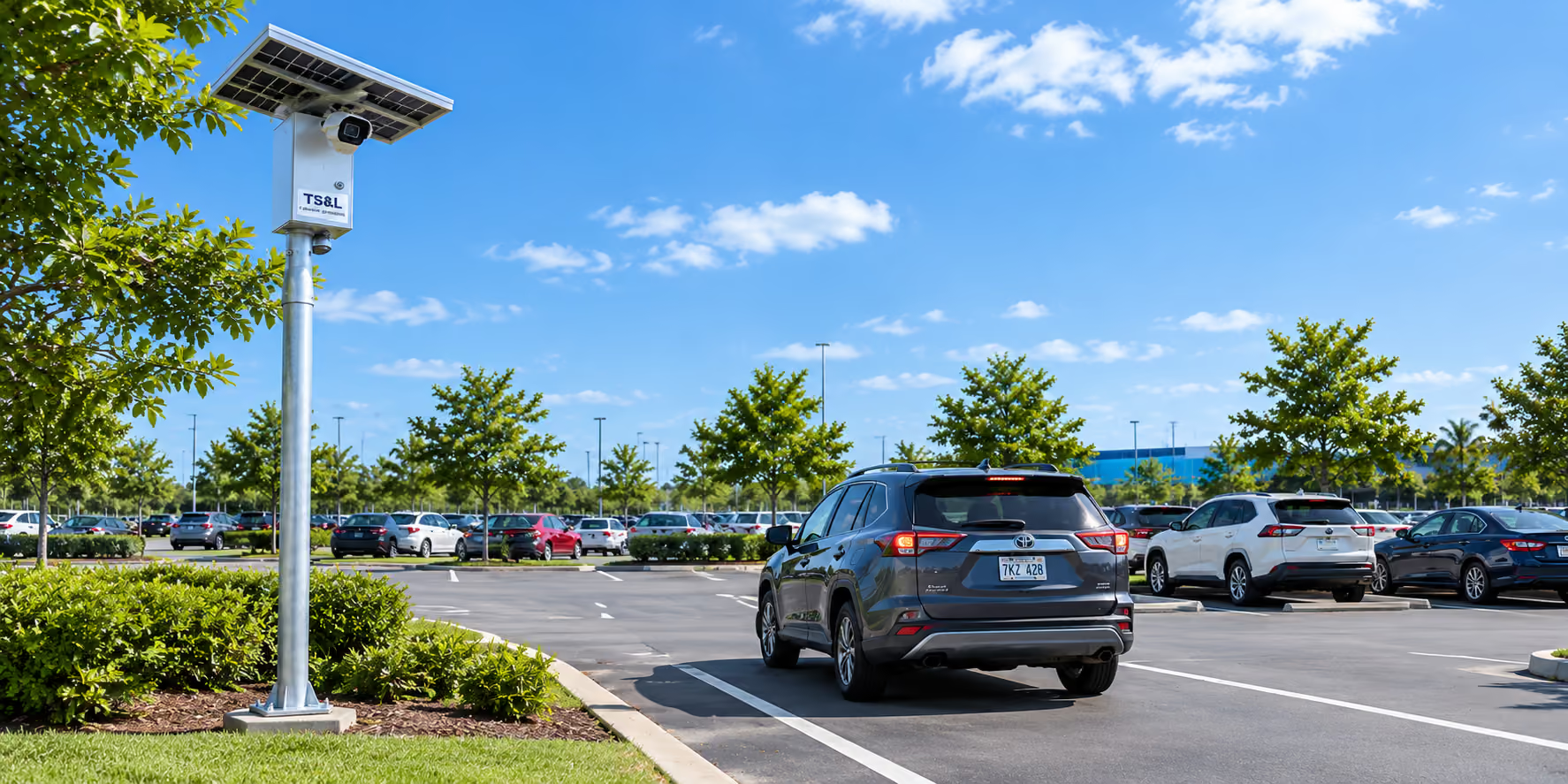
A license plate recognition camera, also called an LPR or ANPR camera, is built to do one job a general security camera does poorly: read a plate every time. The camera is set up for that task, with the right angle, shutter speed, and illumination, and software uses AI to turn the plate image into text. Each read is stored with a timestamp, the camera location, and a photo of the vehicle.
A standard camera shows what happened. An LPR camera adds which vehicle was there. That searchable record is what makes it useful for investigations, enforcement, and access.
How LPR Cameras Work
- Capture. The camera photographs the plate as the vehicle enters or exits. Most LPR cameras use infrared light so the plate is readable day and night.
- Read. Software converts the plate image into text, and in many systems also identifies the issuing state.
- Match. The plate is checked against lists you control, such as permit holders, staff, banned vehicles, or hotlists you have access to.
- Act. The system logs the read, sends an alert, or signals a gate or access system to open.
TS&L supplies Genetec AutoVu license plate recognition for facilities that want LPR inside a unified video and access platform, along with LPR camera pole configurations.
How LPR Cameras Improve Parking Facility Security
Cameras record. LPR cameras identify. That difference shows up in six ways:
- Faster, stronger investigations. Search by plate, date, and time instead of scrubbing hours of video. A plate number gives police something to act on.
- Deterrence at the point of entry. A visible camera at the entrance and exit, with signage, tells drivers the facility keeps a record of every vehicle.
- Real-time alerts. Notify security when a banned vehicle, a watchlist vehicle, or an unregistered vehicle arrives, so staff can respond while the vehicle is still on site.
- Control over who parks where. Verify permits and spot vehicles that overstay or park in restricted areas.
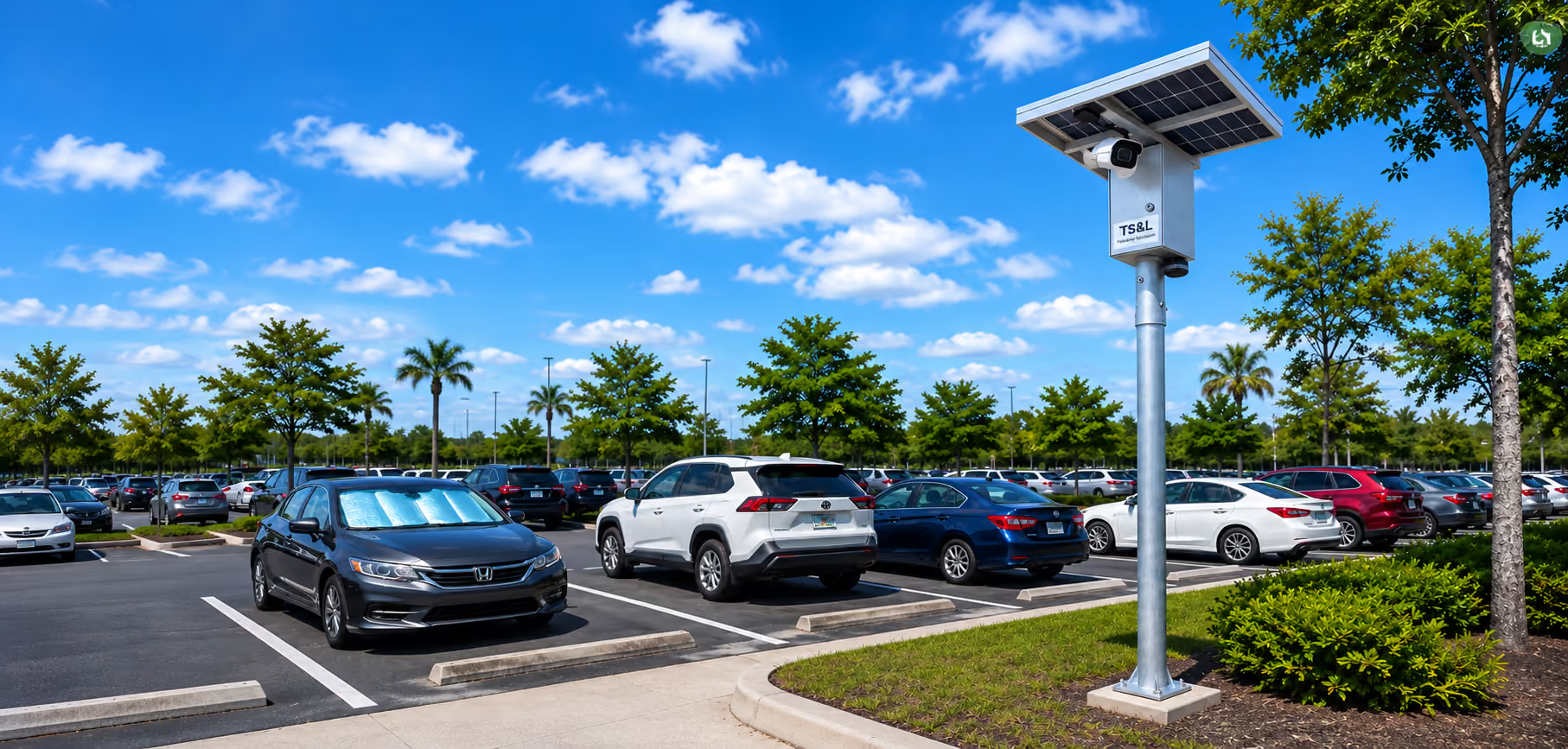
- Evidence you can use. A plate read paired with continuous video shows when a vehicle entered, where it went, and when it left. TS&L's 24/7 recording HAWK solar camera is built for that kind of always-on coverage in parking lots and garages.
- Better operating data. Counts, dwell time, and peak hours help you staff and plan.
Can License Plate Recognition Cameras Automate Parking Access?
Yes. LPR can act as the credential. When a plate matches an approved list, the system can signal a gate or barrier to open, so permit holders drive in without a card, fob, or ticket. Visitors can be added to a temporary list in advance. That removes lost credentials, shared cards, and entry queues, and leaves a log of every entry.
Two things need to be in place. The LPR system has to be integrated with your gate controller or access platform, and someone has to own the approved list and keep it current. Genetec's platform brings video, access control, and LPR into one system, and TS&L can help scope the integration for your site.
Once vehicles are inside, doors still need protecting. TS&L's Proxess wireless access control manages who can enter stairwells, offices, and equipment rooms, with mobile credentials and audit trails.
Do LPR Cameras Work at Night?
Yes, when the system is designed for it. Night performance depends on four things:
- Infrared illumination. LPR cameras use infrared light to light the plate without bright visible light, and US license plates are reflective, which helps.
- Camera settings. Fast shutter speeds freeze a moving plate and limit blur and glare.
- Placement. The camera should sit at a shallow angle to the lane, aimed to avoid headlight glare.
- Maintenance. Dirty lenses, fogged housings, and damaged plates all lower accuracy.
Good site lighting still helps with vehicle color and detail. Solar lighting and commercial roadway lighting can brighten entrances and lanes, including where grid power is limited. Accuracy varies by site, so ask for a test at your own entrance before you commit.
What to Consider Before Installing an LPR System
- Camera placement and lane layout. LPR works best at choke points where vehicles pass one at a time at a controlled speed, such as entry and exit lanes. A wide-view camera covering a whole lot will not read plates reliably.
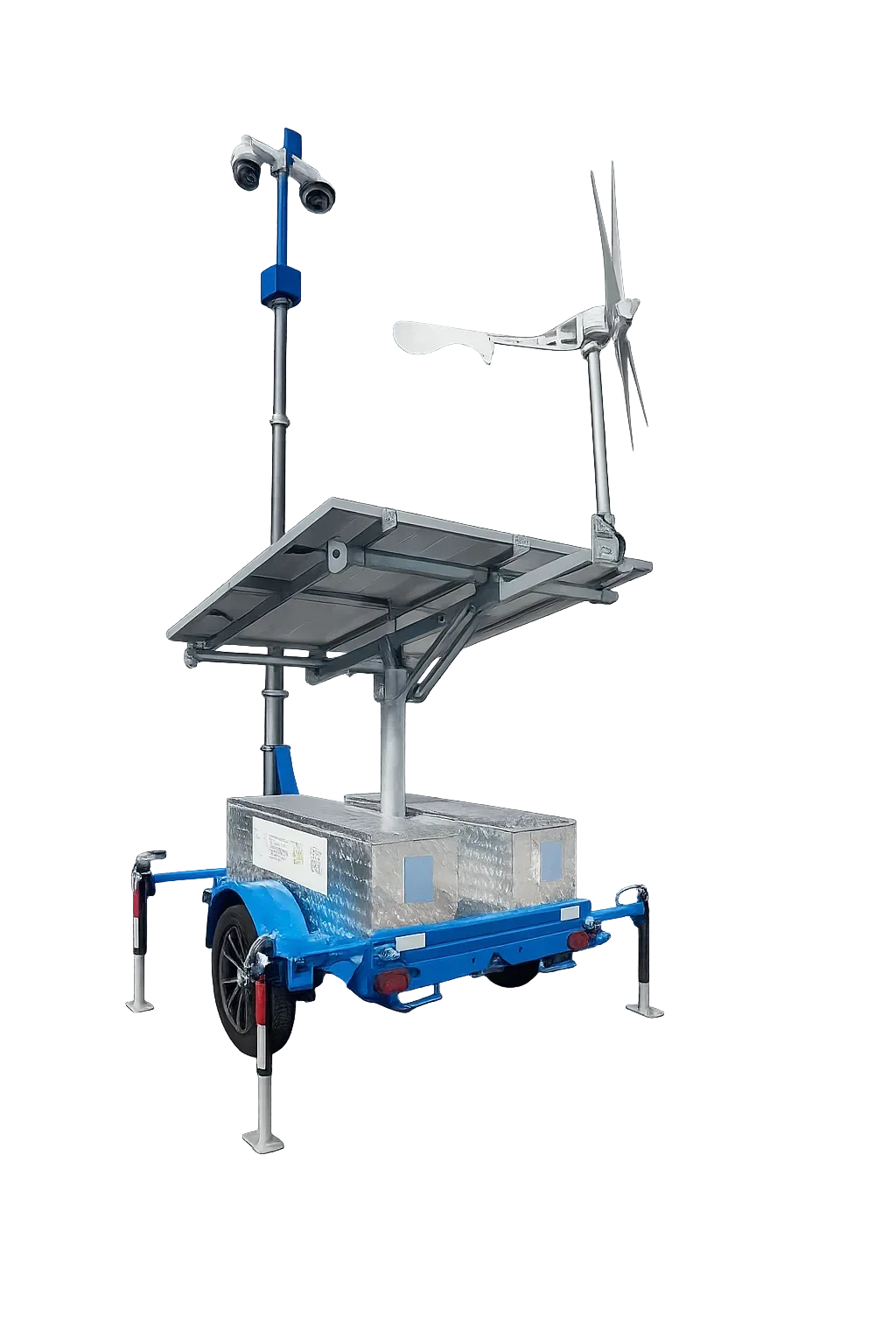
- Power and connectivity. Entrances are often far from power and network. Solar-powered security cameras with LTE connectivity avoid trenching. For temporary lots, events, or garages still under construction, a mobile security trailer provides power, cameras, and connectivity in one tow-in unit.
- Software and integration. Confirm the LPR works with your video management system, gate controller, or access platform before you buy.
- Data retention and privacy. Plate reads are sensitive data. Set a written retention period, limit who can search, and post signage. Rules vary by state and by whether you are a public or private operator, so check with legal counsel. This is general information, not legal advice.
- Accuracy testing. Ask for sample reads from your site, including night reads, dirty plates, and out-of-state plates.
- Maintenance. Plan for periodic lens cleaning and a check of the aim.
Build LPR Into a Complete Parking Security System
LPR identifies vehicles. It does not help a person who is in trouble. A complete parking security plan adds three more layers: cameras covering walkways, stairwells, and levels, lighting, and emergency communication. A facility that adds LPR but skips emergency communication covers the vehicle and misses the person.
A practical layout puts LPR at the lanes, cameras on each level, K1 Mini Emergency Call Boxes in stairwells and elevator lobbies, and a Blue Light Emergency Tower on the open deck. Where you want a camera and an emergency call point in one unit, see TS&L's blue light camera systems. Our guide to parking garage safety systems shows where each device belongs, level by level.
Where LPR Makes the Most Sense
- Parking garages and multi-level structures
- University and hospital campuses
- Municipal lots, parks, and downtown garages
- Apartment and HOA communities with permit parking
- Commercial and mixed-use properties
TS&L designs and installs these systems for facilities across Florida, the Southeast, and the rest of the country. To see how the solar camera platforms compare, visit our solar security cameras page.
Frequently Asked Questions
1. What is a license plate recognition camera?
A license plate recognition (LPR) camera is a camera paired with software that automatically reads license plates. It records the plate number, date, time, location, and a photo of the vehicle, so you can search, alert, and automate access based on the plate.
2. How do LPR cameras improve parking facility security?
They identify vehicles at entry and exit, create a searchable record for investigations, alert staff when a flagged vehicle arrives, and help enforce permits. Combined with cameras, lighting, and emergency call boxes, they give security teams both a record and a response.
3. Can license plate recognition cameras automate parking access?
Yes. When a plate matches an approved list, the LPR system can signal a gate or barrier to open, with no card or ticket needed. The system has to be integrated with your gate controller or access platform, and someone has to keep the approved list current.
4. Do LPR cameras work at night?
Yes. LPR cameras use infrared illumination and fast shutter settings to read plates in the dark. Accuracy depends on placement, glare, lighting, and lens cleanliness, so ask for a test at your own entrance.
5. Can license plate recognition run on solar power?
Yes. TS&L's HAWK solar security camera offers license plate recognition as an add-on and connects over LTE, so LPR can be installed at entrances where trenching for power and data is impractical.
6. Does TS&L supply LPR cameras in Florida and across the US?
Yes. TS&L is based in Boca Raton, Florida, and supplies license plate recognition cameras, solar security cameras, and related parking security systems to facilities across Florida, the Southeast, and the United States. Request a quote to get started.
Add License Plate Recognition to Your Parking Security Plan
TS&L designs and installs parking facility security systems across Florida, the Southeast, and the rest of the United States, from LPR and solar cameras to emergency call boxes and lighting. Tell us about your site and we will recommend a layout.
Get a Solar Camera Quote with LPR →