Cities ask a lot of their streets. They need to be lit, safe, connected, and cheap to run, and for decades the humble light pole did only one of those jobs. Smart city infrastructure changes that by turning the poles, signals, and public spaces a city already owns into a connected network that senses what is happening and shares that information in real time.
The evidence for the basics is strong. The U.S. Department of Energy reported that Los Angeles had converted more than 115,000 streetlights to LED and was seeing an estimated 63.5 percent energy savings over the high pressure sodium lights they replaced, while networked controls on about 54,000 of them let the city monitor fixtures remotely. A randomized study in New York City public housing found that added street lighting led to at least a 36 percent reduction in serious outdoor crimes at night. Lighting matters, and connected lighting adds the data and control around it.
This guide explains what smart city infrastructure is, how smart city technology improves urban communities, where public safety fits, and what municipalities should plan for. TS&L supplies Juganu smart city lighting and related smart infrastructure solutions for cities, campuses, and communities across Florida and the United States.
Quick Answer
Smart city infrastructure is public infrastructure, such as street lights, traffic signals, and public Wi-Fi, that is connected to sensors, communications, and software so a city can monitor conditions, respond faster, and manage resources more efficiently. It improves connectivity, public safety, energy efficiency, and day to day urban management.
What Is Smart City Infrastructure?
Smart city infrastructure is the physical and digital foundation that lets a city collect data and act on it. Most projects combine four layers:
- Connectivity. Wi-Fi, cellular, or dedicated wireless links that carry data from devices to the people who need it.
- Sensing. Cameras, optical sensors, noise detectors, and environmental sensors that measure what is happening on the street.
- Processing. Software, often running at the edge on the device itself, that turns raw readings into useful information such as an alert or a count.
- Applications. The dashboards, alerts, and controls that city staff, campus teams, and emergency responders use every day.
Streetlight poles are a natural place to start. They already line most roads, parks, and campuses, they already have power, and their height suits sensors and antennas. Adding connectivity and intelligence to a pole the city already owns is faster and less disruptive than building new infrastructure from scratch.
How Does Smart City Technology Improve Urban Communities?
Connectivity
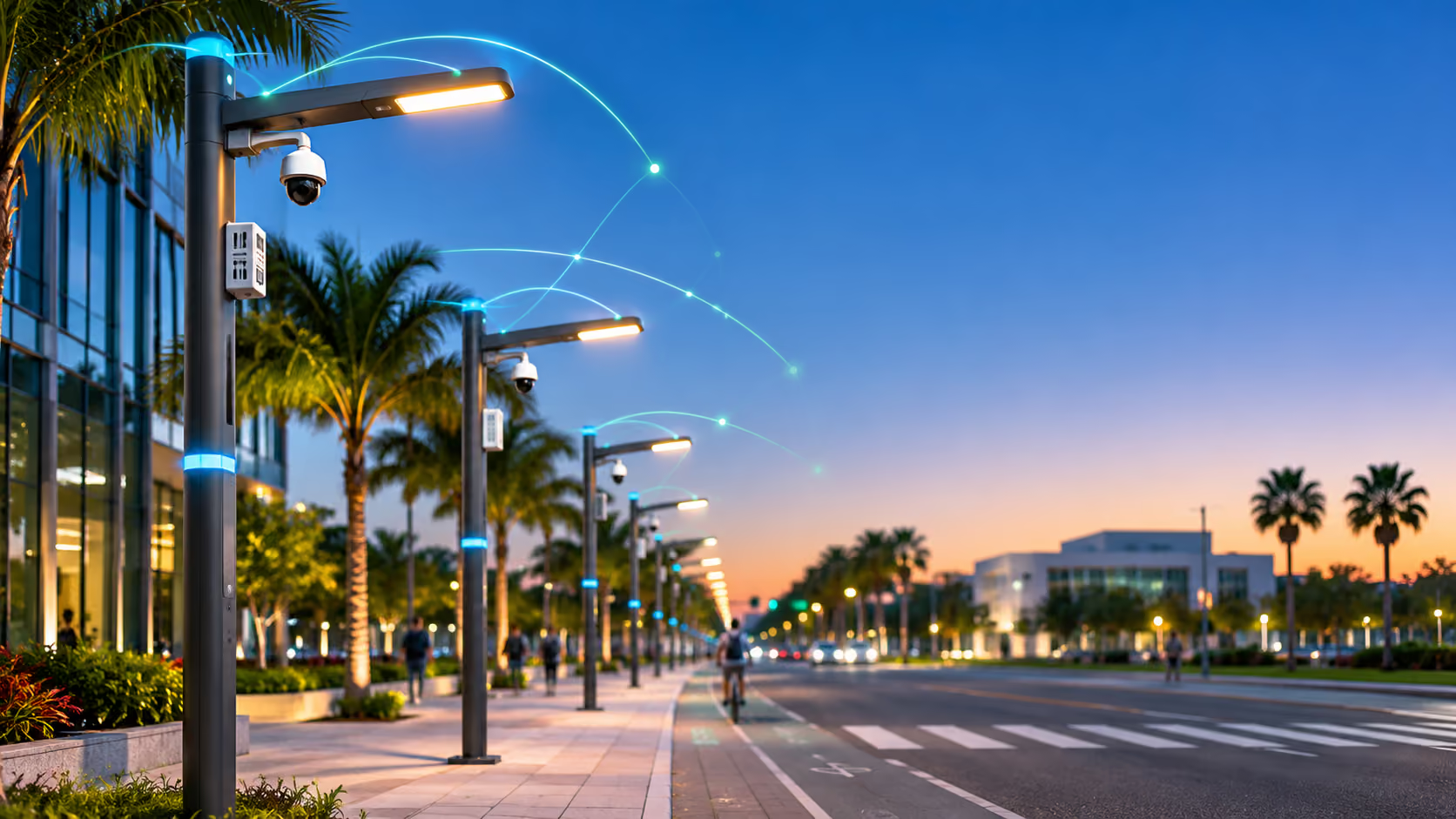
Connected poles can carry public Wi-Fi, support cellular and vehicle communications, and link other devices on the street. Juganu fixtures are built with Wi-Fi access, 5G, and CV2X support, so the same pole that lights a street can also connect pedestrians, vehicles, and city equipment.
Public safety
Cameras, sensors, and edge AI on a pole can detect events as they happen and alert the people who can respond. Better lighting also changes behavior. The New York City experiment placed temporary lighting towers at public housing developments and found at least a 36 percent drop in outdoor nighttime index crimes, which are serious crimes such as robbery and felony assault. The lights were unusually bright and the study covered public housing, so results will differ elsewhere, but the finding shows how much lighting shapes safety.
Energy efficiency
LED fixtures use far less energy than older lamps, and connected controls cut waste further by dimming lights when streets are quiet. Los Angeles reported an estimated 63.5 percent energy savings from its LED conversion alone. Juganu states that its fixtures deliver up to 90 percent energy savings compared with traditional high pressure sodium lamps.
Urban management
Remote monitoring shows which fixtures have failed without waiting for a resident to call, so crews can be sent where they are needed. Sensors add counts, noise readings, and environmental data that planners can use to decide where to put crossings, patrols, and maintenance budgets.
Smart Street Lighting: The Backbone of Smart City Infrastructure
Smart street lighting pairs an efficient LED fixture with a controller, sensors, and a network connection. The light still does its basic job, and every pole becomes a connected point on the city's map.
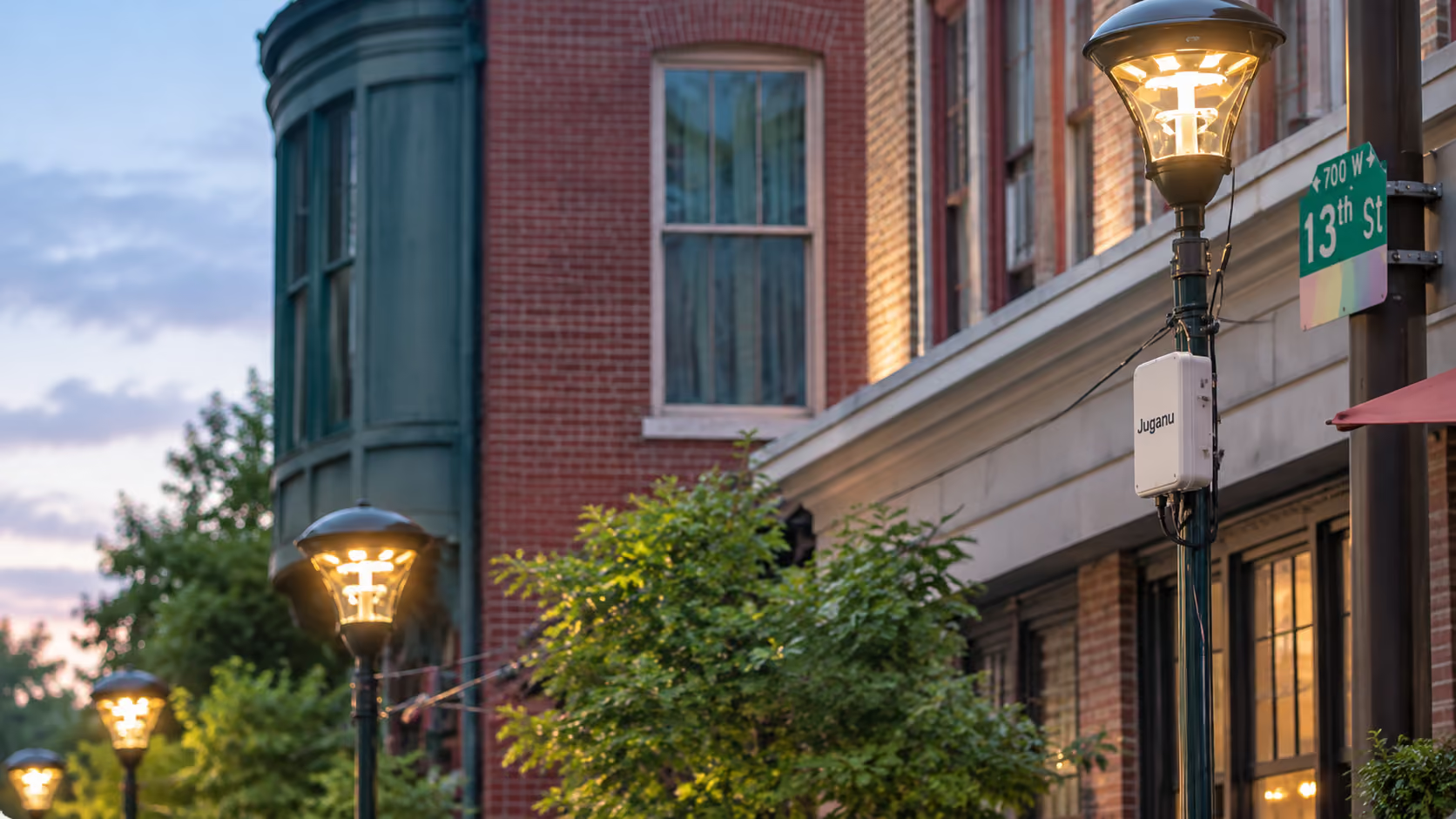
Two Juganu platforms show how this works in practice. The Smart Solitaire is built for urban streets, campuses, and public plazas, with dual high resolution cameras, an edge AI processor, wireless connectivity, and remote monitoring and control. Local AI processing keeps data on the pole instead of sending everything to the cloud. The Smart Phoenix acts as an IoT hub, with the ability to power external smart devices and system efficacy of up to 140 lumens per watt.
Both are available through TS&L. See the full range on our Juganu smart city lighting page, or talk to our team about a pilot corridor.
Can Smart Lighting Systems Improve Public Safety?
Yes, in three ways that reinforce each other.
- Better visibility. Well lit streets and paths make people feel safer and give potential offenders fewer places to hide. Research supports the effect, as the New York City experiment shows.
- Faster detection. Cameras and sensors on connected poles can flag unusual activity, outages, and noise events so security teams respond sooner.
- Better data. Real time and historical readings show where problems cluster, so cities can place patrols and improvements where they matter.
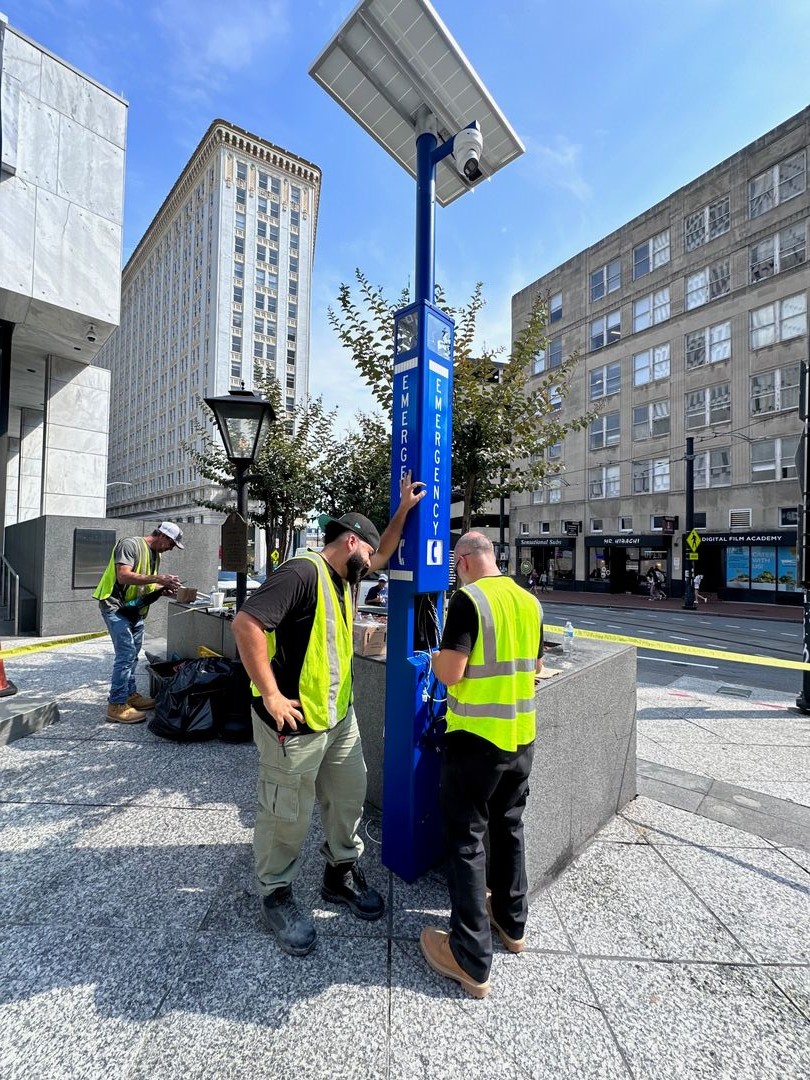
Smart lighting works best as one layer of a safety plan. Pair it with ways for people to call for help directly. A Blue Light Emergency Tower gives pedestrians a clearly marked place to call dispatch with one push, and a Blue Light E-Phone covers stairwells and building interiors. For sites without a power run, solar security cameras add monitoring where it is hard to wire.
Privacy deserves attention from the start. Cities should set clear rules on what is recorded, who can view it, and how long it is kept, and they should prefer systems that process data locally.
What Are the Benefits of Connected Infrastructure for Municipalities?
- Lower energy costs. LED plus dimming controls reduce the electricity bill for lighting, which is a recurring cost for every city.
- Lower maintenance costs. Remote monitoring means fewer routine inspection drives, and crews are sent only to fixtures that need them.
- One platform instead of many. Lighting, sensing, and connectivity from a single fixture means fewer vendors and a simpler maintenance picture.
- Data for planning. Counts and sensor readings support decisions on traffic, safety, and capital spending.
- Room to grow. Systems that integrate with third party tools let a city add capabilities over time instead of replacing hardware.
- Faster rollout. Juganu describes its cableless installation as often completing within a day, which limits disruption.
Smart Infrastructure Solutions Beyond Lighting
Lighting is a strong starting point, and smart city infrastructure reaches further. Cities and campuses commonly add:
- Smarter traffic signals. AI sensors and software can adjust signal timing to real traffic. The NoTraffic management platform does this at city grid level, and our guide to adaptive vs. fixed-time traffic signals explains the difference.
- Solar powered public amenities. EnGo Planet Solar lighting, the Smart Solar Shelter, and the Smart Solar Bench bring light and comfort to places without a power connection.
- Sustainable mobility. Solar powered e bike charging stations support riders at campuses, parks, and downtown areas.
- Safer crossings and speeds. Pedestrian crossing systems and LED radar speed signs give drivers real time feedback where people walk.
A reliable traffic networking communications backbone ties these devices to the people who manage them.
Smart City Infrastructure in Florida and the Southeast
Florida and the Southeast bring conditions that make connected infrastructure especially useful. Hurricane season tests every system a city has. Remote monitoring shows which fixtures and devices are down so crews can prioritize repairs. Growing populations, seasonal visitors, and busy tourist areas create changing demand on streets and public spaces, and connected systems let cities adjust lighting and traffic management as conditions change.
TS&L is based in Boca Raton, Florida, and works with cities, universities, and communities across Florida and the United States on smart infrastructure projects.
Planning a Smart City Project: What to Consider
- Start with a clear goal. Energy savings, safety, connectivity, or traffic flow each point toward different priorities.
- Pilot first. Choose one corridor, campus, or district, record the starting conditions, and measure the results.
- Plan data governance. Decide what data is collected, who can see it, and how long it is retained.
- Check integration. Confirm the system works with the tools and vendors you already use.
- Secure the network. Connected devices need strong cybersecurity and a plan for updates.
- Scale in phases. Expand to the next area once the pilot shows results.
Frequently Asked Questions
1. What is smart city infrastructure?
Smart city infrastructure is public infrastructure, such as street lights, traffic signals, and public Wi-Fi, that is connected to sensors, communications, and software. It lets a city monitor conditions in real time, respond faster, and manage energy, safety, and maintenance more efficiently.
2. How does smart city technology improve urban communities?
Smart city technology improves connectivity with public Wi-Fi and wireless links, supports public safety with better lighting, cameras, and sensors, saves energy with LED fixtures and dimming controls, and gives city staff data and remote monitoring to manage infrastructure more efficiently.
3. Can smart lighting systems improve public safety?
Yes. Better lighting reduces crime and improves feelings of safety, and a randomized study in New York City public housing found at least a 36 percent drop in serious outdoor crimes at night after lighting was added. Smart lighting adds cameras, sensors, and alerts so teams can respond faster, and works best alongside emergency call stations.
4. What are the benefits of connected infrastructure for municipalities?
Connected infrastructure lowers energy and maintenance costs, shows which equipment needs attention, provides data for planning, and lets cities add new capabilities without replacing hardware. Cities can also reduce the number of vendors by using a single platform for lighting, sensing, and connectivity.
5. What is smart street lighting?
Smart street lighting combines an efficient LED fixture with a controller, sensors, and a network connection. Each pole can be monitored and controlled remotely, dimmed to save energy, and used to collect data on conditions around it.
6. Does TS&L supply smart city infrastructure in Florida and across the US?
Yes. TS&L is based in Boca Raton, Florida, and supplies Juganu smart city lighting, adaptive traffic management, solar lighting, and related smart infrastructure solutions to cities, universities, and communities across Florida and the United States. Request a quote to get started.
Ready to Build Smart City Infrastructure for Your Community?
TS&L supplies smart city lighting, traffic management, solar infrastructure, and safety systems for cities, campuses, and communities across Florida and the United States. Tell us about your project and we will recommend where to start.
Explore Juganu Smart City Lighting →